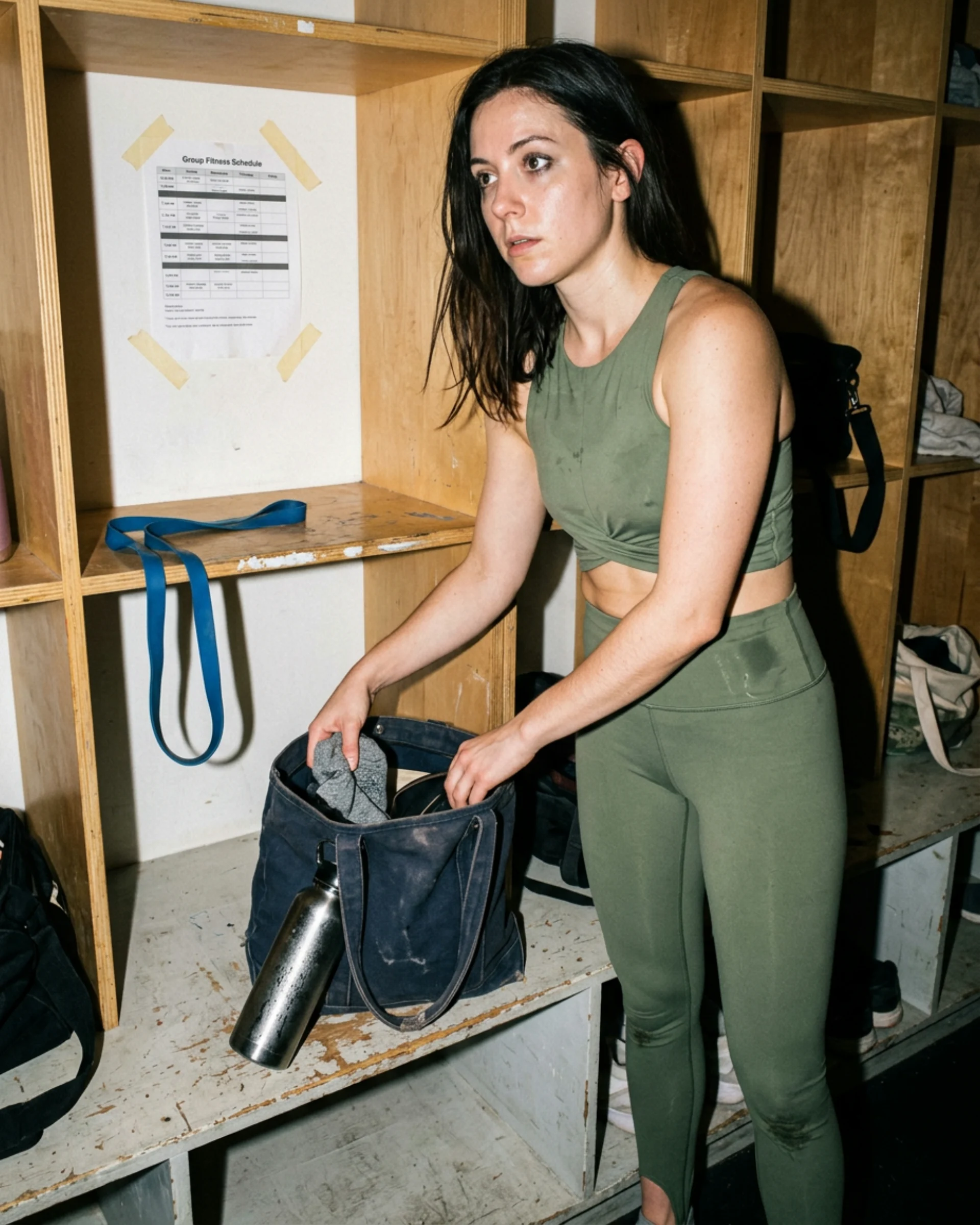
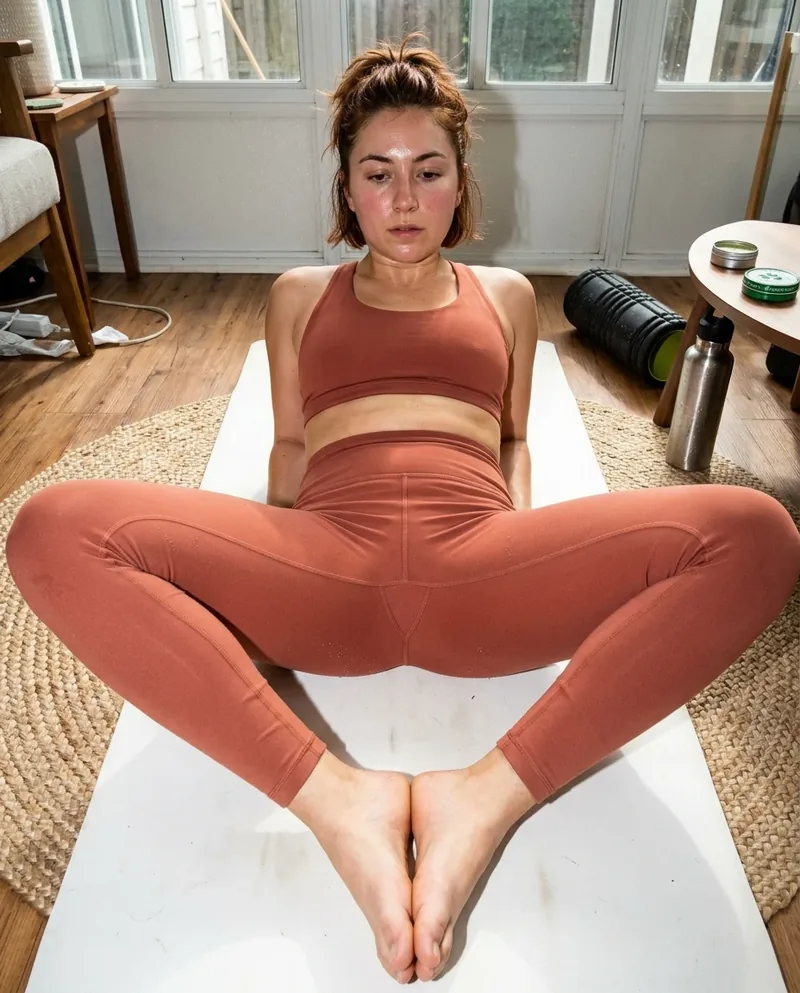
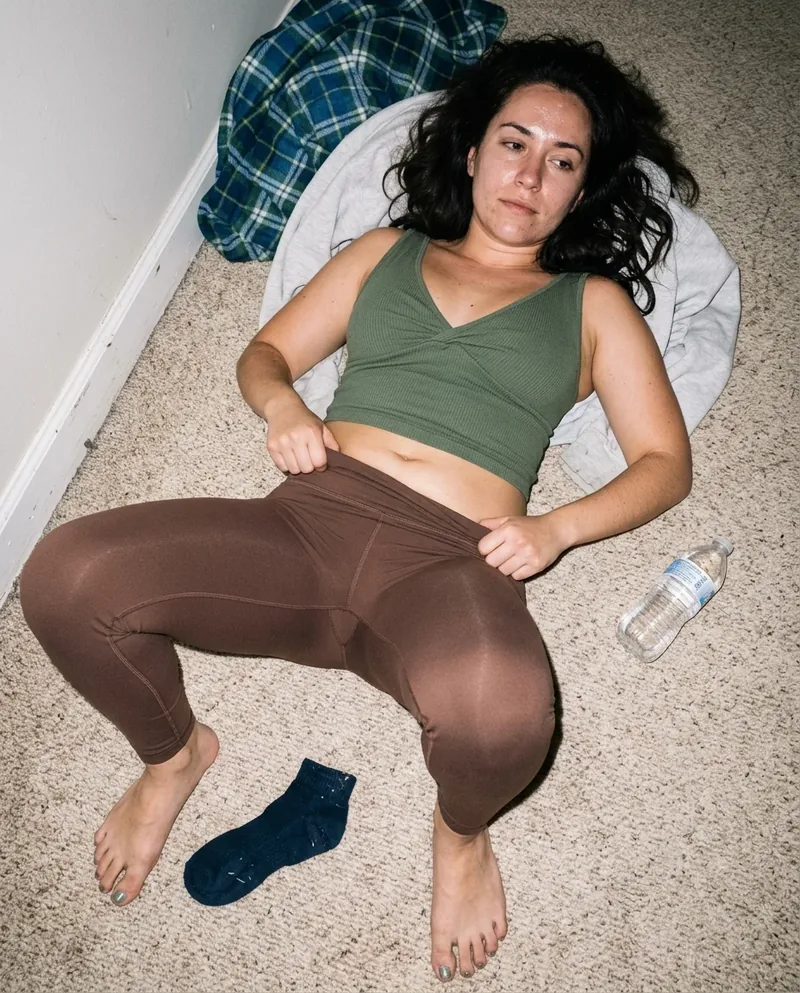
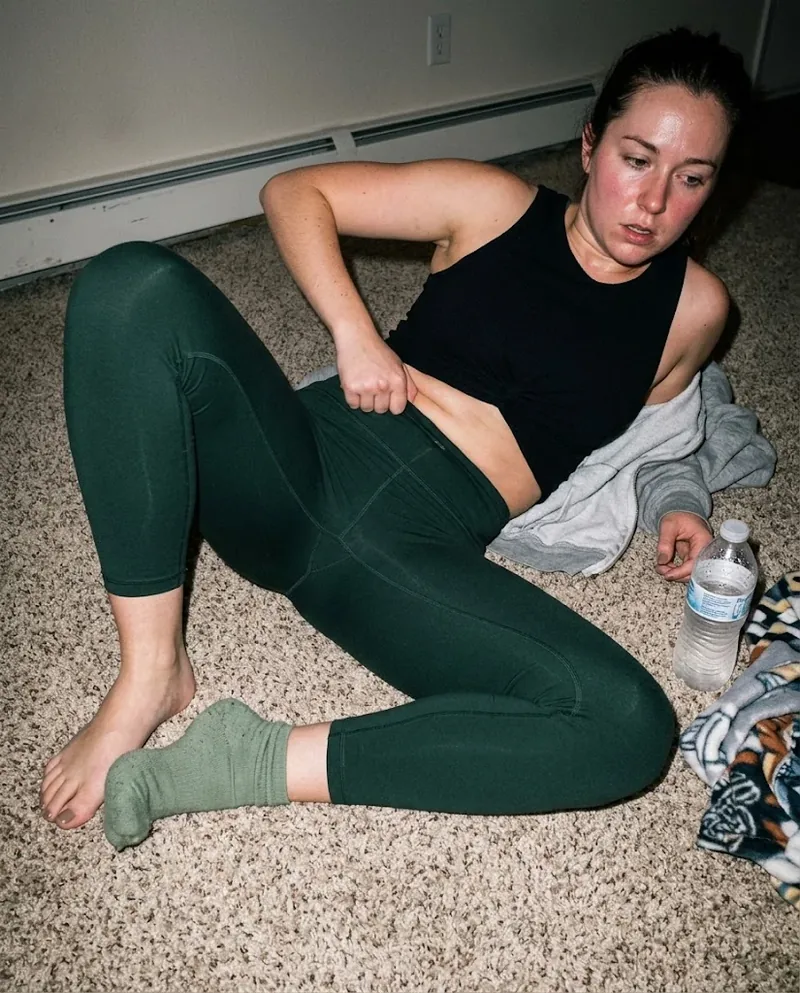
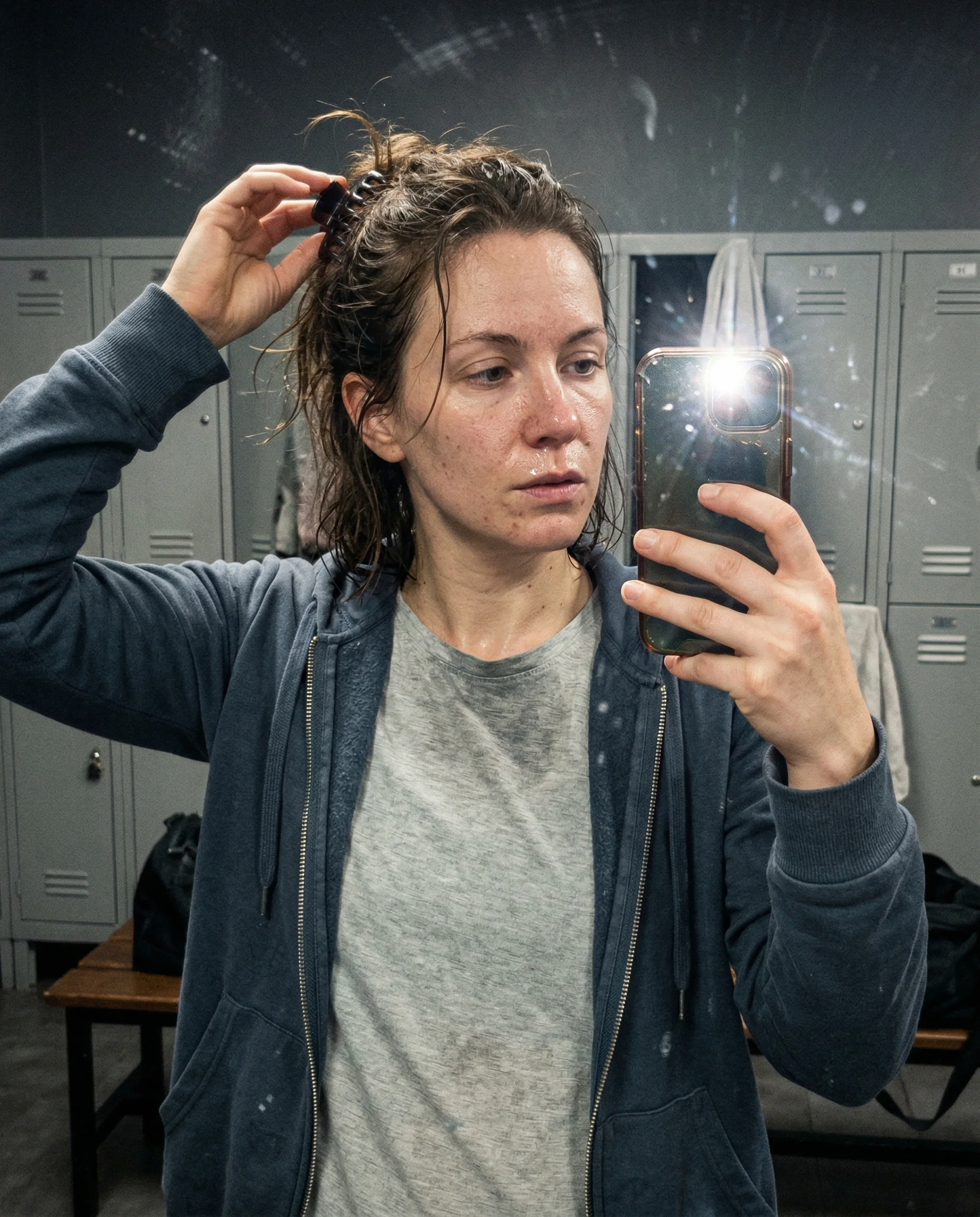
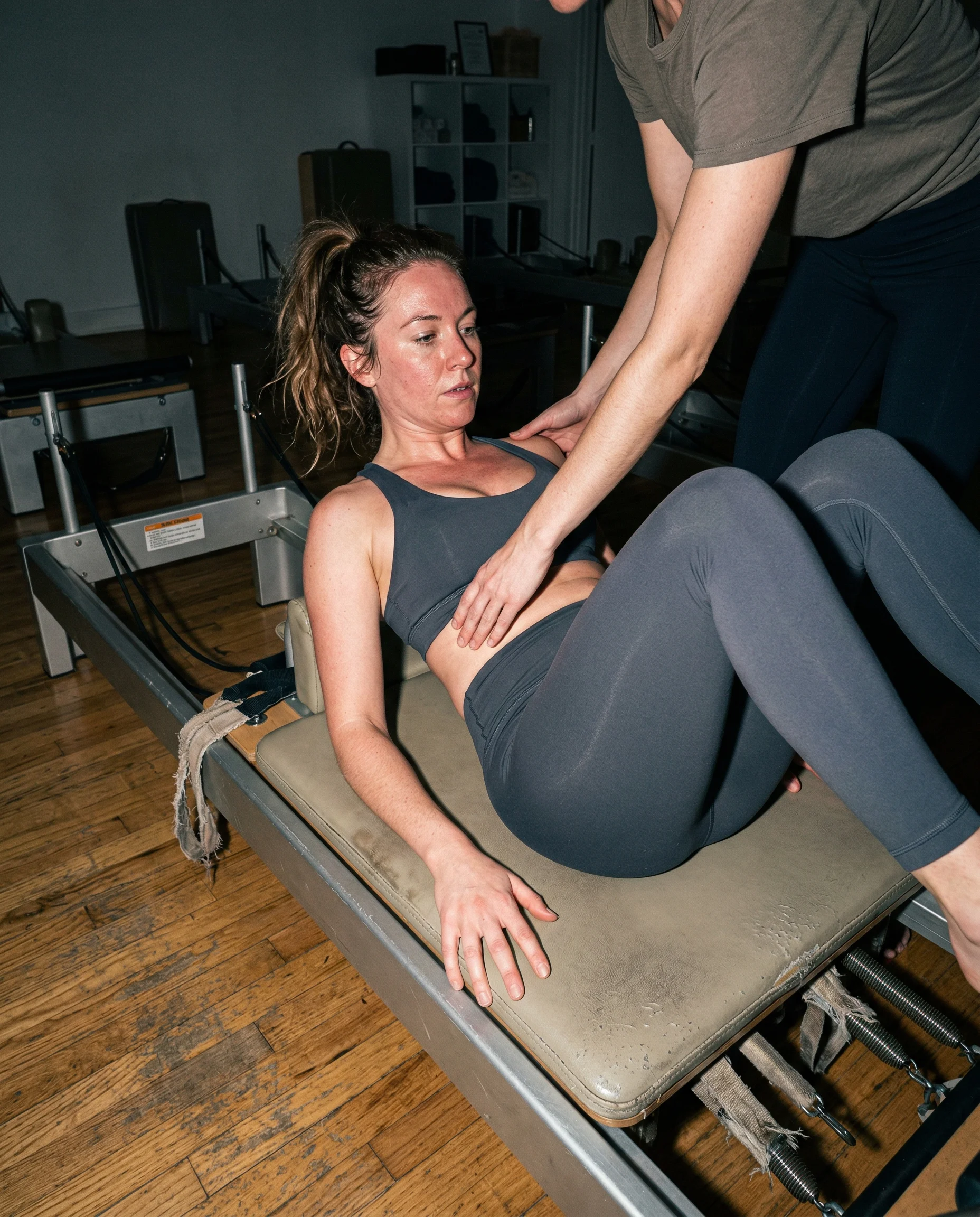
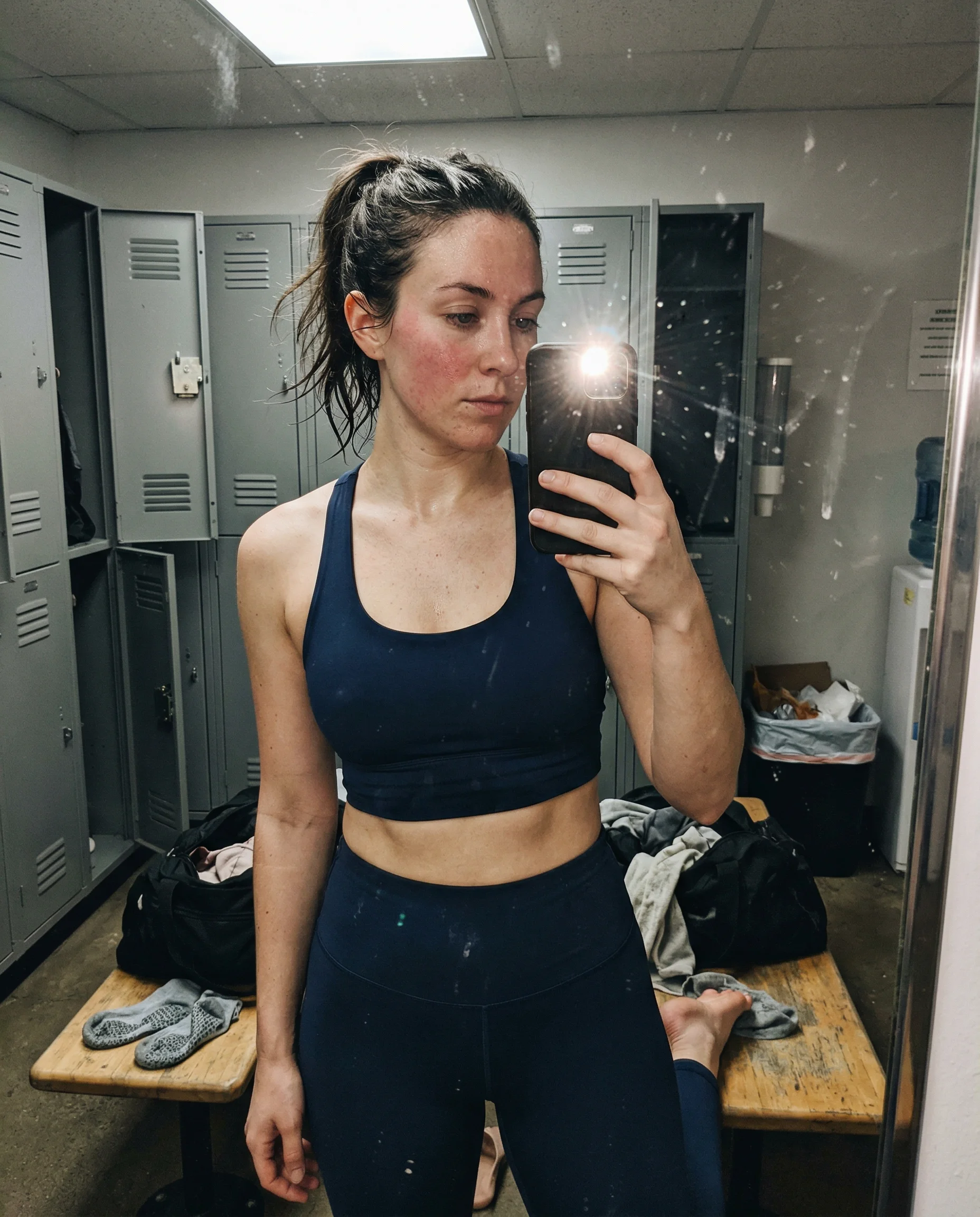
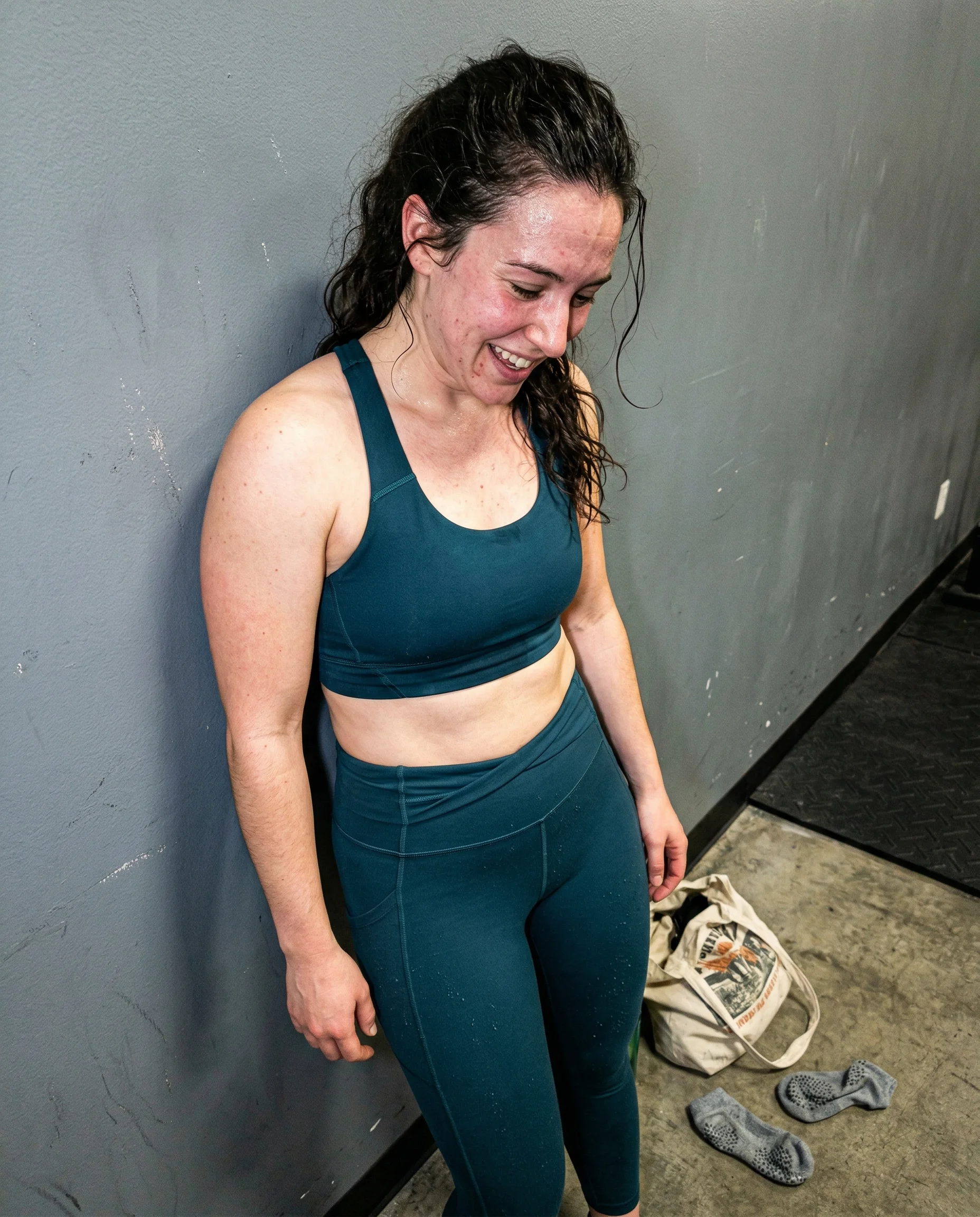
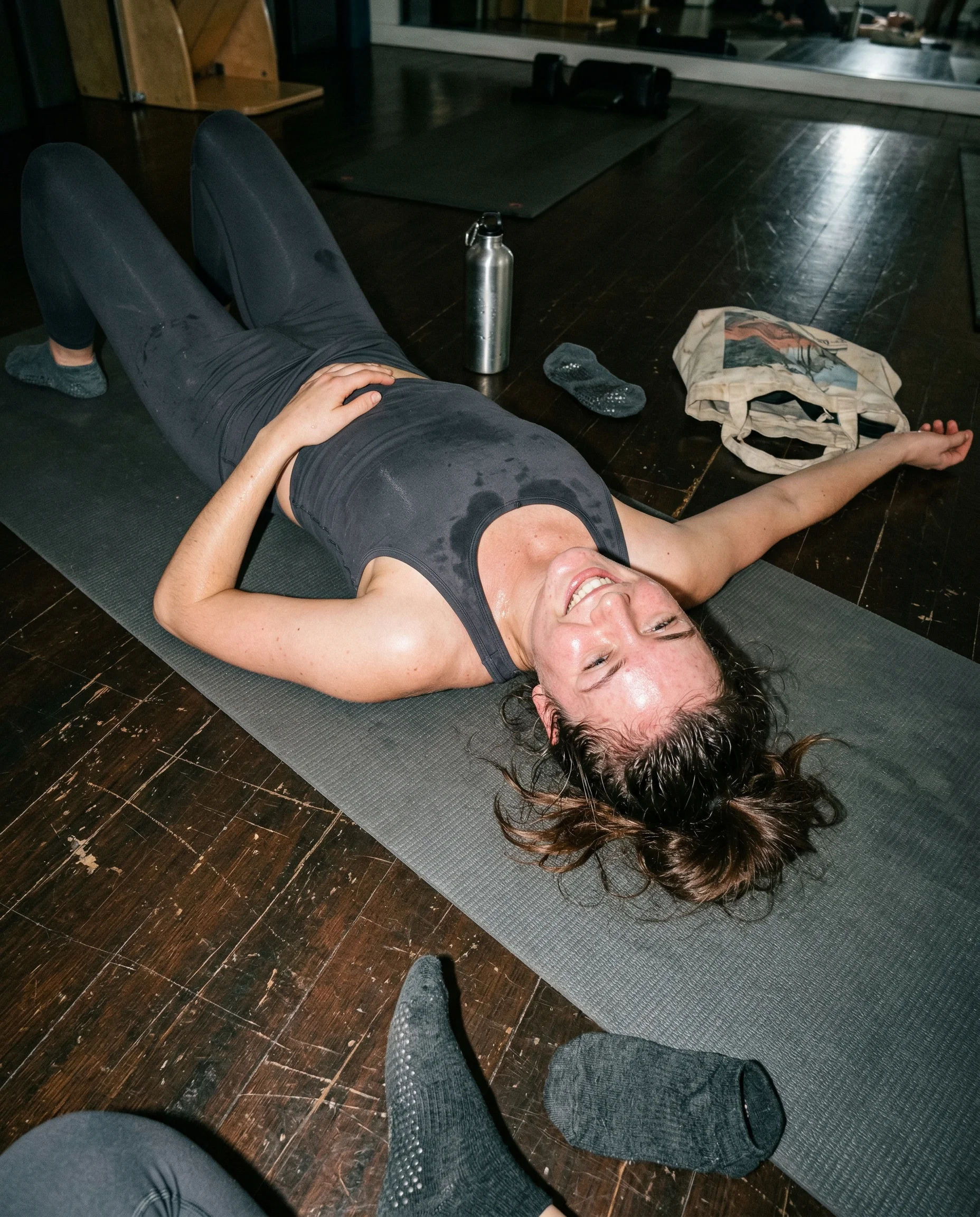
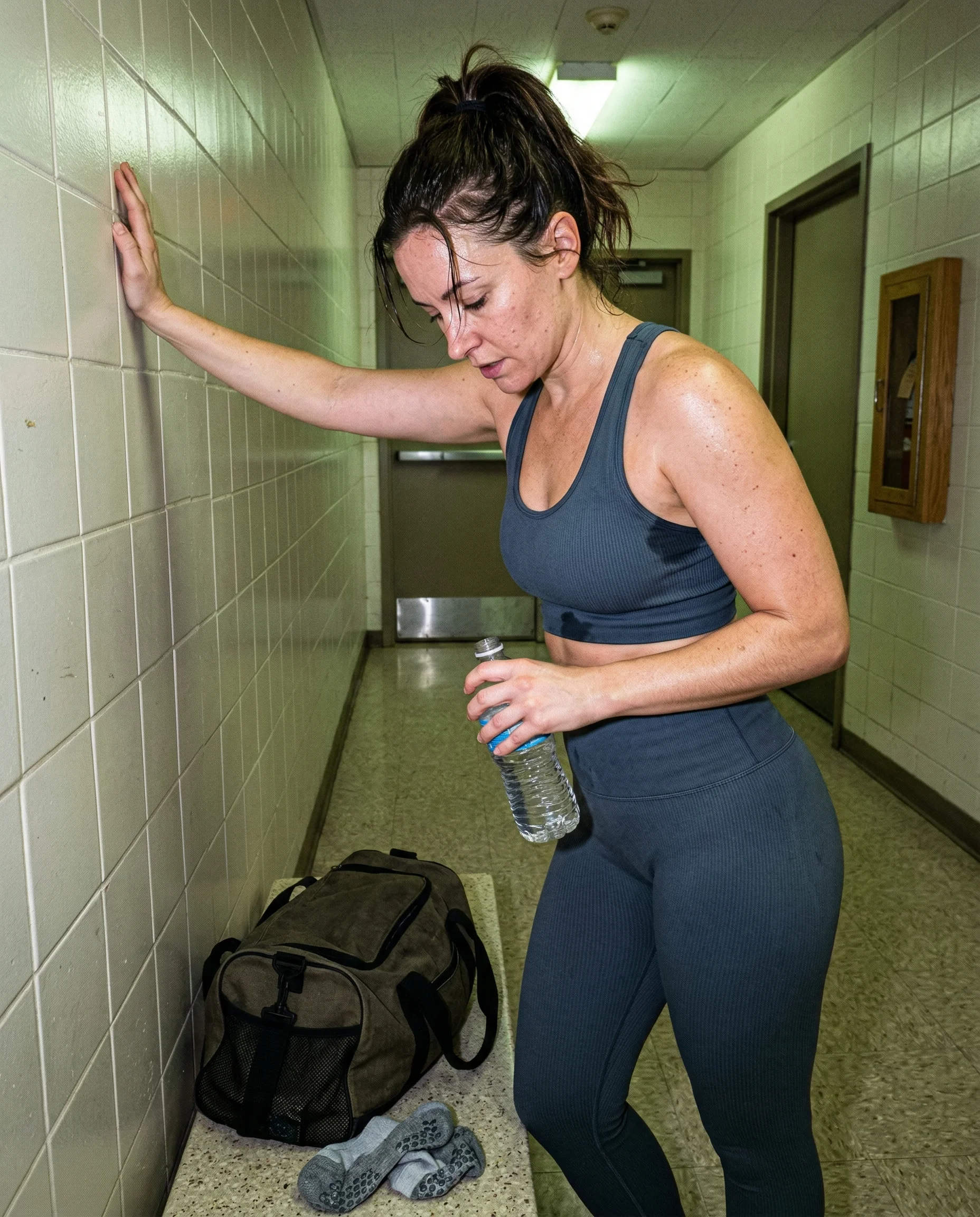
Pilates is the post-class collapse where the sweat is real, the reformer springs are heavy, and the studio lighting is unforgiving.
Get the next prompt drop
We publish new prompts weekly. Get them in your inbox instead of checking back.
You're in. New drops land in your inbox.
flash, floor, and fabric
A blunt, direct flash is what stops this from looking like a staged fitness ad. The light catches the texture of the carpet, the sheen on her skin, and the ribbing of her tank top without trying to be flattering. When the lighting gets too soft or ‘cinematic,’ these kinds of grounded, after-the-fact scenes lose their believability fast.
one sock and floor clutter
The story isn’t just in the pose; it’s in the mess on the floor. A single dropped sock, a bunched-up sweatshirt, and a sweating water bottle make the moment feel found, not posed. If everything is too tidy—both socks on, no clutter—the image starts to feel like a stock photo of ‘exhaustion’ instead of the real thing.
low camera angle and skin texture
The low, chest-height camera angle feels personal, like a phone picture taken without much thought. It avoids the polished, heroic angles of a professional shoot. This perspective, combined with a flash that doesn’t hide pores or a little sweat, keeps the image honest. Clean, perfect skin is usually the first sign that an AI image is faking it.
Frequently asked questions
Why does the flash look so harsh?
It's meant to mimic an on-camera phone flash in a dim room. Softer, more professional lighting often makes these scenes look fake and staged. The 'ugly' flash creates sharp shadows and highlights textures, which adds to the realism.
How do I get more believable 'aftermath' scenes?
Focus on the small details of exhaustion. A dropped piece of clothing, a half-empty water bottle, hair stuck to the skin—these things tell a better story than just a tired expression. The clutter is what makes it feel real.
Does the camera angle matter here?
Yes, a lot. A low, casual angle feels more like a candid snapshot. If you shoot from too high or too far away, it can start to look like surveillance or a generic gym photo. The closer, more personal angle makes it feel like a moment that was actually lived in.
What makes the clothing look realistic?
It's about how the clothes interact with the body and the situation. Visible pressure from a waistband, a bunched-up sweatshirt, and a sock that's been kicked off all contribute. Perfect, wrinkle-free athletic wear usually kills the believability of a post-workout shot.