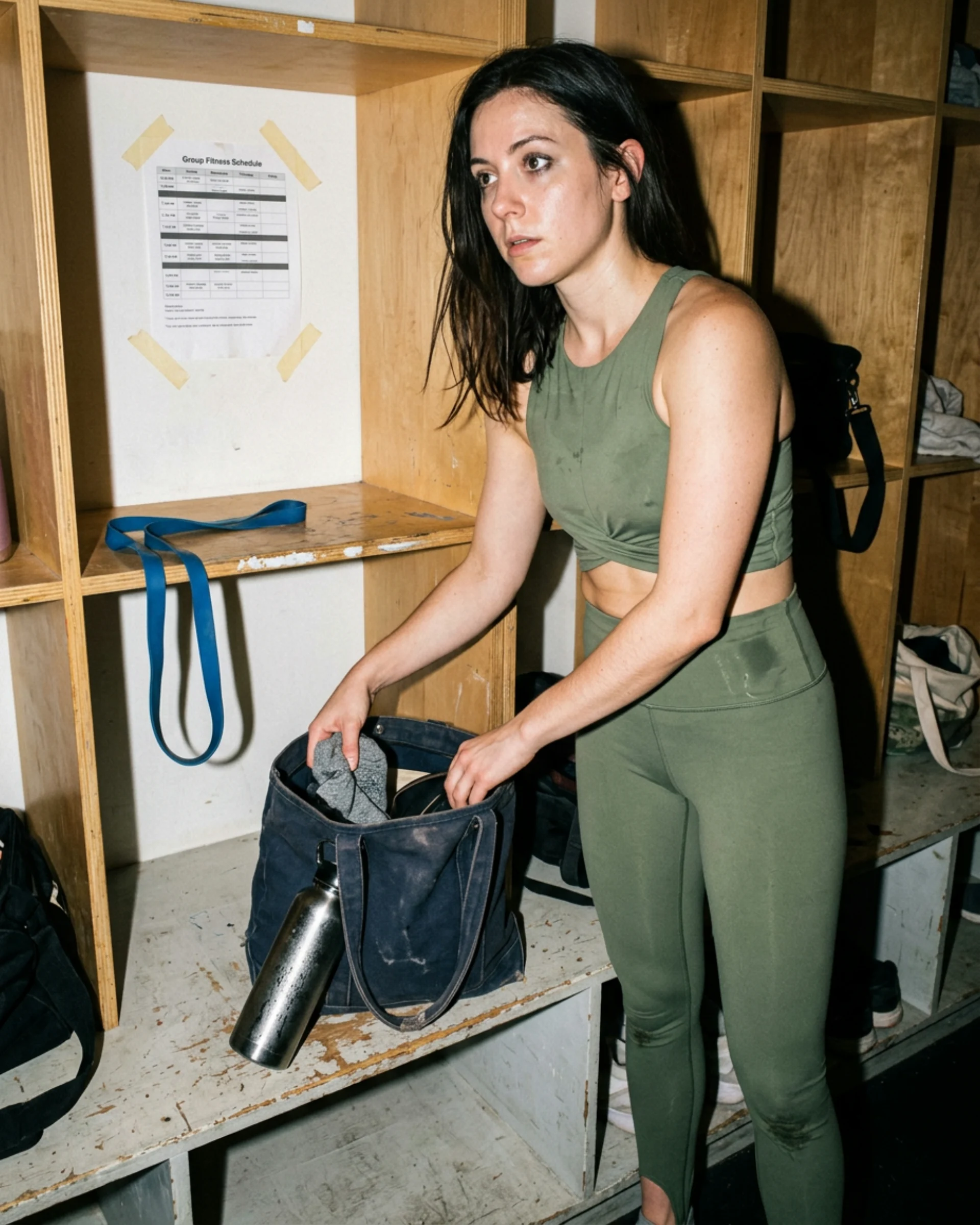
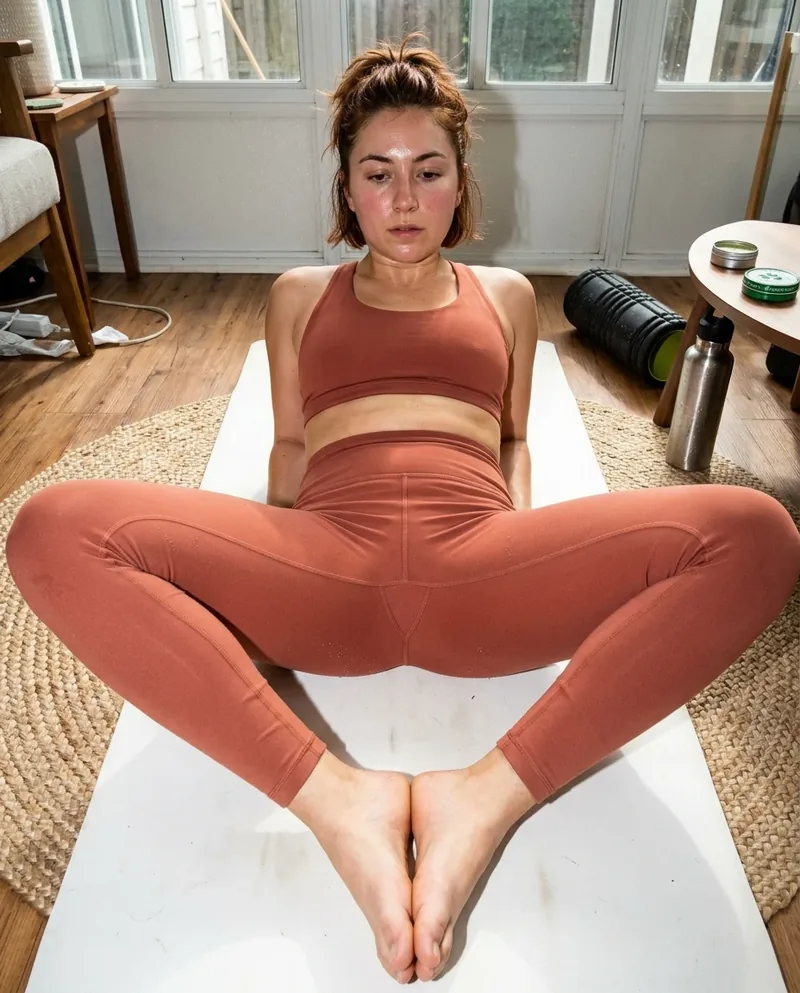
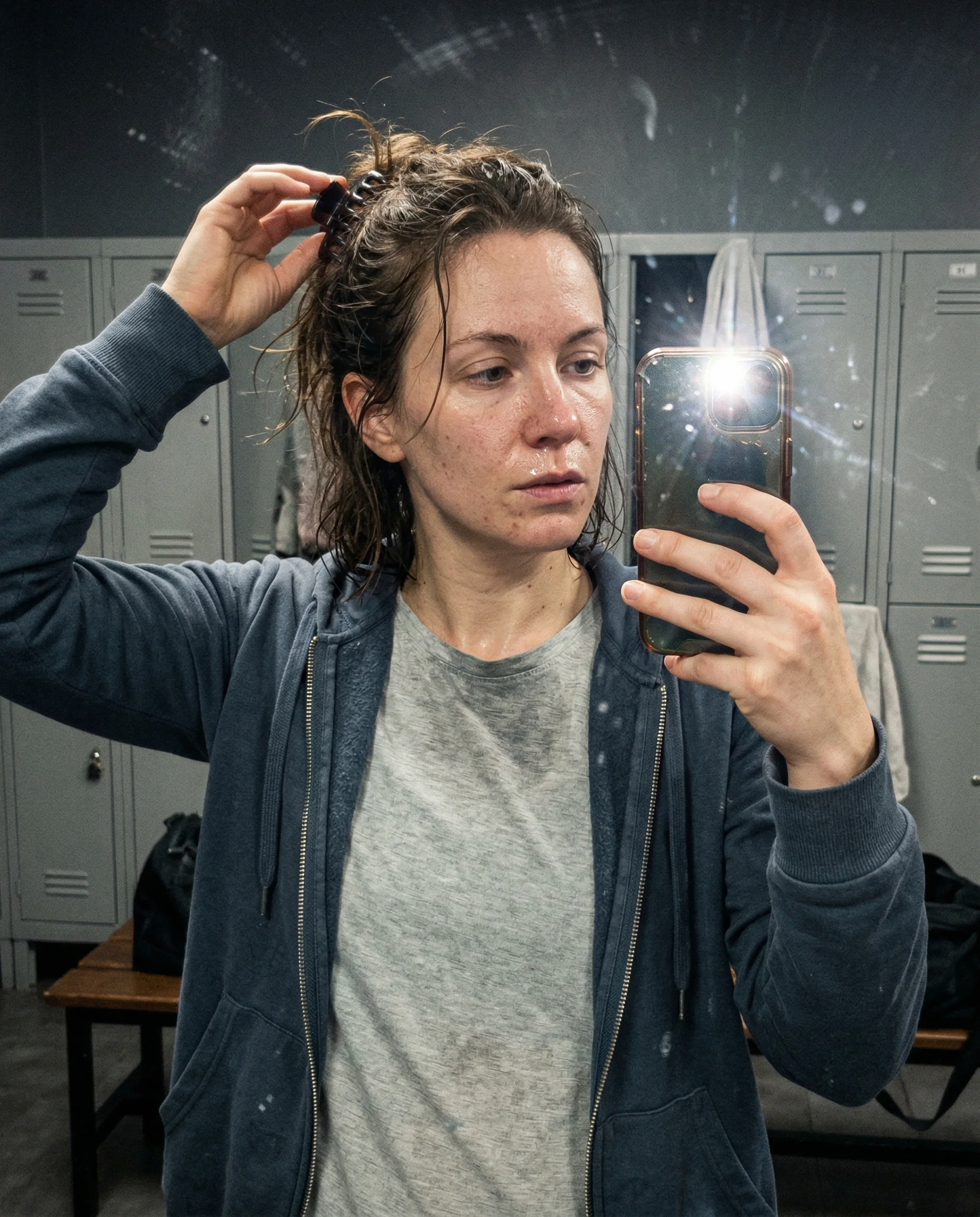
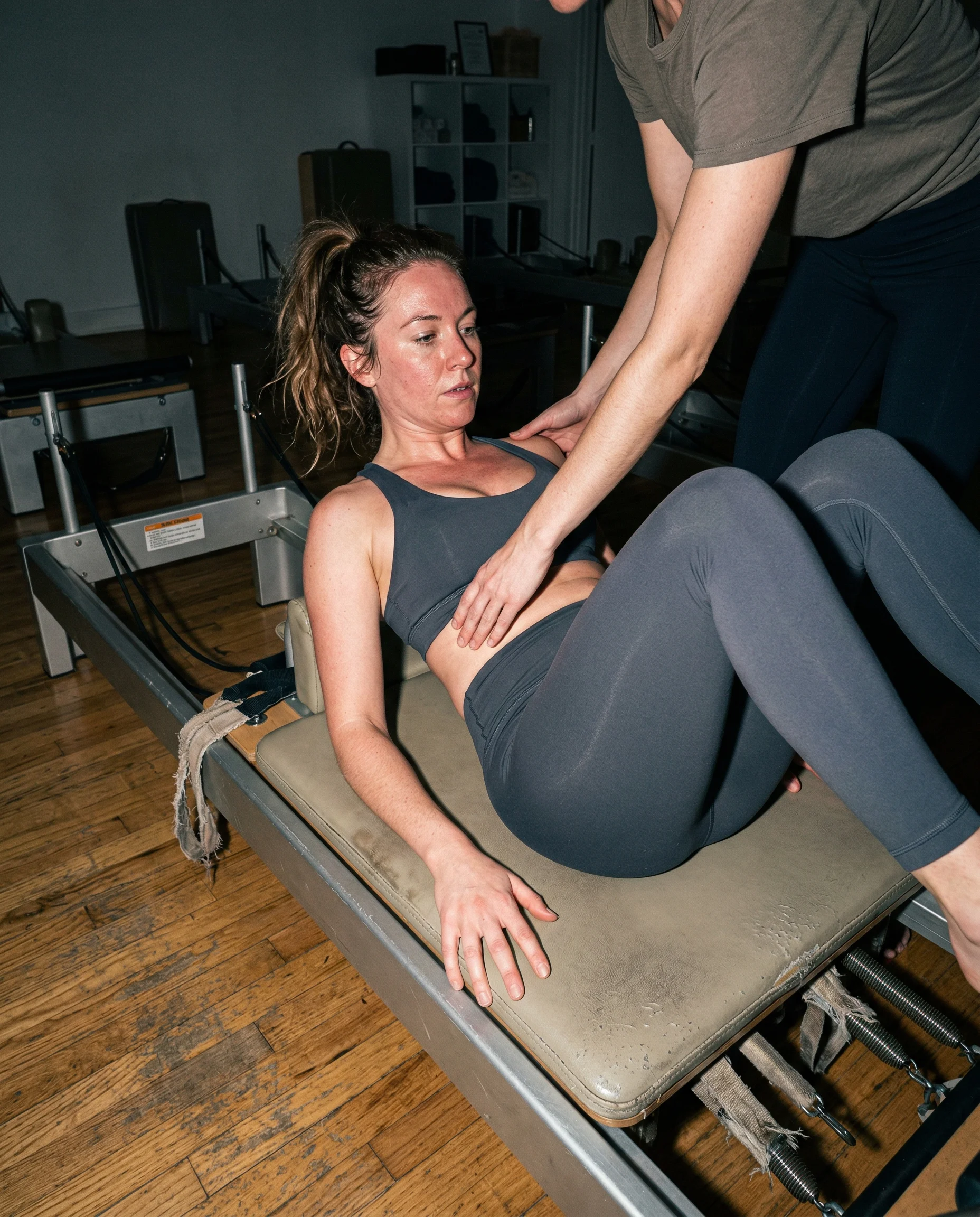
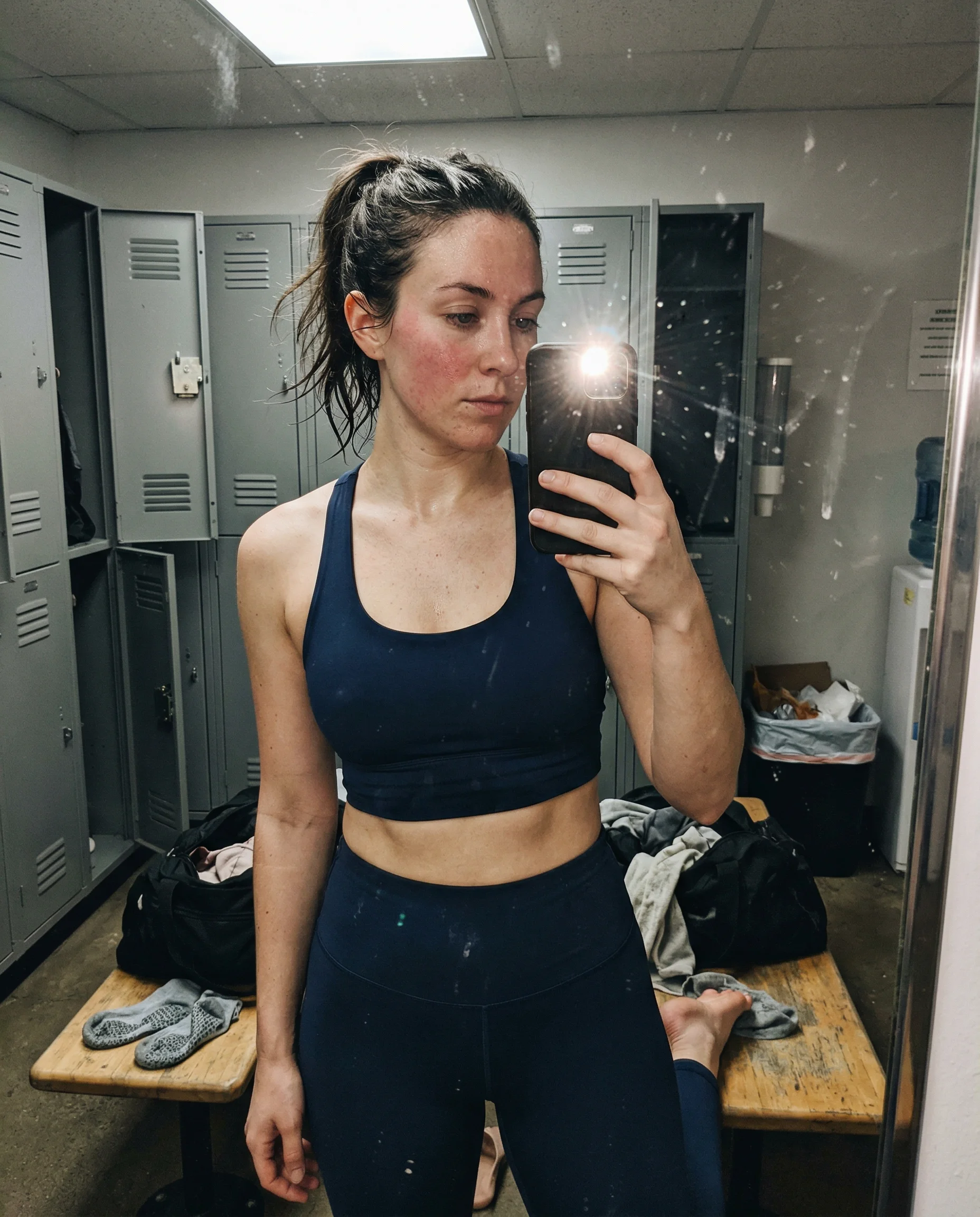
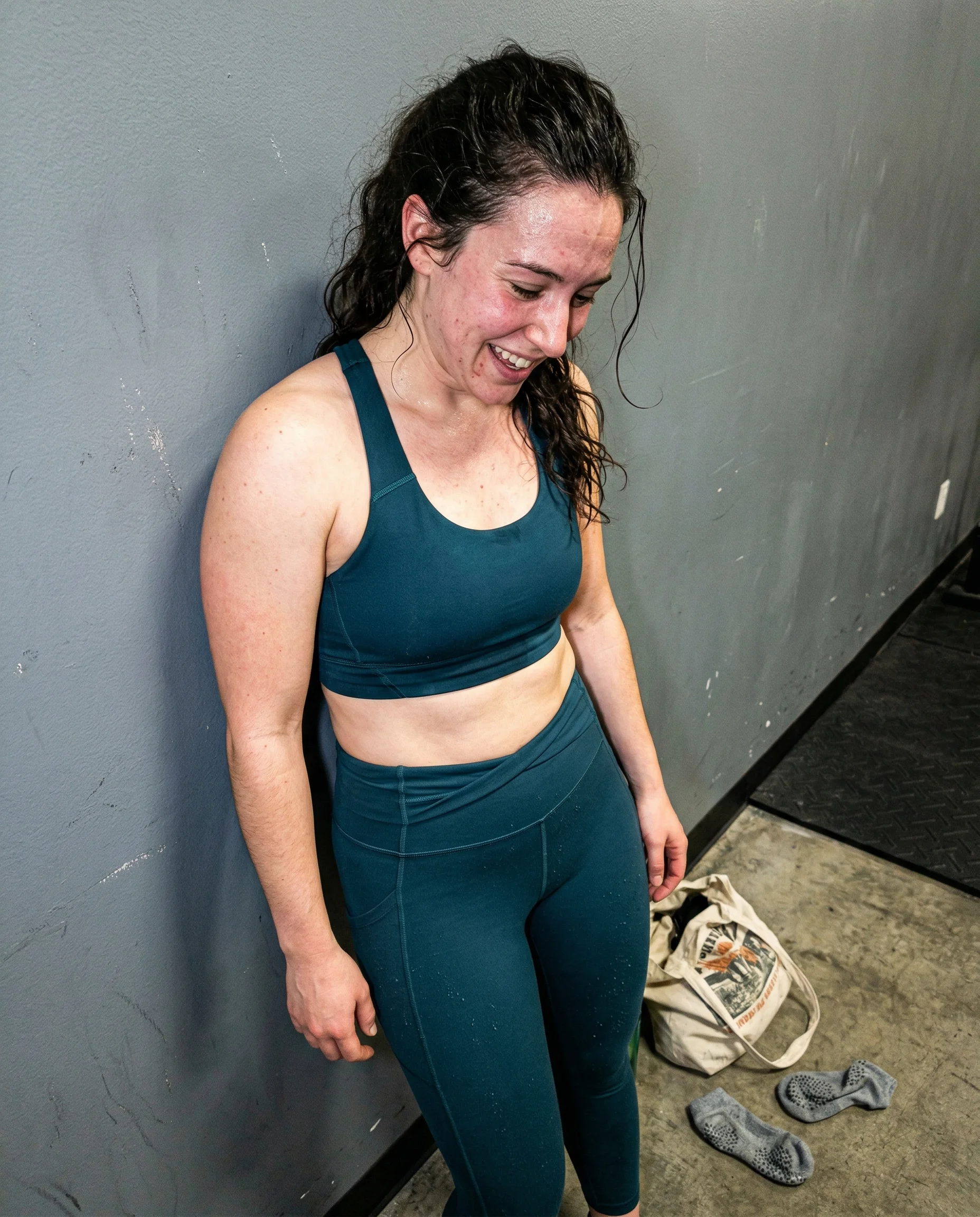
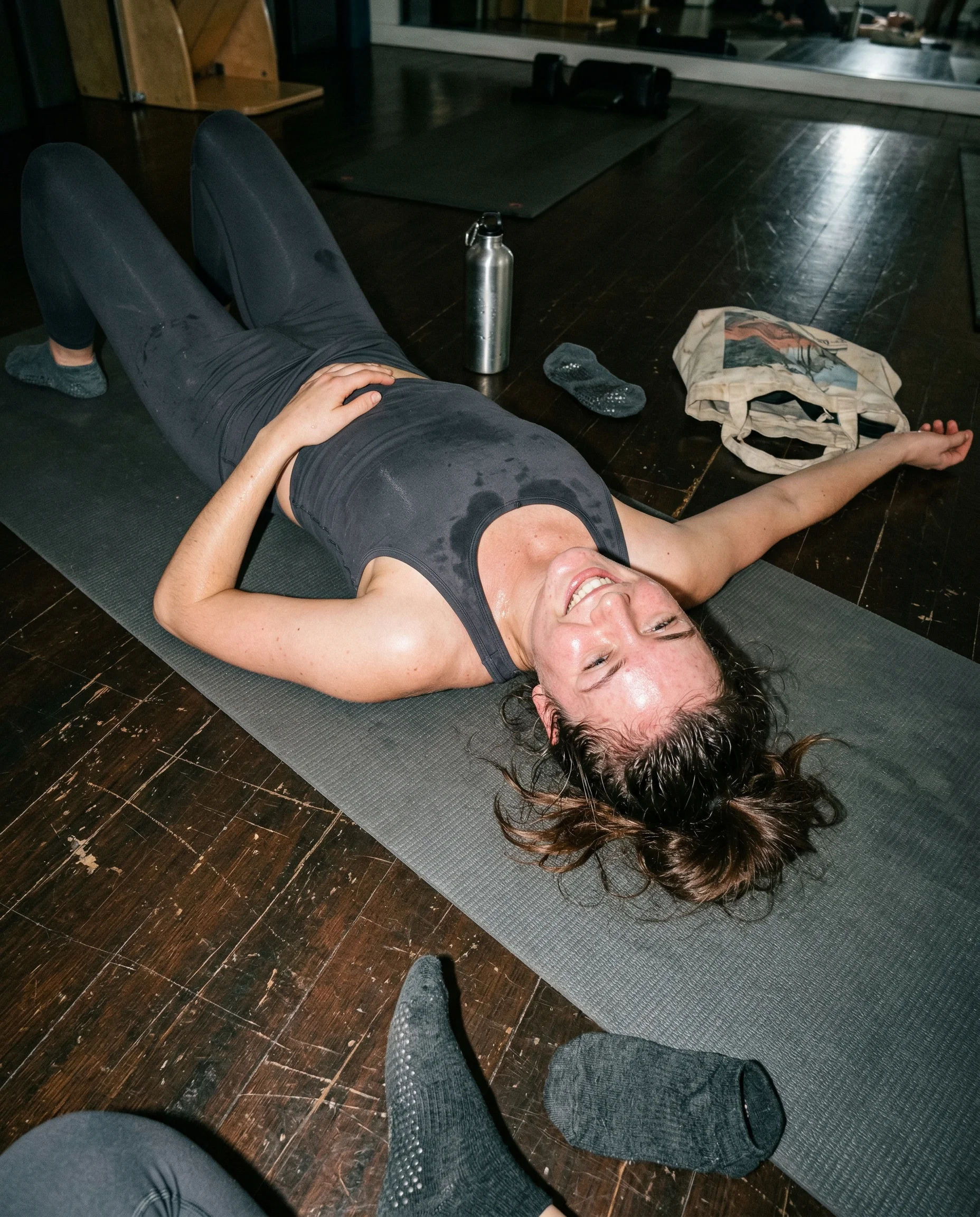
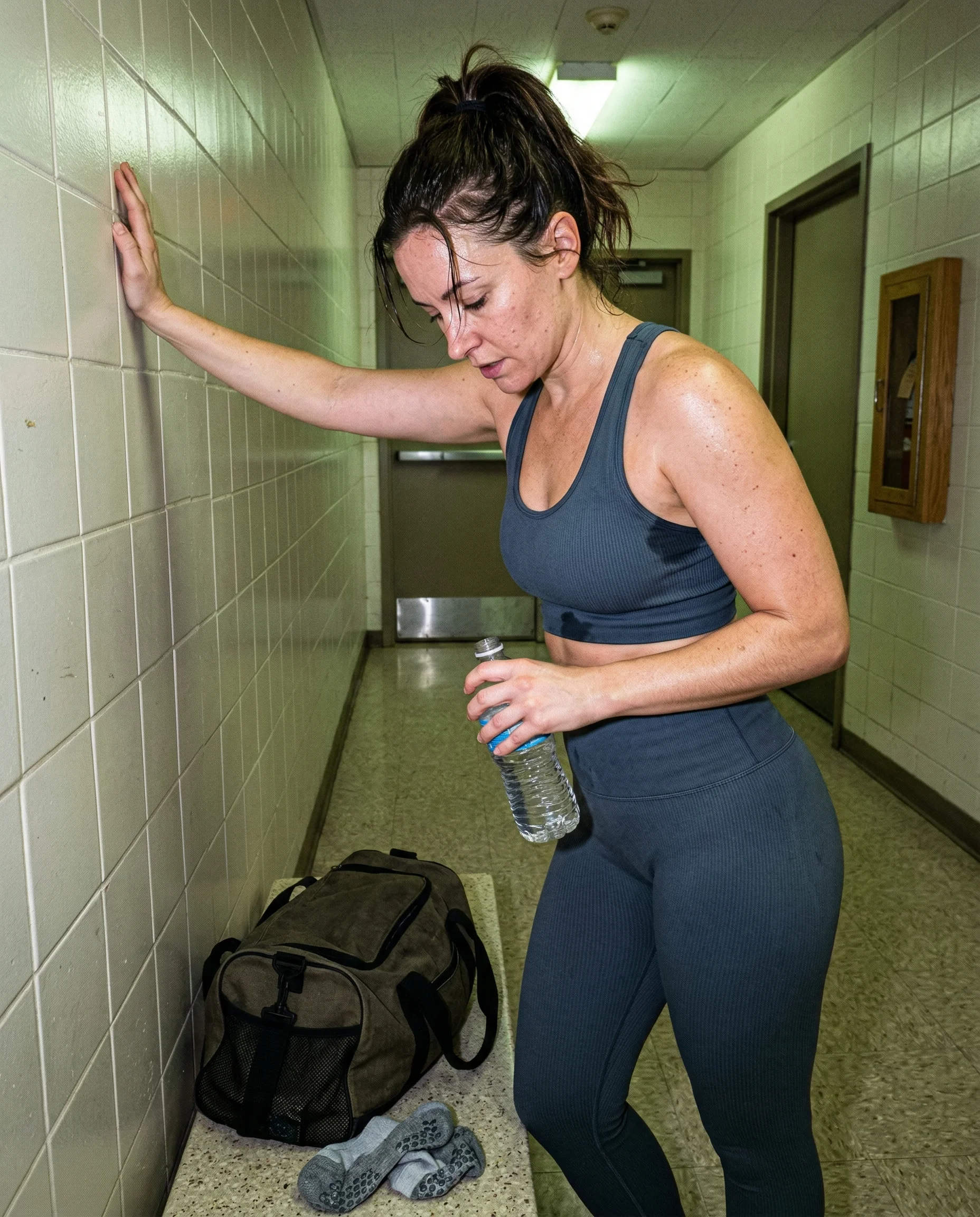
Pilates is the post-class collapse where the sweat is real, the reformer springs are heavy, and the studio lighting is unforgiving.
Get the next prompt drop
We publish new prompts weekly. Get them in your inbox instead of checking back.
You're in. New drops land in your inbox.
floor clutter and scuffed baseboards
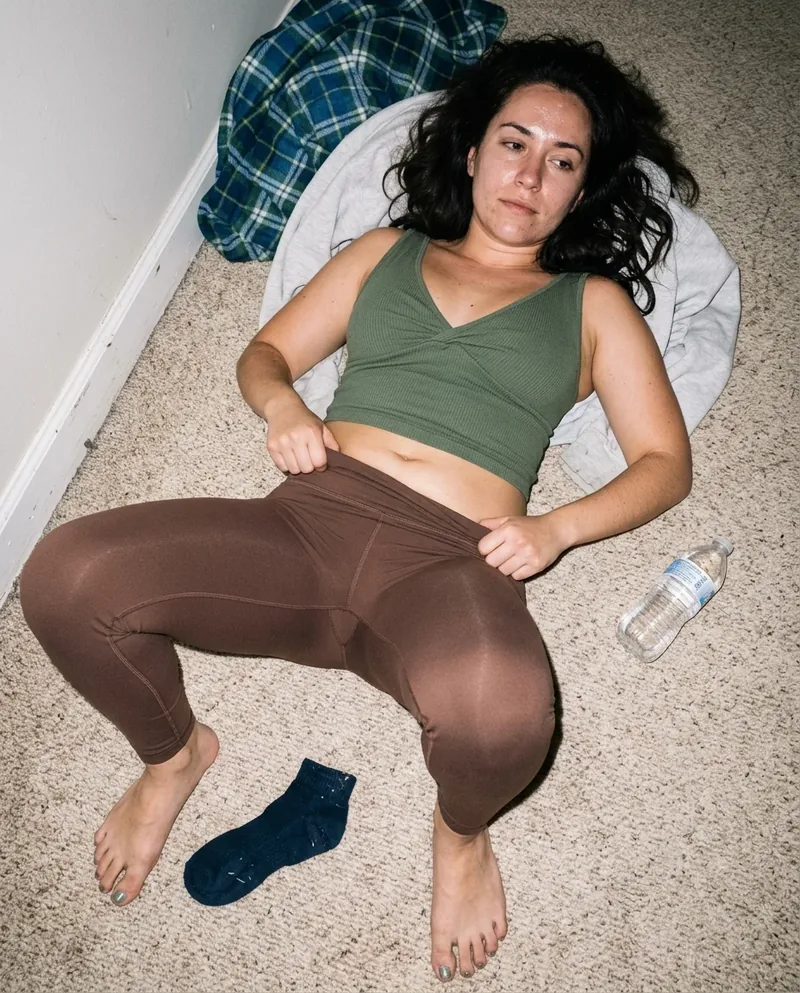
A sweating water bottle, a discarded hoodie, and the scuffed edge of a baseboard ground the scene in an ordinary apartment corner. When the carpet looks tired and the background remains unstyled, the artificiality of the frame dissolves. These small, messy markers of a lived-in room provide the necessary context to make the moment feel like a genuine snapshot rather than a staged production.
harsh flash on skin texture
Direct flash acts as a blunt instrument, catching the T-zone sheen and the natural texture of skin without attempting to flatter the subject. By letting the light hit the face and the floor at the same intensity, the image avoids the polished, soft-focus look that often signals a fake result. The light remains a little rude, highlighting pores and the fatigue of the moment to keep the visual tone grounded.
slouched sock and fabric tension
Details like a sage sock slouched at the ankle or the slight pressure of a waistband against the skin carry the weight of the narrative. These imperfect markers of a real person in a real room prevent the image from drifting into stock-photo territory. When the fabric looks worn and the clothing isn’t perfectly arranged, the whole frame feels like a genuine, unedited capture taken by a friend.
Frequently asked questions
How do I keep the flash from looking too professional?
Avoid any settings that imply a softbox or diffused light. The look depends on the light being direct and slightly unflattering, which mimics the harsh, singular burst of a phone camera in a dark room.
Why does the background matter so much?
A clean, studio-like background immediately breaks the illusion of a candid moment. Scuffed baseboards, stray lint, and everyday clutter provide the necessary context to make the scene feel lived-in.
What makes the skin texture look real?
The combination of direct flash and a wide-angle lens tends to pick up natural skin details like pores and sheen. Keeping these visible rather than smoothing them out is essential for a believable result.
How should the clothing look?
Focus on signs of wear and movement. A twisted tank top, a slouched sock, or visible waistband pressure suggests the person has actually been moving, rather than just posing for the camera.