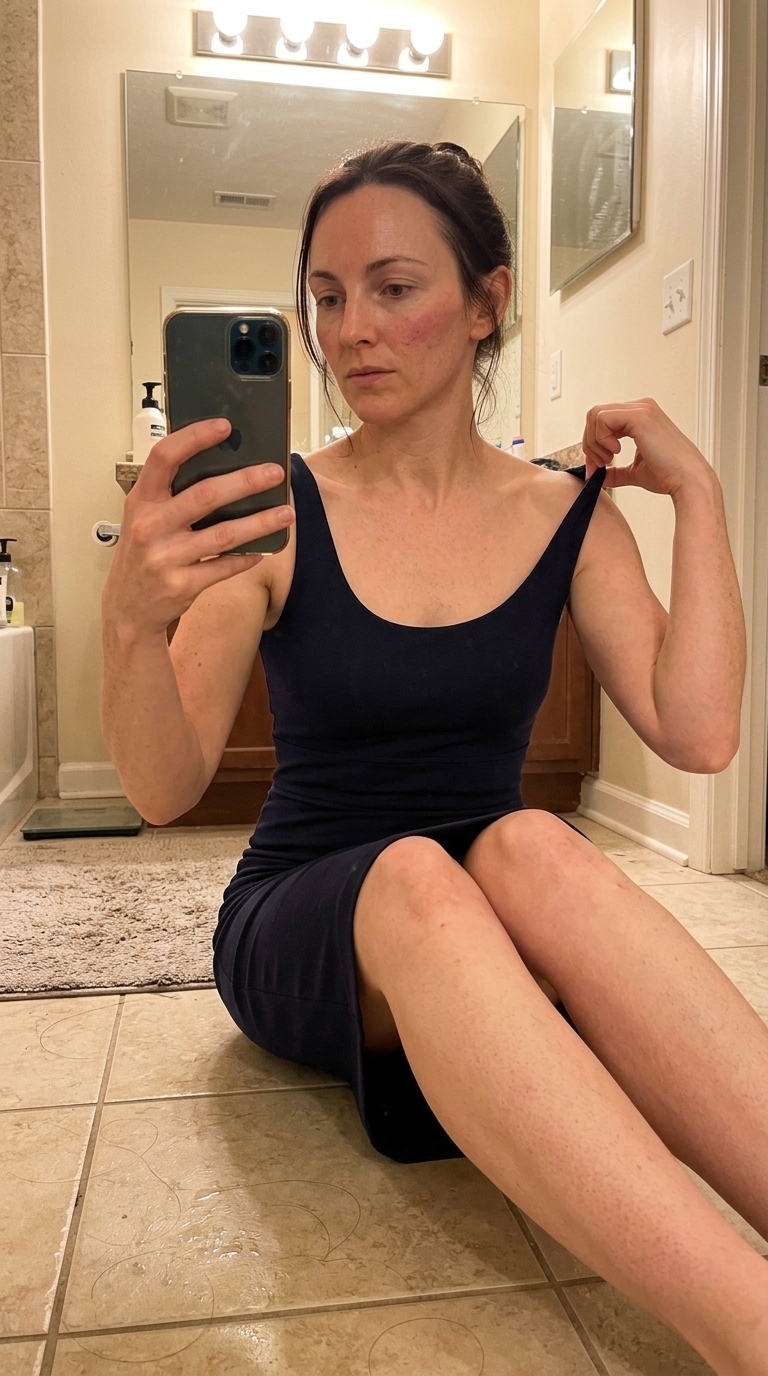
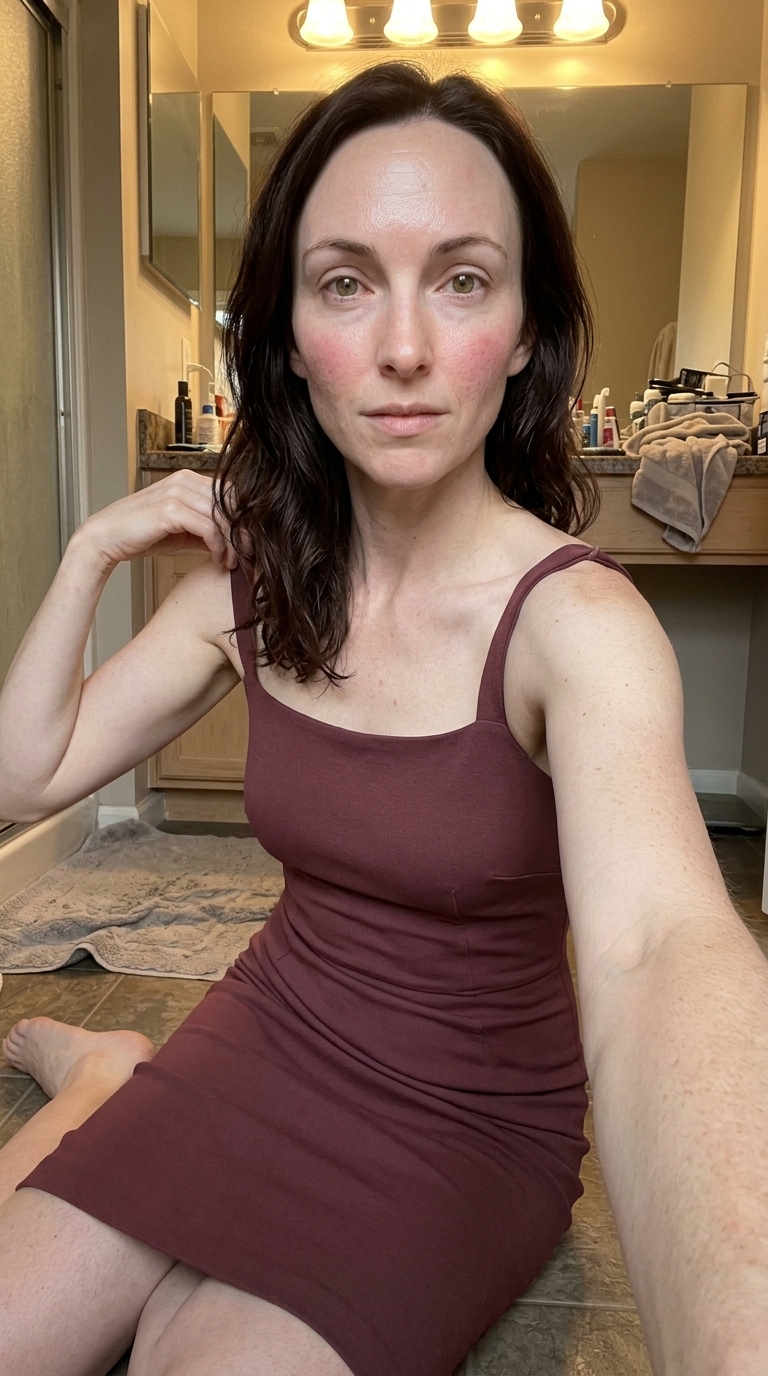
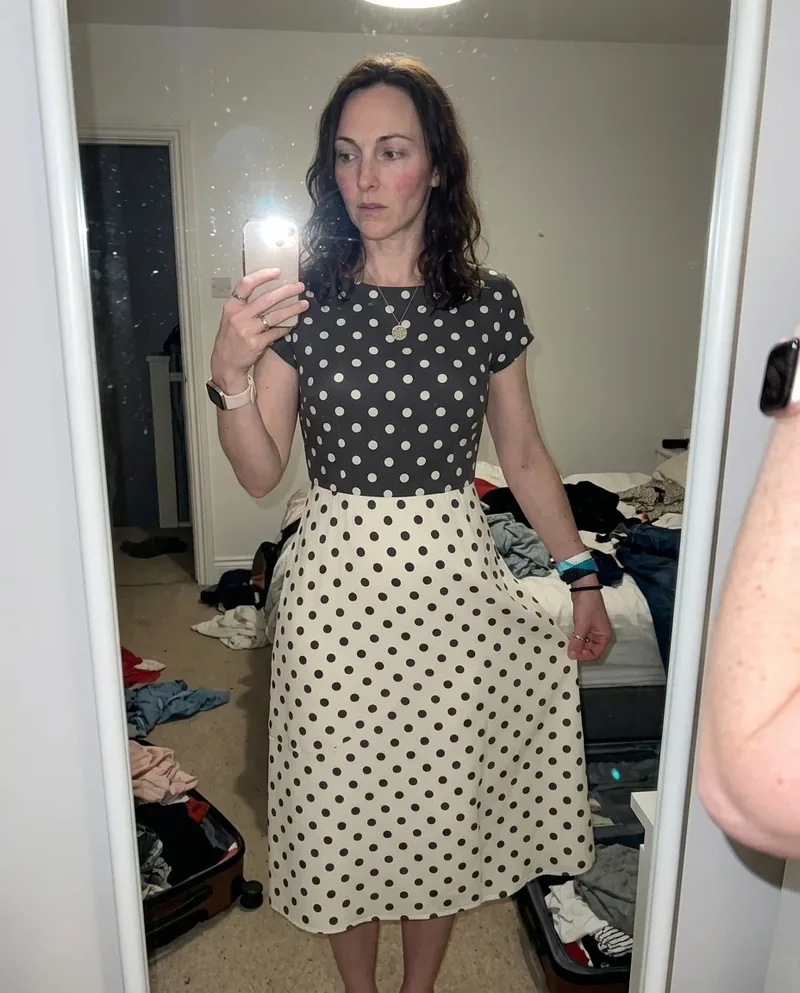
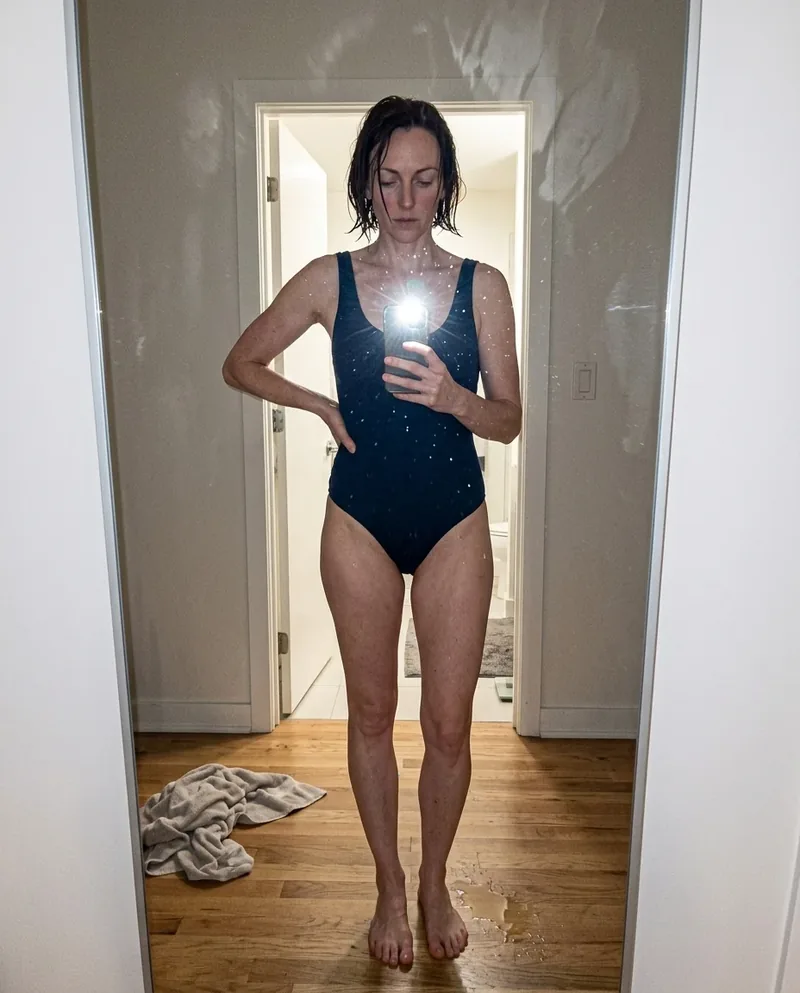
Harsh Flash is direct phone flash, ordinary rooms, and private aftermath moments where the light is rude enough to keep the image honest.
Get the next prompt drop
We publish new prompts weekly. Get them in your inbox instead of checking back.
You're in. New drops land in your inbox.
flash on skin and brass hardware
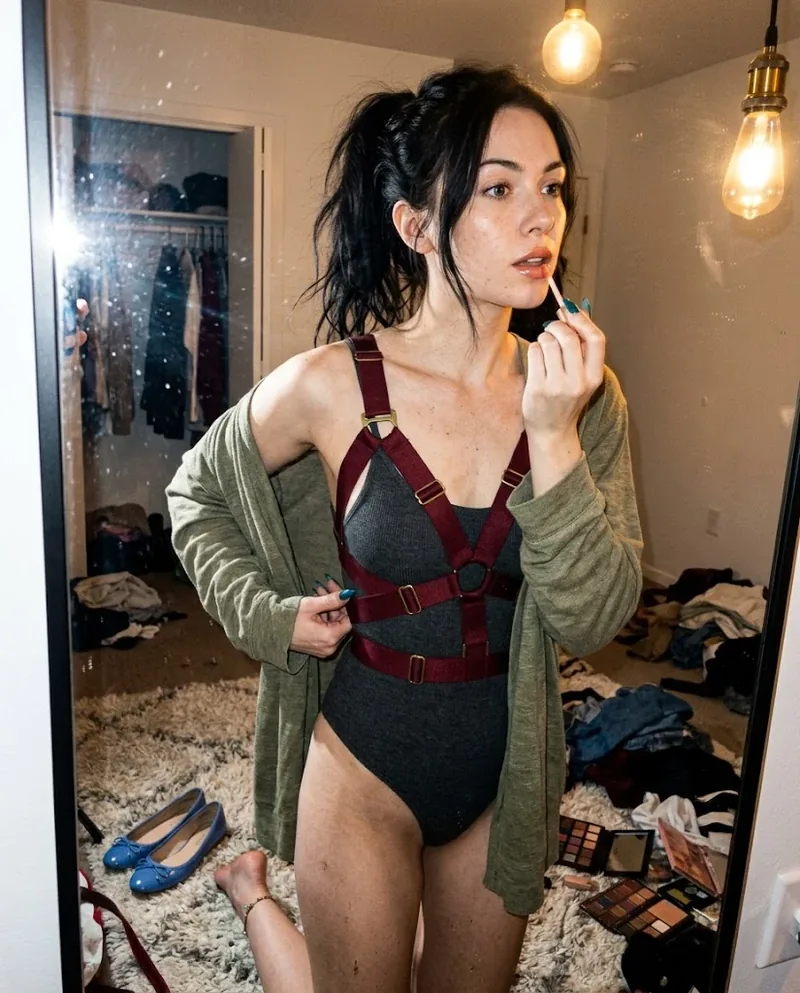
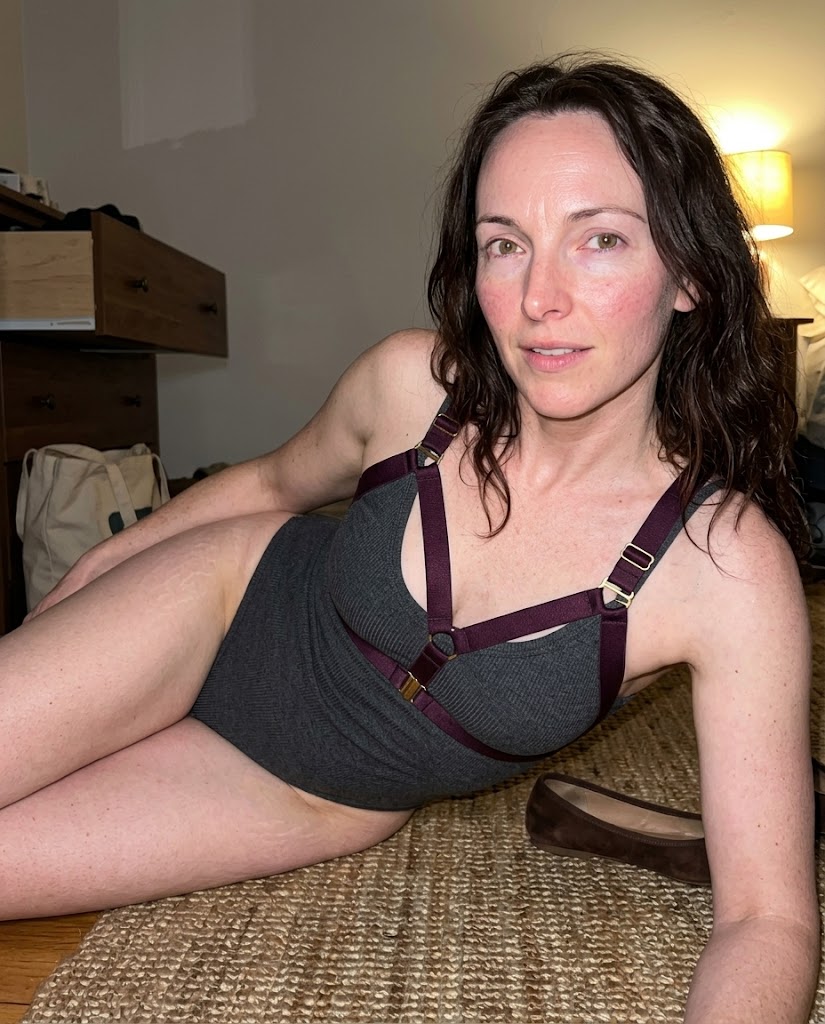
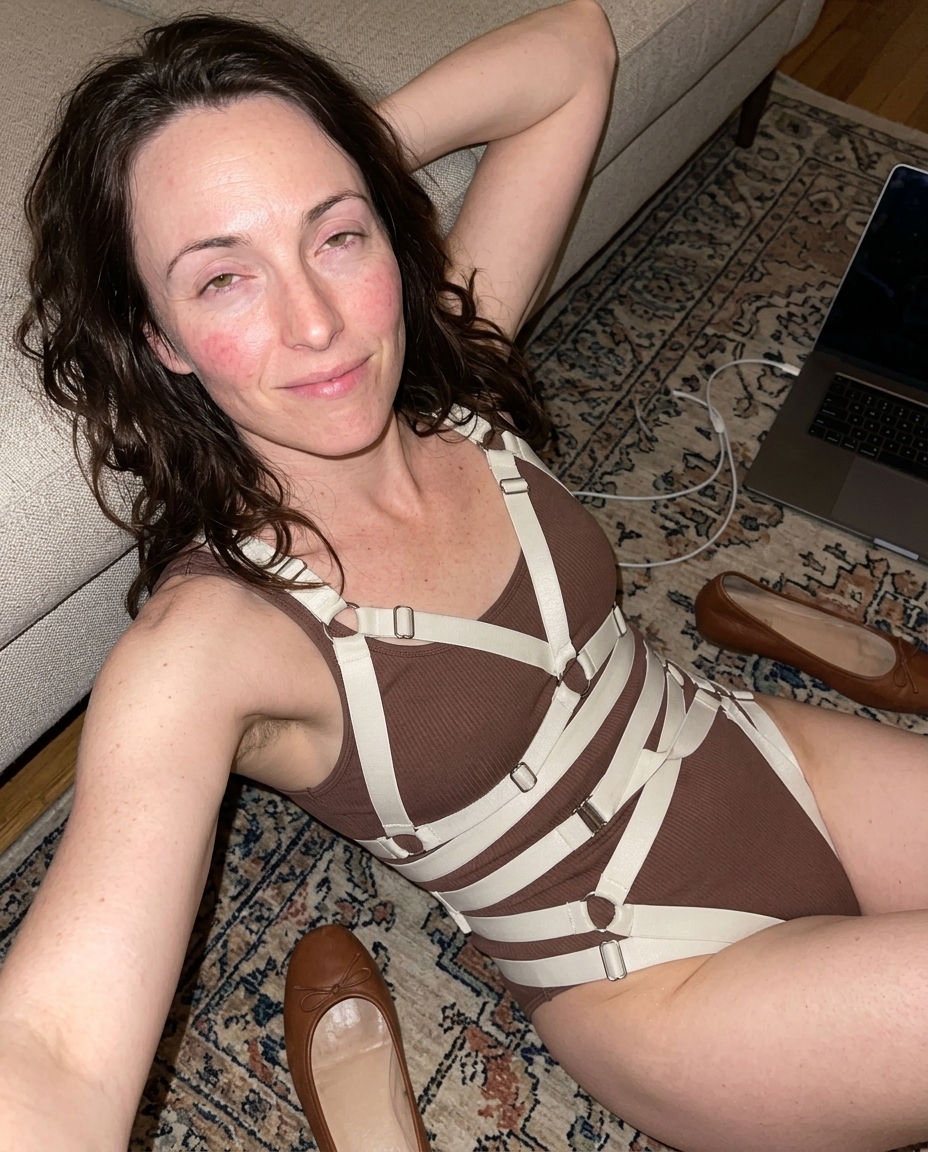
The harsh, direct flash creates bright, blown-out highlights that catch the brass hardware on the straps and the natural sheen on the skin. This lighting choice mimics an accidental phone snapshot, preventing the scene from feeling like a polished studio production. When the light hits the textures of the ribbed fabric and the skin without trying to flatter the subject, the result feels caught in the middle of a private moment. The flash stays a little rude, hitting the surface details directly rather than softening them into a generic glow.
floor clutter and rug texture
Realism thrives in the mess that isn’t being managed. The rumpled duvet, the phone face-down on the rug, and the ballet flats kicked off to the side provide the context of a long night. When the room looks too tidy, the image starts to feel like a set-up. By keeping the rug lint and the slightly twisted fabric of the bodysuit, the frame feels inhabited. It is the kind of clutter that happens when someone is tired and just wants to drop their gear and sit down.
camera angle and crop
The tight, side-led crop from shoulder to shin makes the frame feel invasive in a way that feels honest. By cutting off parts of the scene—like the knee or the edge of the rug—the composition avoids the trap of trying to show everything at once. This perspective keeps the proportions grounded, avoiding the fisheye distortion that ruins phone-camera shots. It feels like a quick, unthinking capture, the kind of thing that happens when there is no intention to perform for the lens.
Frequently asked questions
Why does the flash look so harsh?
The harshness is intentional to mimic a direct, on-camera phone flash. It creates high-contrast highlights on the skin and hardware, which helps the image feel like a raw, private snapshot rather than a polished studio production.
How do I keep the image from looking too staged?
Focus on the small, messy details. Rumpled bedding, items left on the floor, and natural fabric tension are what make a scene feel lived-in. If the room looks too perfect, the image will immediately start to feel fake.
What makes the subject look like an adult rather than a teen?
It comes down to the facial geometry and the way the body is posed. A settled, mature jawline and a relaxed, preoccupied expression help avoid the soft, doll-like features often found in AI-generated faces. The posture should feel like someone who is tired or comfortable, not someone posing for a camera.
Why is the crop so tight?
A tight, slightly awkward crop helps the image feel accidental. By cutting off parts of the frame, you remove the sense of a curated editorial shot and replace it with the feeling of a real, unthinking moment captured on a phone.