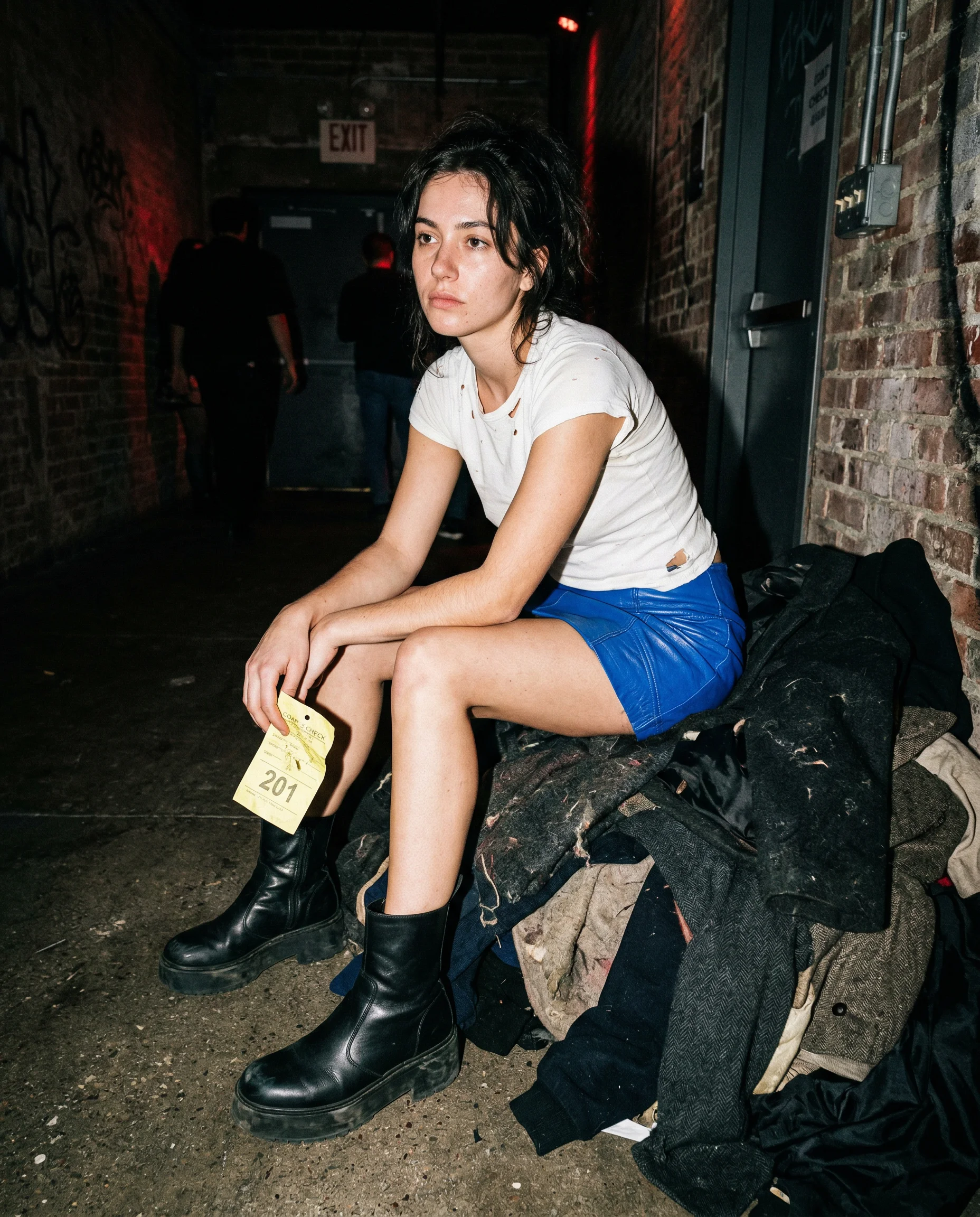
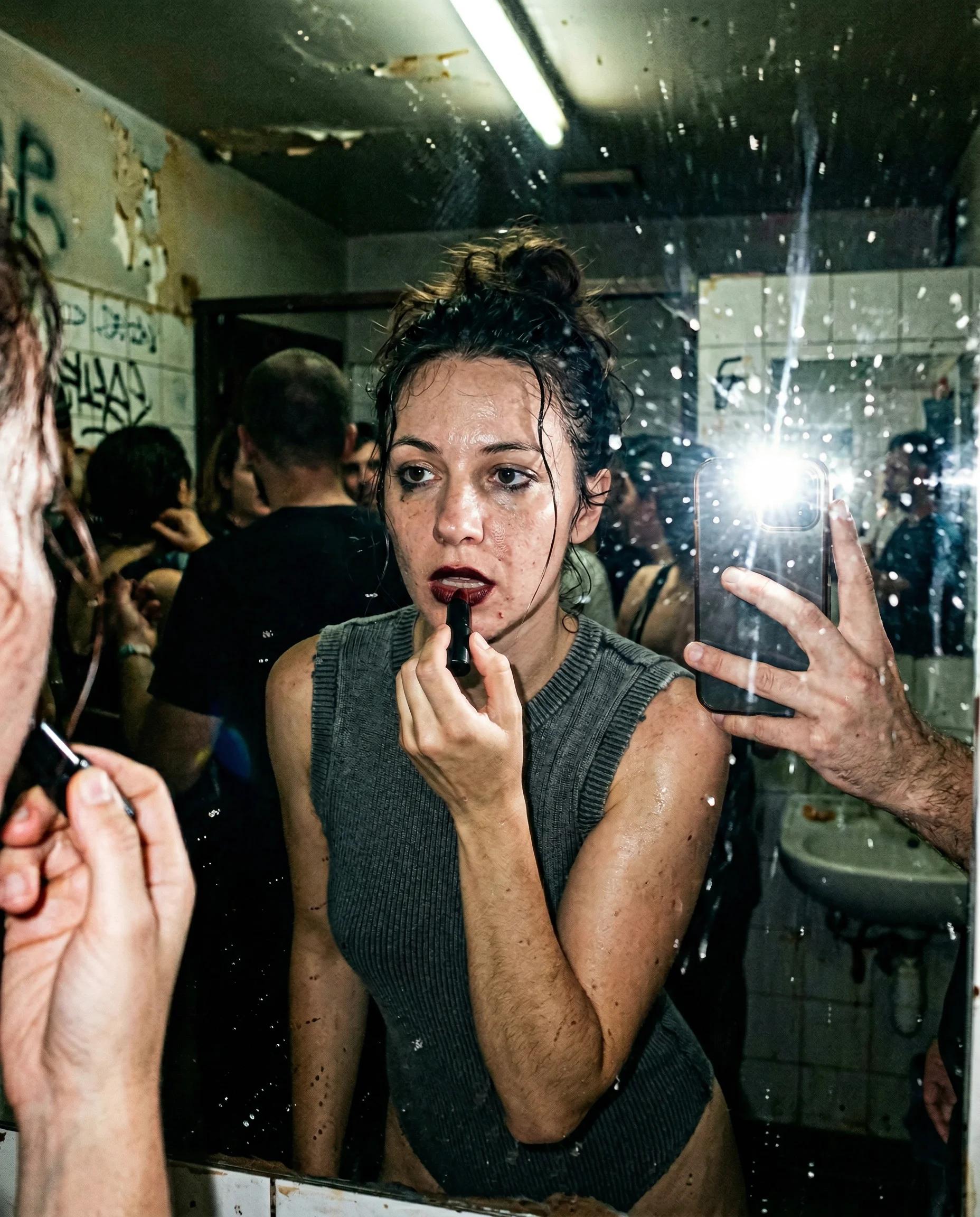
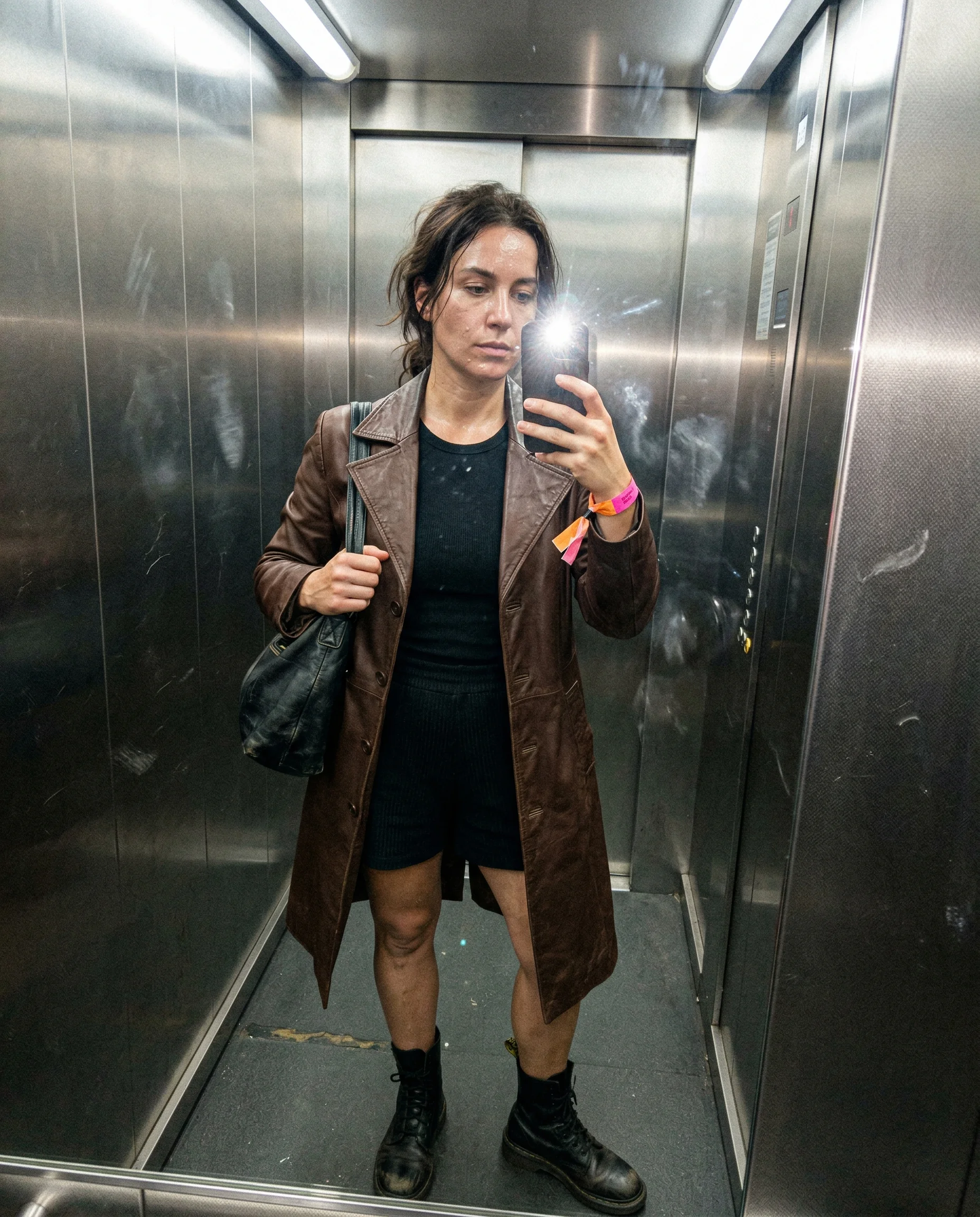
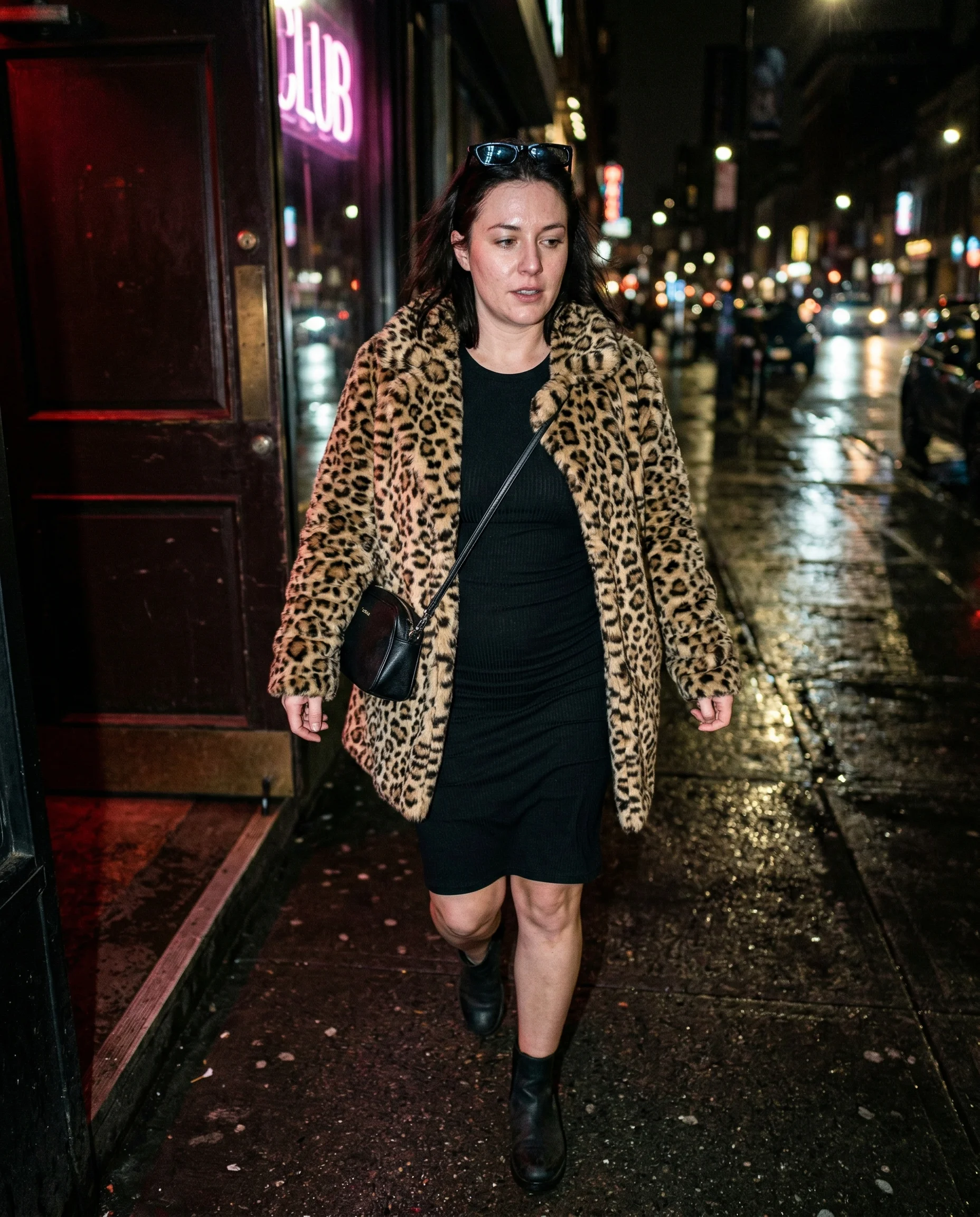
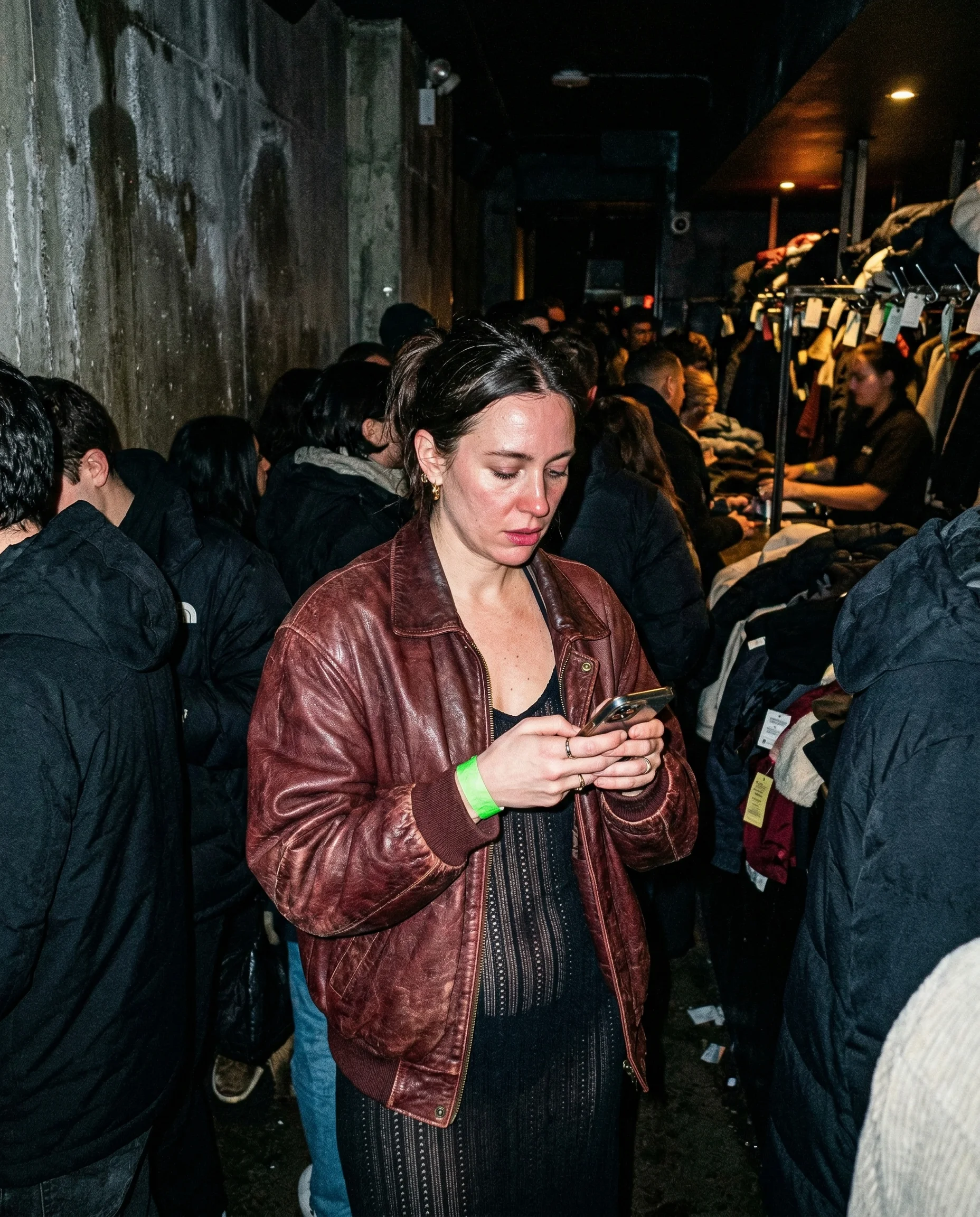
Nightlife captured with a jagged, unforgiving flash. Forget the polished party aesthetic; this is the reality of 3 AM bathroom mirrors and sticky bar tops.
Get the next prompt drop
We publish new prompts weekly. Get them in your inbox instead of checking back.
You're in. New drops land in your inbox.
hitting the floor for the angle
The low angle is what sells the claustrophobia here. By dropping the camera to floor level, you force the lens to look up at the stall walls and the cramped metal partitions. It makes the space feel smaller and more pressurized than a standard eye-level shot ever could. That 24mm wide-lens distortion is doing heavy lifting too, stretching the legs and the foreground while making the toilet and the graffiti-covered tiles feel like they’re closing in. If you shoot this from standing height, you lose that sense of being trapped in a tiny, ugly room at 3 AM.
flash bounce off the grime
I need the flash to be rude. If the light is too soft or well-diffused, the whole scene turns into a fashion catalogue and loses its teeth. The direct, harsh flash here bounces off the cracked tile and hits the metal door, creating those blown-out highlights that make the dirt look real. When the light hits the scuffed floor and the stray bits of trash, it stops feeling like a set. Don’t worry about the shadows being too deep; the pitch-black corners of the stall are what keep the focus on the subject. If you try to brighten the background, you’re just inviting the AI to smooth out the mess, and once the mess is gone, the image is dead.
skin texture and the messy finish
This is where most people lose it. If the skin looks like airbrushed plastic, the whole thing feels like a fake advertisement. what matters is the T-zone sheen, the visible pores, and the slight redness that comes from a long night out. The hair shouldn’t be perfect; it needs to look like it’s been through a few hours of dancing. When the flash catches the peach fuzz on the cheek or the slight unevenness of the skin tone, it grounds the image in reality. The smudged mirror glass and the discarded paper on the floor are the final details that make this feel like a photo caught on a phone, not a staged shoot.
Frequently asked questions
How do I stop the AI from making the skin look too smooth?
You have to explicitly ask for skin texture. Use words like 'visible pores,' 'T-zone sheen,' and 'ordinary uneven skin tone.' If you don't call out the imperfections, the model will default to a generic, airbrushed look.
Why does the wide-lens distortion matter?
It adds that specific 'phone camera' feel. A 24mm lens creates a slight barrel distortion that makes the cramped space feel more aggressive and immediate, which helps sell the 'caught in the moment' energy.
Should I include trash or clutter in the prompt?
Yes. Clutter like discarded paper, a stray cup, or scuff marks on the floor are what make the scene feel lived-in. Without those small, ugly details, the stall looks too clean and staged.
What's the best way to handle the flash in these low-light shots?
Keep it harsh and direct. Words like 'direct flash,' 'blown-out highlights,' and 'harsh lighting' tell the model to avoid soft, professional studio setups. You want the flash to look like a phone light, not a softbox.