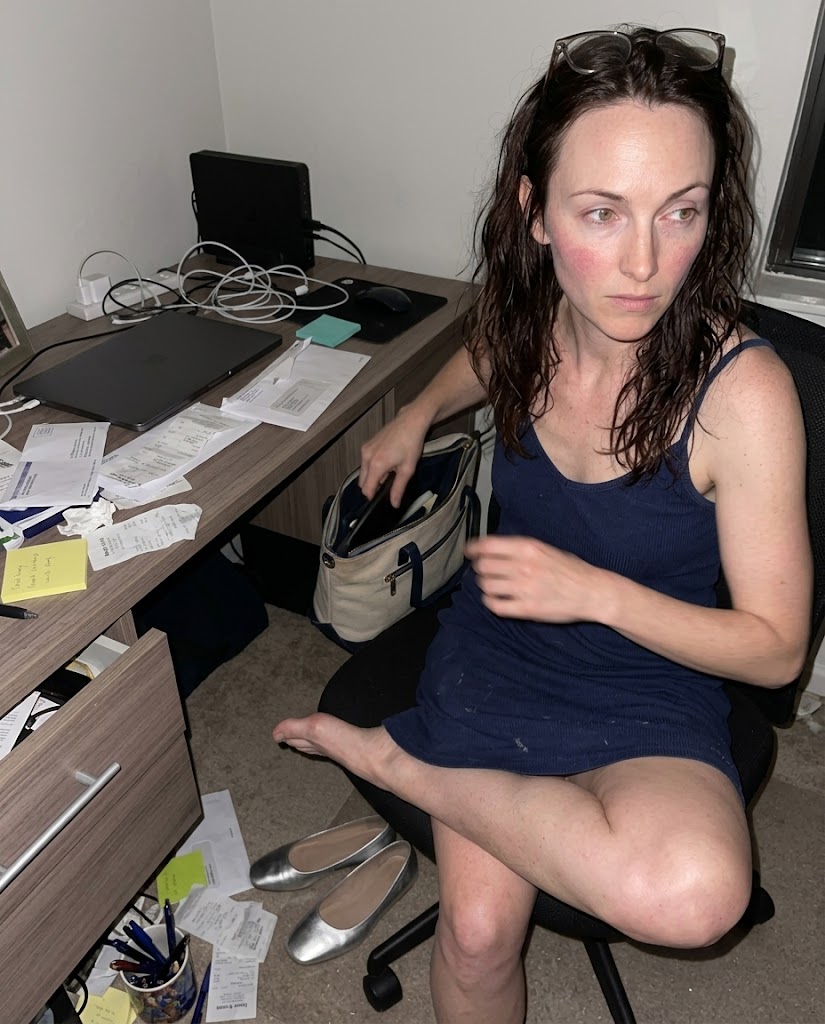
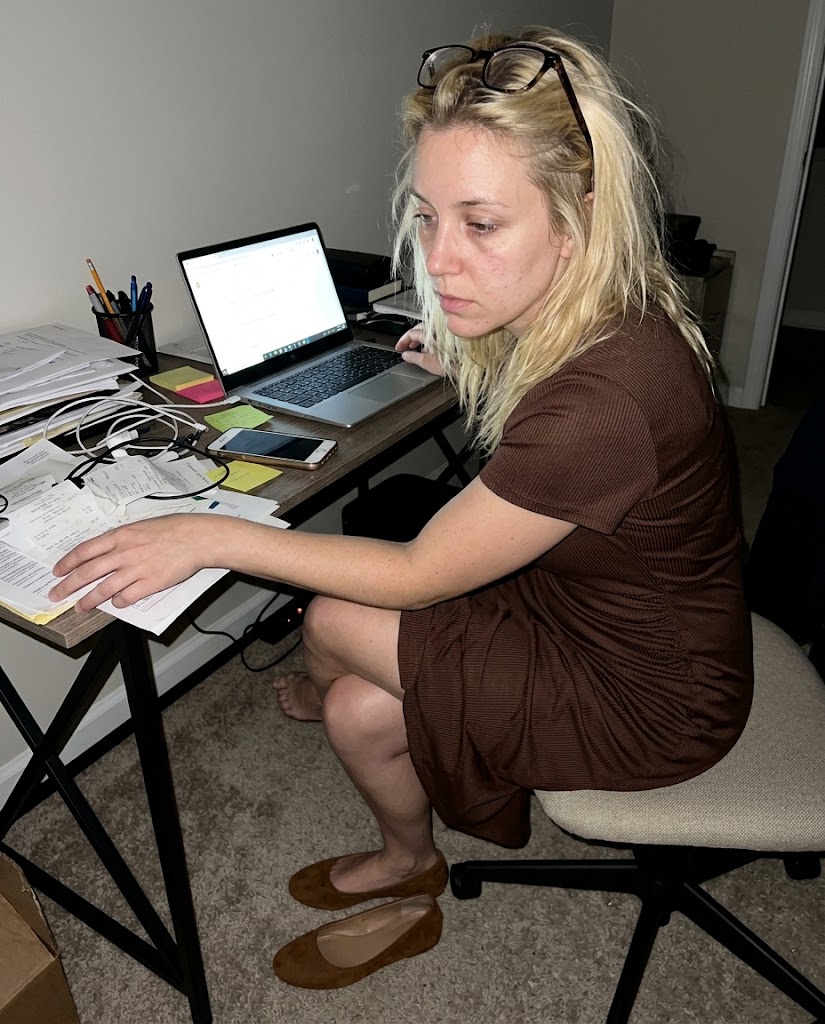
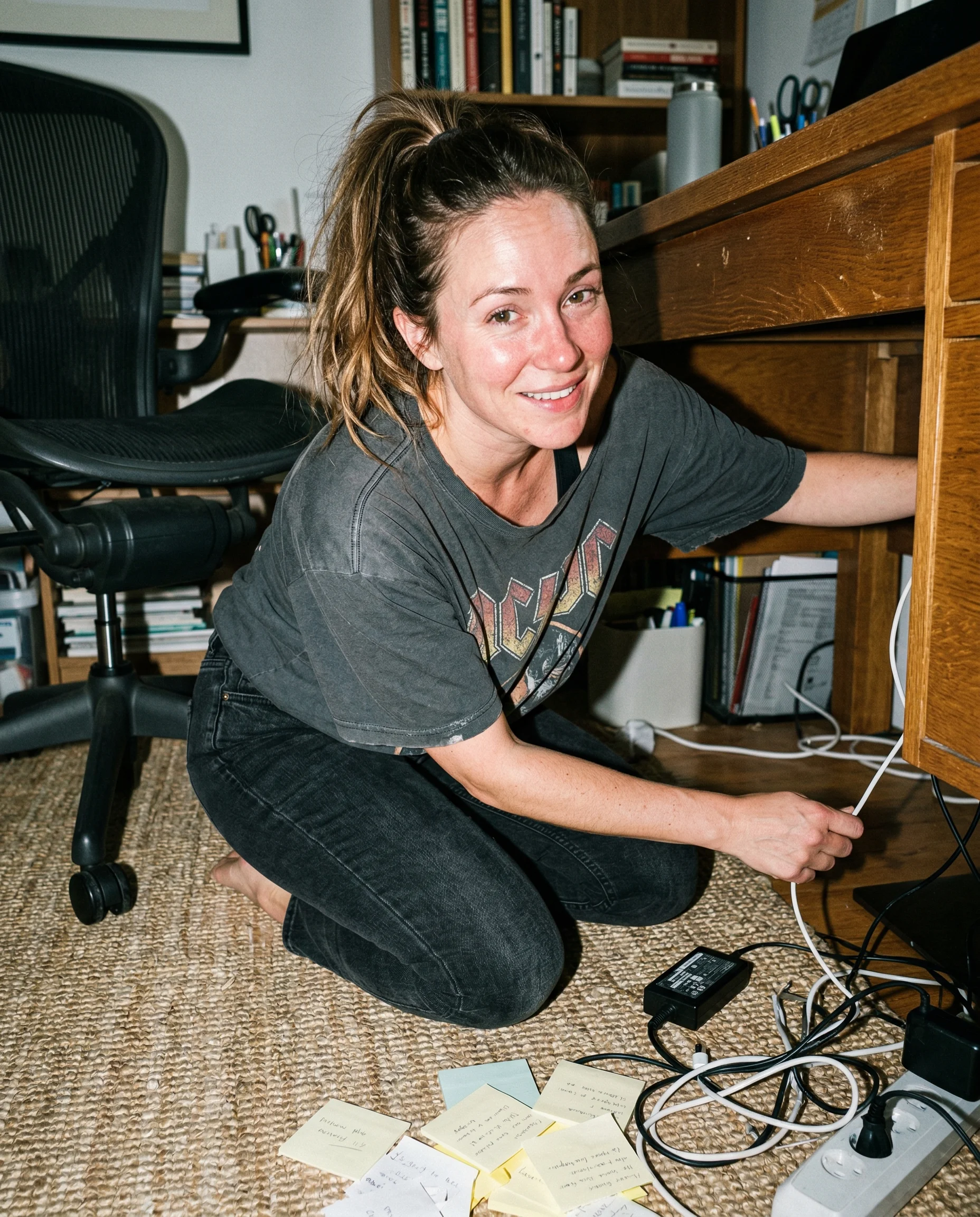
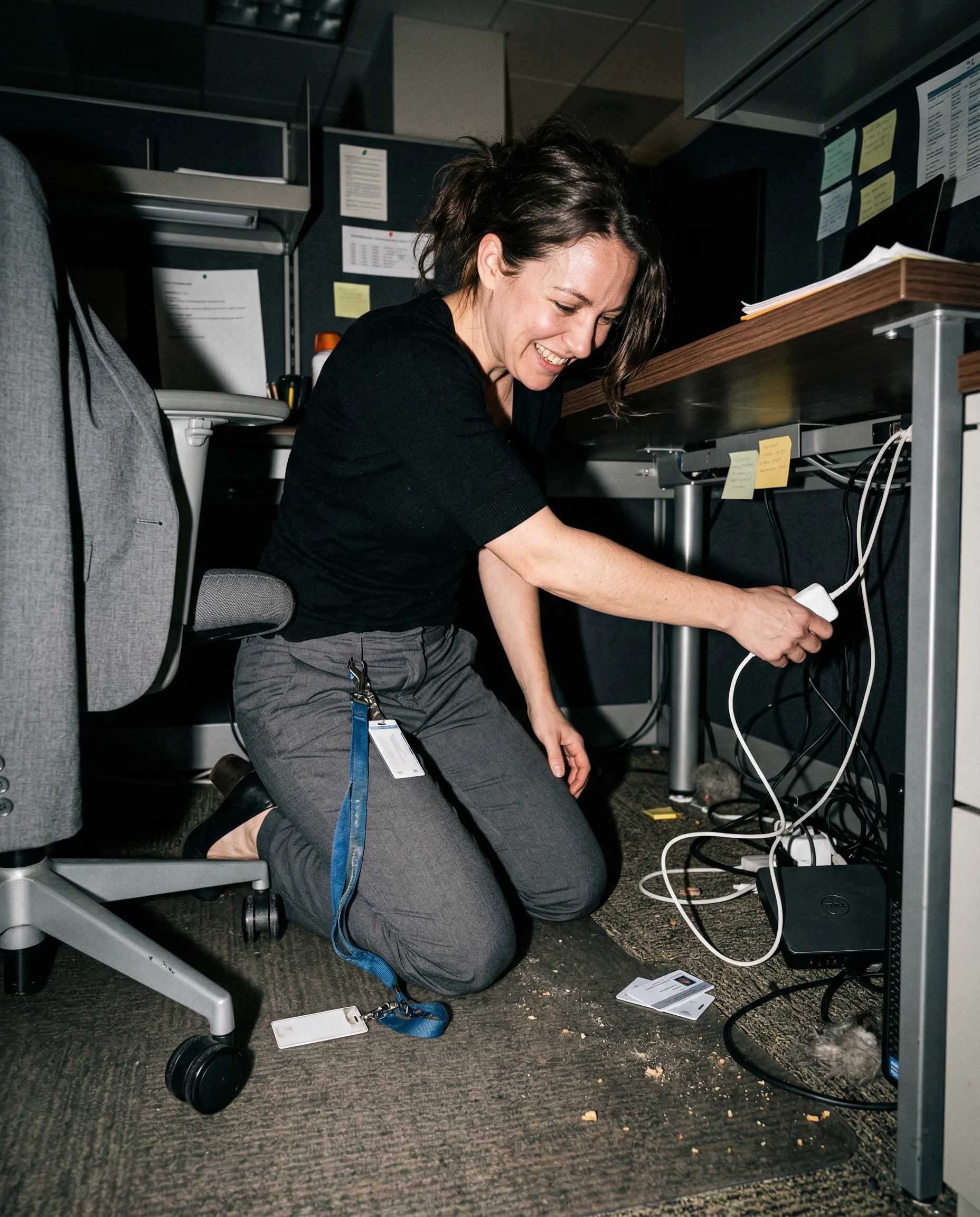
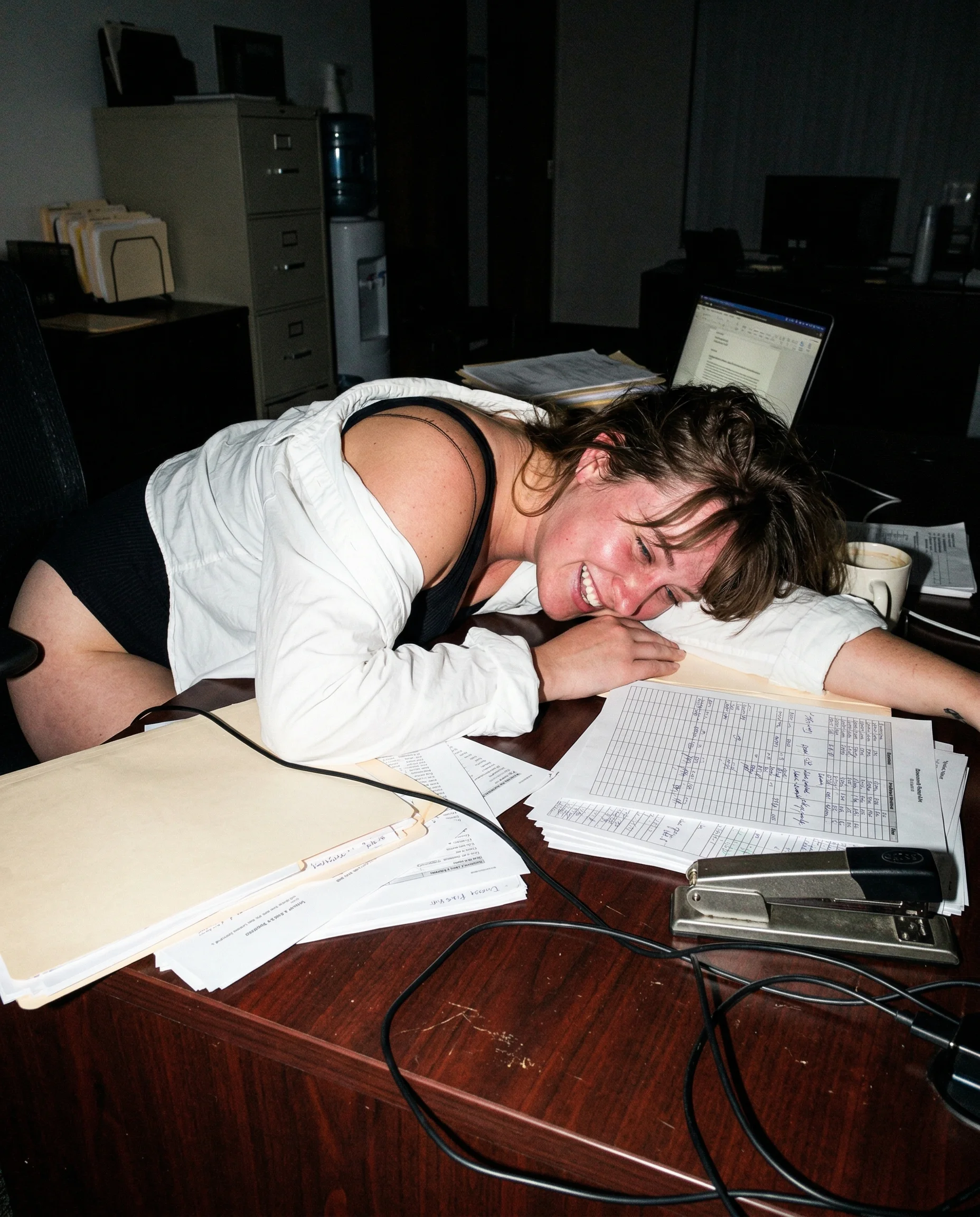
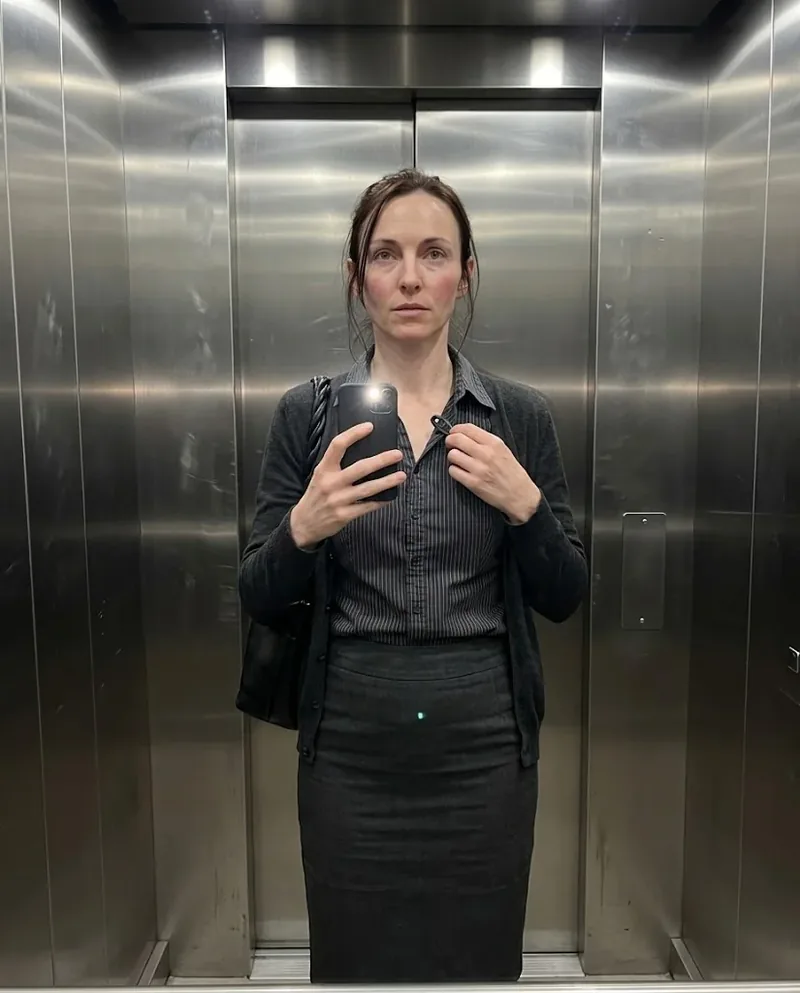
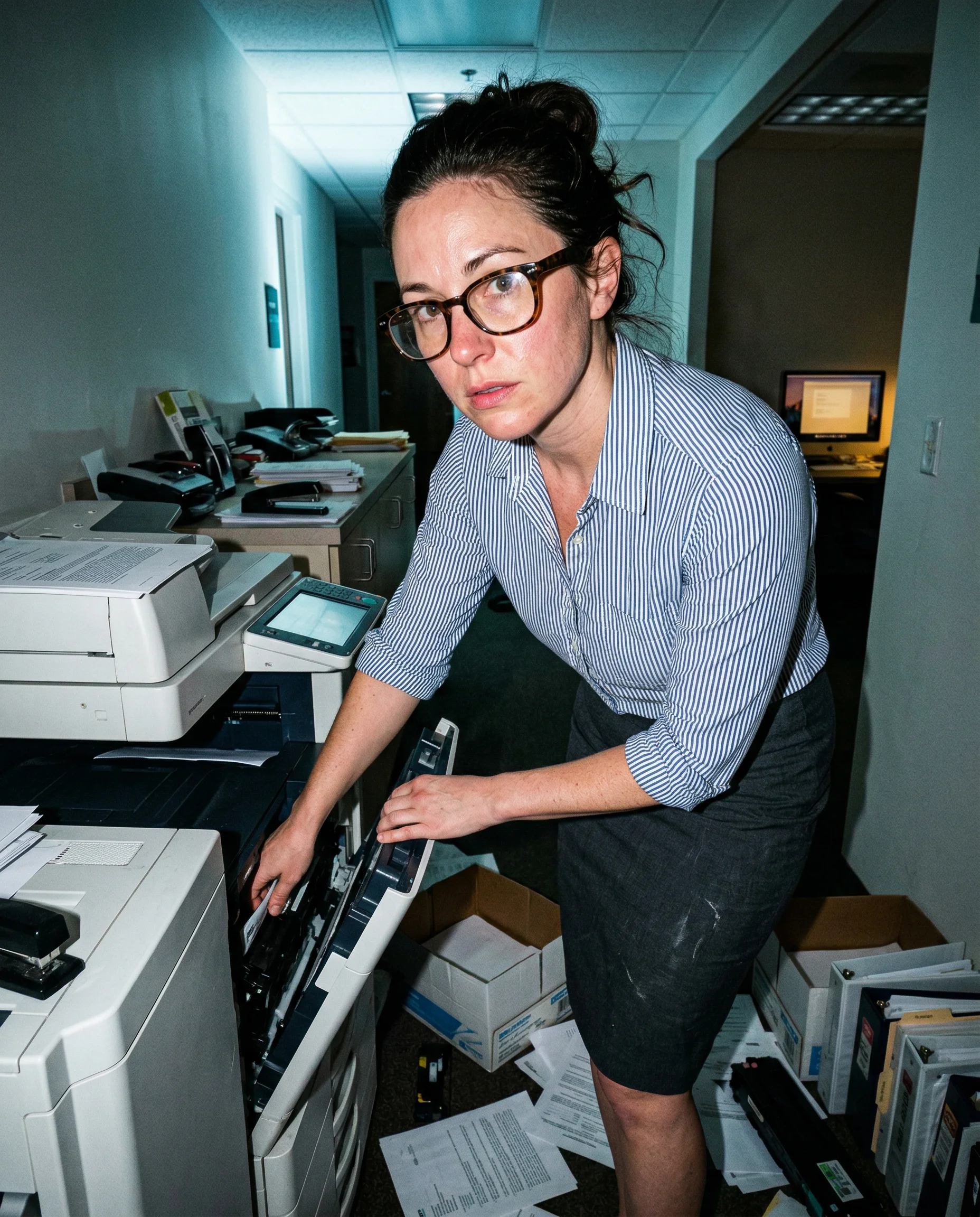
Office Siren is sharp tailoring, bad fluorescent light, and the quiet exhaustion of a late night at the desk. These shots trade polish for real-world grit.
Get the next prompt drop
We publish new prompts weekly. Get them in your inbox instead of checking back.
You're in. New drops land in your inbox.
harsh flash on commercial carpet
Direct, unsoftened flash is the only way to kill the sterile corporate look. Overhead office lights are flat and forgiving, but a camera flash creates that slightly rude highlight on the skin and the edges of the furniture. It turns the commercial carpet from a dull gray background into a textured, high-contrast surface. If the light were diffused, the scene would look like a stock photo. By keeping the flash raw, you get the slight T-zone sheen and the honest, un-retouched skin texture that makes the image feel like a real person actually sat on that floor.
the tangle of cables and markers
The mess on the floor does more work than any pose. The tangled HDMI cables and the discarded projector remote are the anchors here. If the cables were neatly coiled, the image would lose its sense of immediate, lived-in frustration. The fact that they are just a pile of black plastic on the floor makes the scene feel like a Tuesday night that went on too long. Adding in the stray marker caps and the half-finished drink creates a layer of debris that stops the eye from focusing on a single, staged point. It turns the frame into a snapshot of a specific, tedious task, rather than a portrait of a person.
keeping the skirt and blazer honest
It is easy to make clothes look too perfect, but the reality of sitting on a conference room floor is that fabric bunches and wrinkles. The skirt riding slightly askew and the blazer abandoned on the chair are the details that sell the scene. If the outfit looked pristine, the image would feel like a costume. By allowing the clothing to look a bit worn and lived-in, the image gains a sense of weight. The small skin blemishes and the way the light catches the pores on her nose are the final pieces of the puzzle; they act as a reminder that this isn’t a studio shoot, but a moment caught in the middle of an f***ing long workday.
Frequently asked questions
how do i get that raw flash look without it feeling too bright?
Keep the light source direct and avoid any bounce or diffusion. If the flash is too even, you lose the harsh shadows that define the edges of the cables and the texture of the carpet. Let the light hit the subject head-on so the skin has a natural, slightly oily sheen rather than a studio-perfect matte finish.
why does the floor-level angle matter for this shot?
A low angle puts the viewer in the room with the subject. It forces the perspective to focus on the clutter—the cables, the markers, and the carpet—rather than the clean conference-room layout. It makes the scene feel more intimate and less like a wide-shot corporate stock photo.
what keeps the skin from looking like plastic?
The prompt relies on visible pores, peach fuzz, and minor blemishes. If you clean these up, the image turns into an ad. Keep the skin tone ordinary and don't try to smooth out the T-zone. The flash will naturally highlight the texture, which is exactly what you want to keep it grounded.
should i add more items to the floor to make it look messier?
Be careful not to overdo it. The current amount of clutter—the cables, a few markers, and a single drink—works because it feels accidental. If the floor looks too staged, the whole thing loses its grip on reality. It needs to feel like a workspace, not a prop-heavy set.