
Oxblood Bomber and Phone Glow in the Coat Check Line
Nightlife captured with a jagged, unforgiving flash. Forget the polished party aesthetic; this is the reality of 3 AM bathroom mirrors, sticky bar tops, and the walk home.
Get the next prompt drop
We publish new prompts weekly. Get them in your inbox instead of checking back.
You're in. New drops land in your inbox.
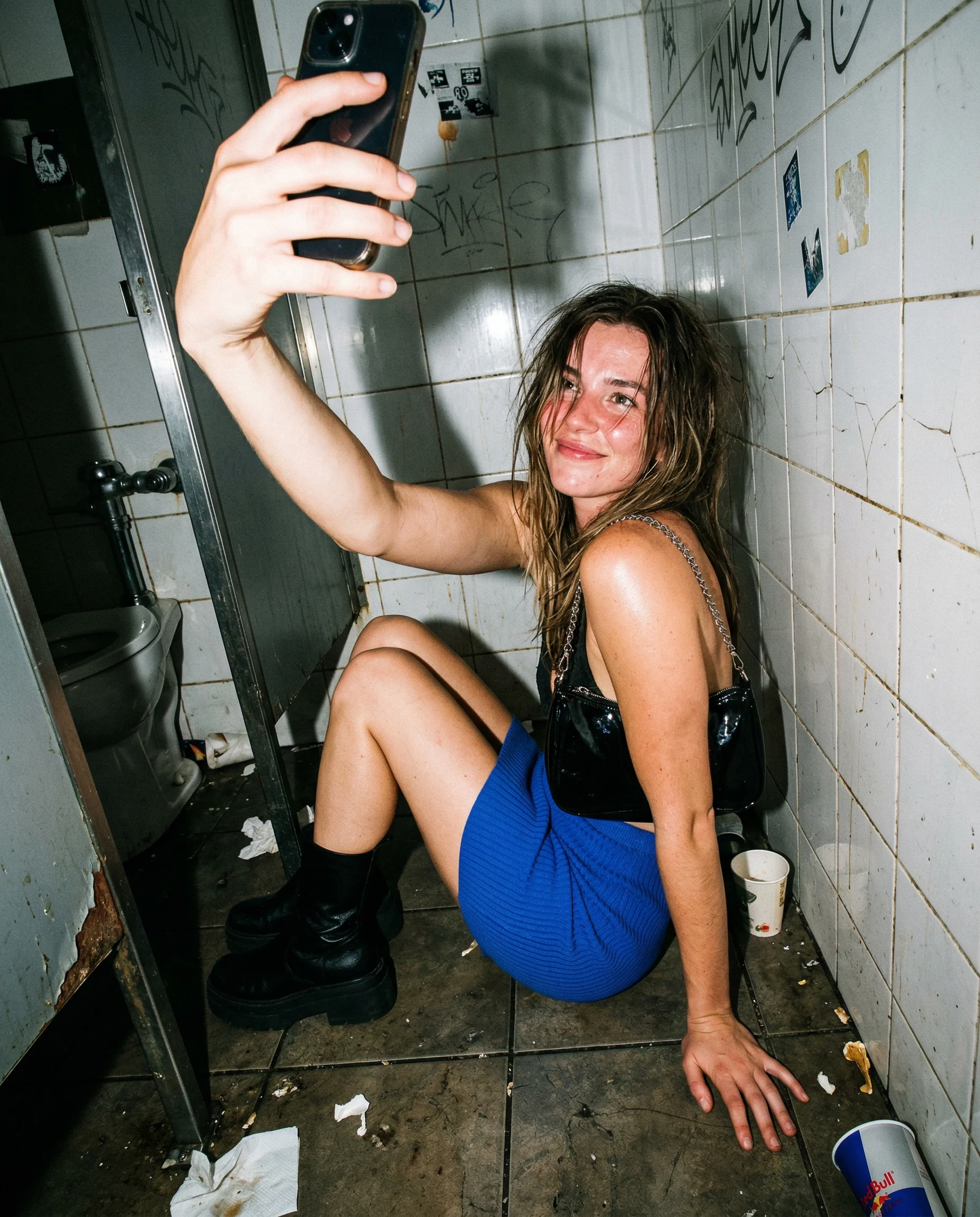

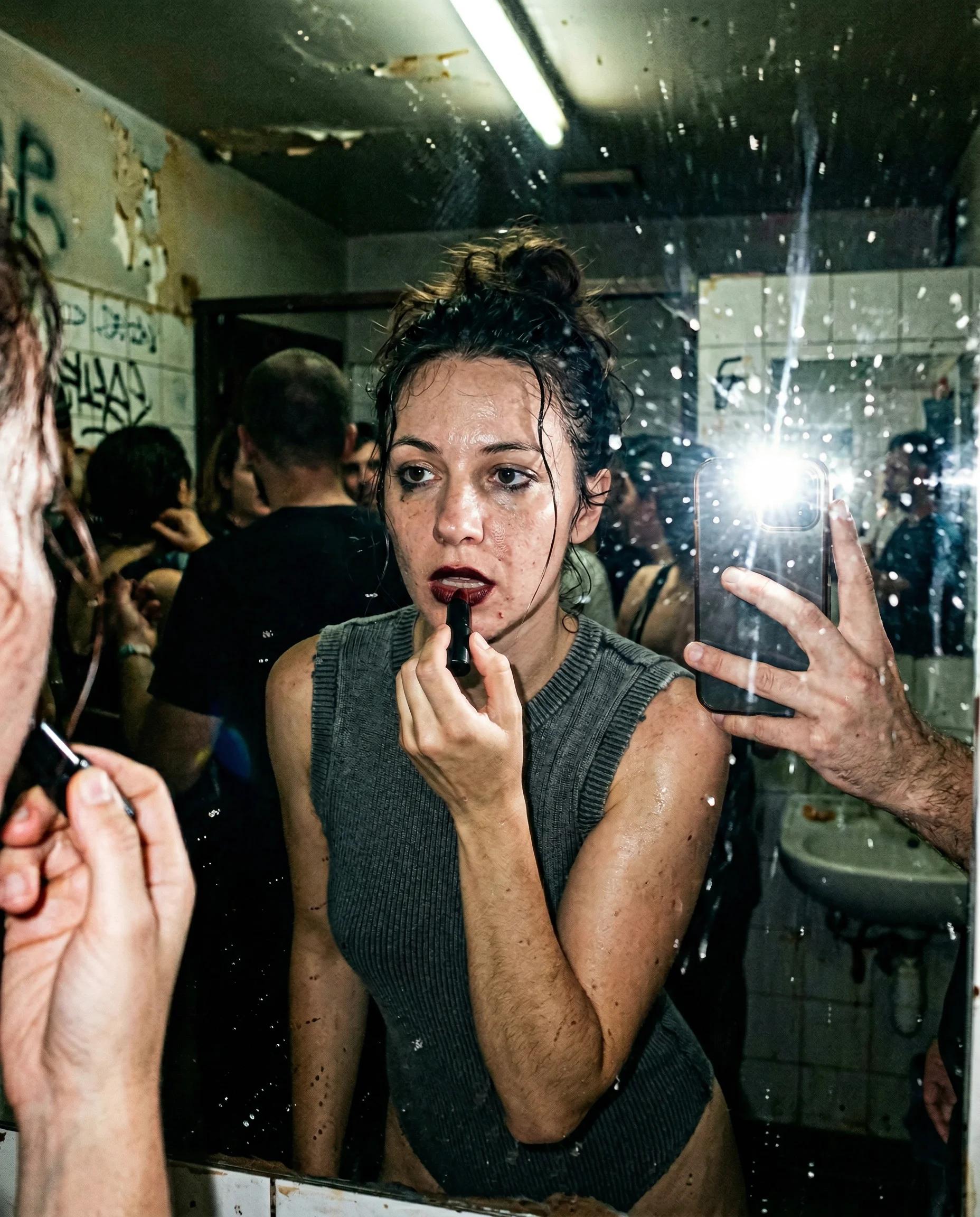
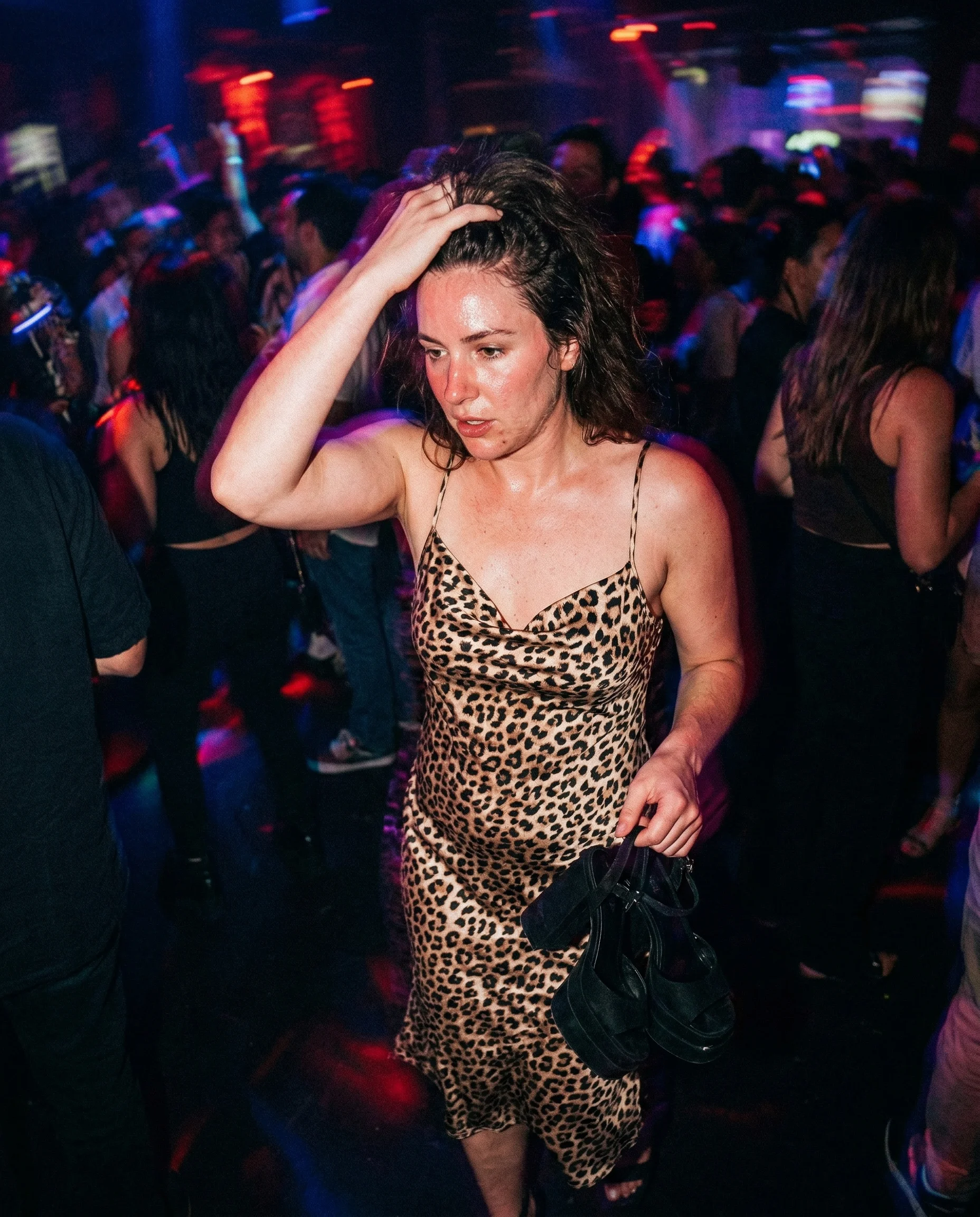
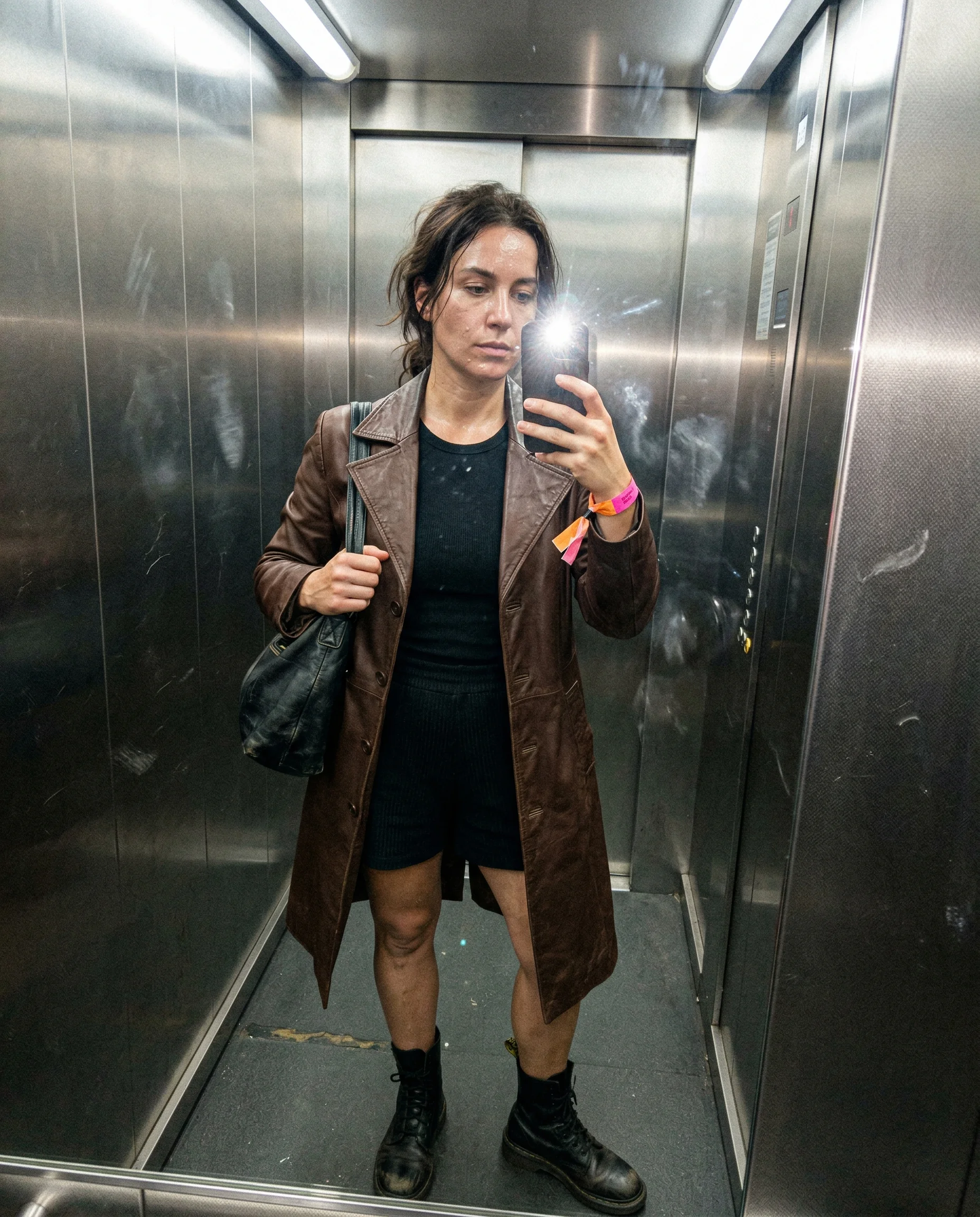
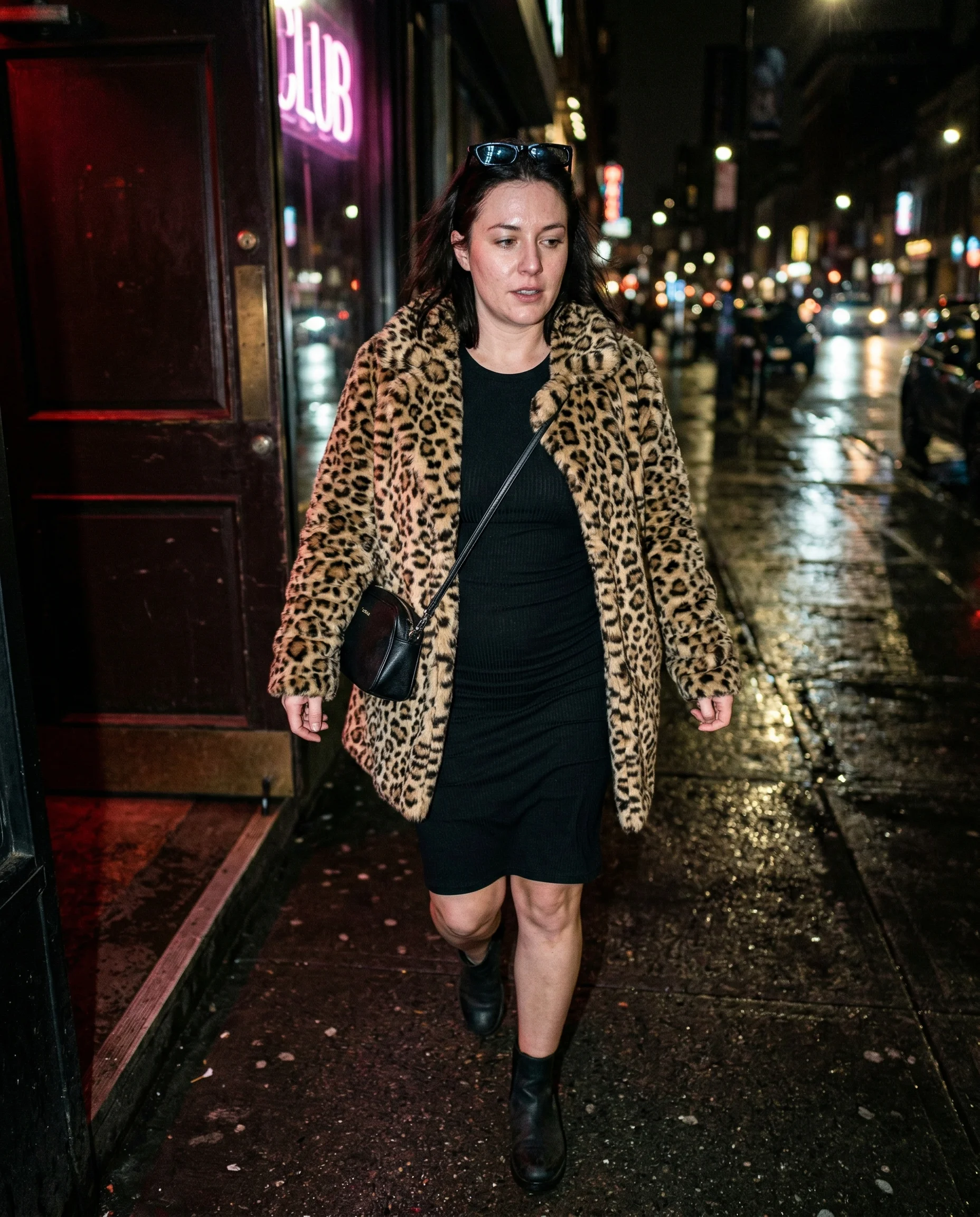
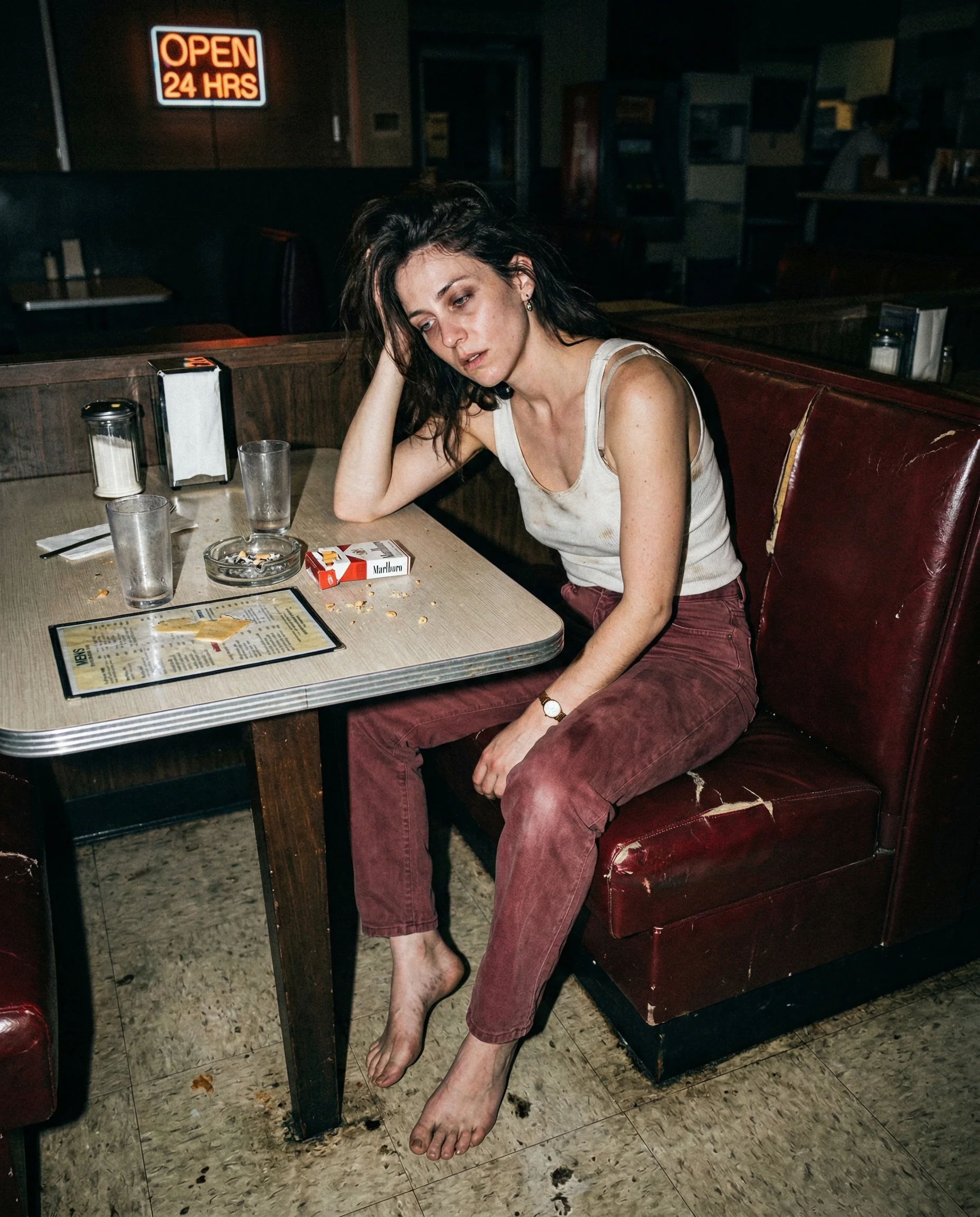
flash that flattens the room
The direct flash is the only reason this shot works. If I had used a softbox or tried to balance the ambient club light, the whole thing would have turned into a glossy editorial nightmare. By slamming the subject with a hard, forward-facing light, I’m forcing the camera to pick up the condensation on the concrete wall behind her and the chaotic, messy pile of coats. It’s rude lighting. It doesn’t try to make her look good; it just documents the exhaustion of waiting in line at 3 AM. The light catches the texture of the worn-in oxblood leather, emphasizing every crease and scuff, which adds a layer of history to the jacket that a studio light would have completely erased.
the neon wristband and phone glow
I’m obsessed with the small, ugly details that ground a shot in reality. The neon-green paper wristband is tight on her forearm, cutting into the skin just enough to look real. It’s a tiny, bright anchor in a sea of dark, moody tones. Then there’s the phone. The screen is the only thing keeping her occupied, and the way it casts a faint, cool light upward against the warm, harsh flash creates a weird, discordant color palette. That contrast between the artificial green of the wristband, the deep oxblood of the jacket, and the blue-white glare of the screen is exactly what makes this feel like a stolen moment rather than a staged setup.
skin texture and the cost of honesty
If the skin here looked like plastic, I’d delete the file. I want to see the T-zone sheen, the faint peach fuzz where the flash hits the side of her face, and the uneven tone that happens when you’ve been sweating in a club for six hours. The 24mm lens creates that slight barrel distortion that feels like a phone camera held at hip height—it’s not meant to be flattering. It’s meant to be candid. When I see those visible pores and the slight, tired redness around her nose, I know I’ve hit the sweet spot. It’s not about being pretty; it’s about being h*ll-bent on capturing the version of the night that actually happened, not the version we tell people about the next day.
Frequently asked questions
Why does the flash look so harsh in this shot?
It’s a direct, on-axis flash. I’m not bouncing it off the ceiling or using a diffuser because I want that flat, high-contrast look that mimics a cheap phone camera. It creates those deep, ugly shadows behind the subject that define the cramped space.
How do I get that specific 'worn-in' look on the leather jacket?
The prompt specifies 'worn-in oxblood leather' and 'oversized.' The key is to avoid words like 'new' or 'pristine.' You want the model to look like they’ve owned the piece for years, with visible scuffs and fading that the flash can pick up.
What should I focus on to make the skin look real?
Stop trying to make it smooth. You need to emphasize texture—pores, T-zone sheen, and uneven tone. If the AI tries to airbrush it, add keywords like 'visible pores,' 'peach fuzz,' or 'ordinary skin texture' to the prompt to force some grit back into the render.
Why the low camera angle?
Holding the camera near the hip creates a more voyeuristic, accidental feel. It changes the perspective so you're looking up at the subject, which makes the scene feel like a candid phone snap someone took while standing in line behind her.