
Club Coat Check Pile Candid with Cobalt Leather Skirt
Nightlife captured with a jagged, unforgiving flash. Forget the polished party aesthetic; this is the reality of 3 AM bathroom mirrors and sticky bar tops.
Get the next prompt drop
We publish new prompts weekly. Get them in your inbox instead of checking back.
You're in. New drops land in your inbox.
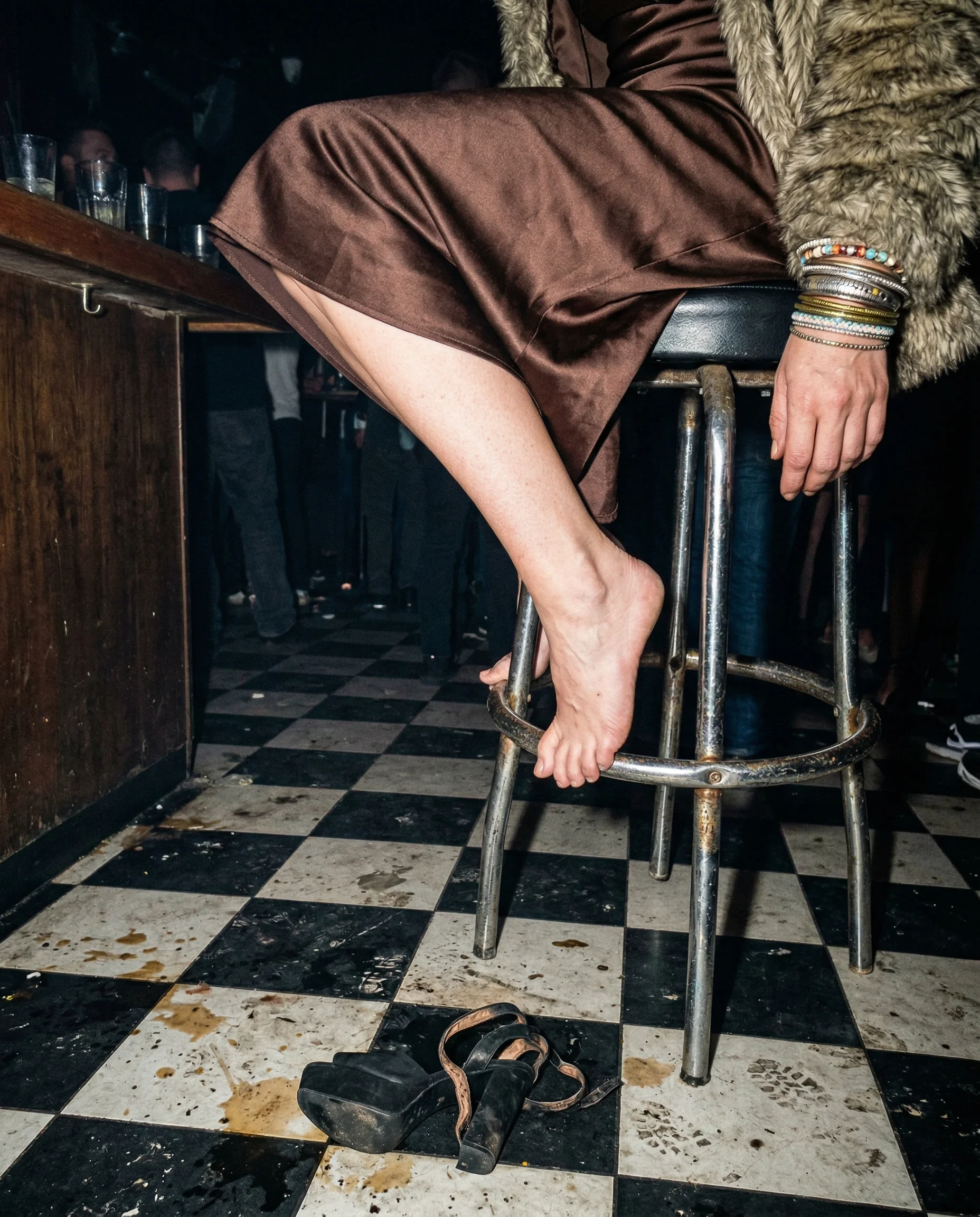

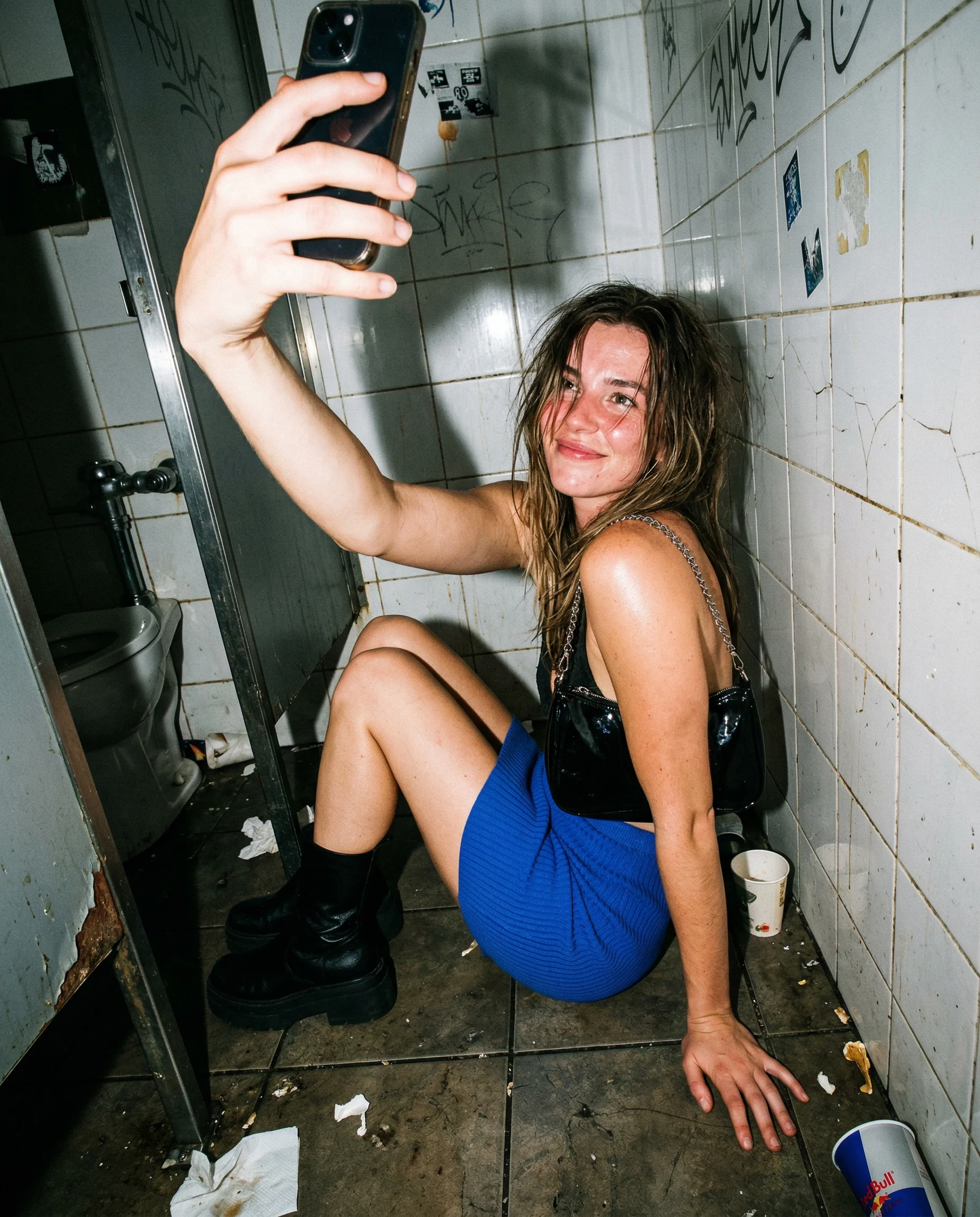

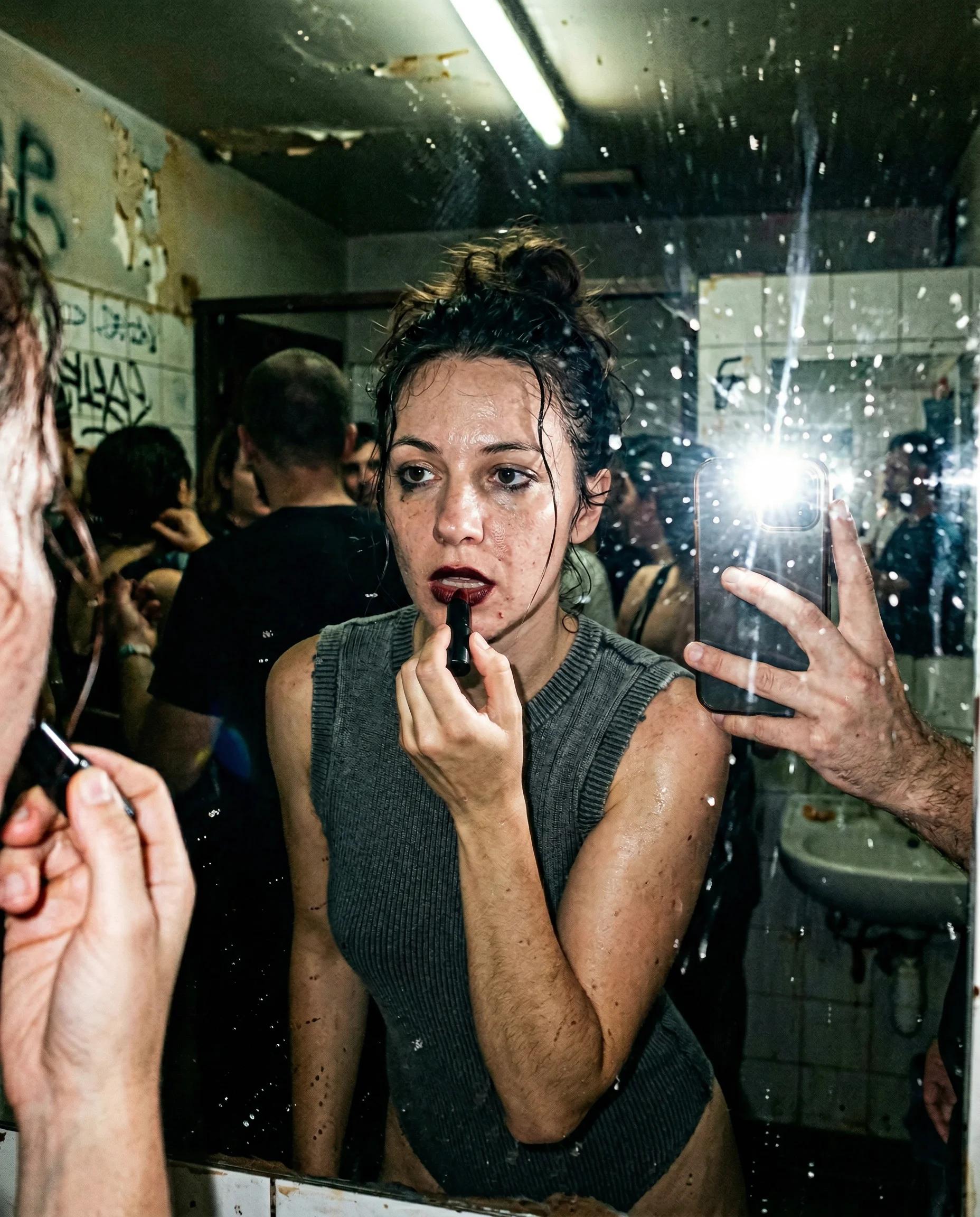

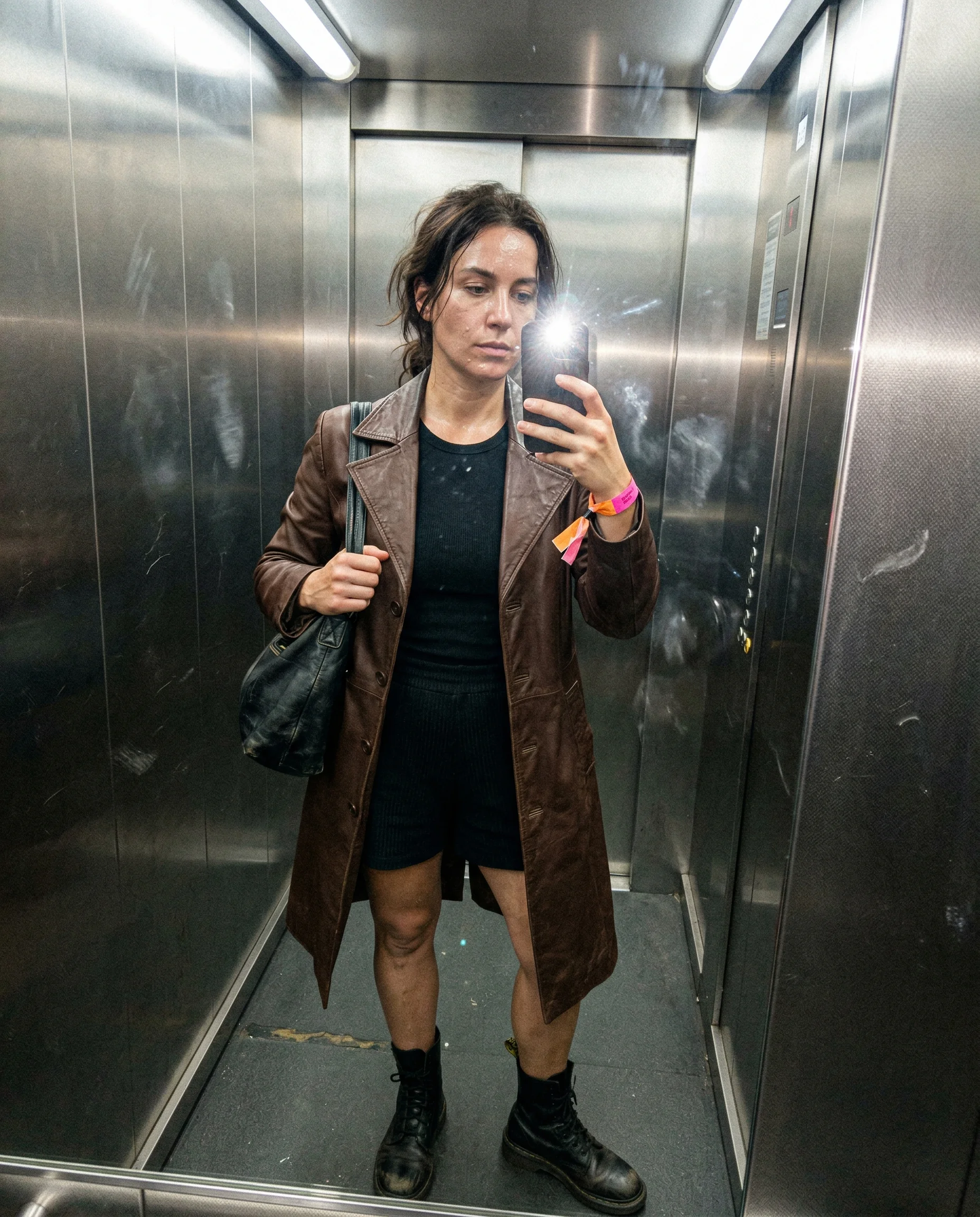
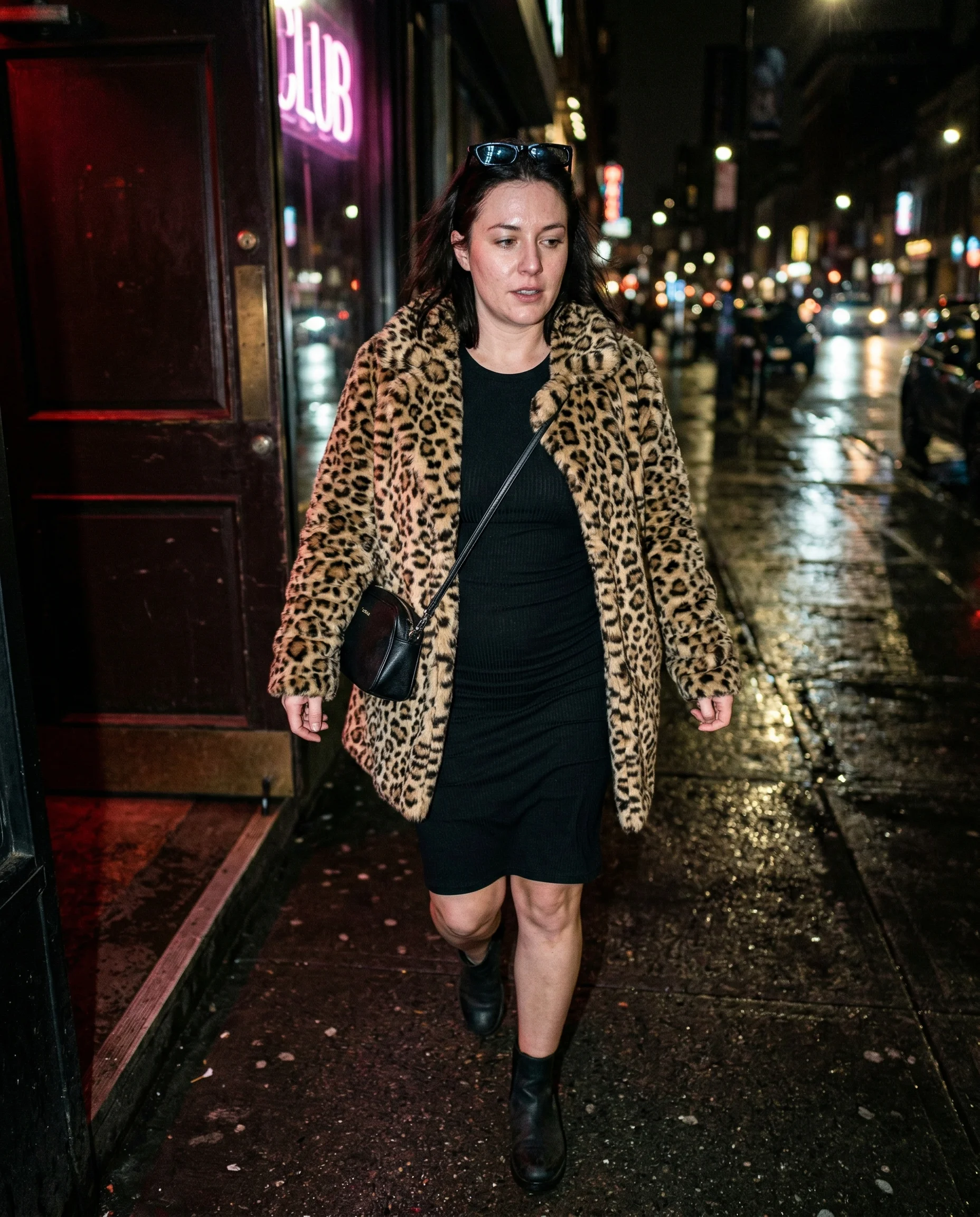
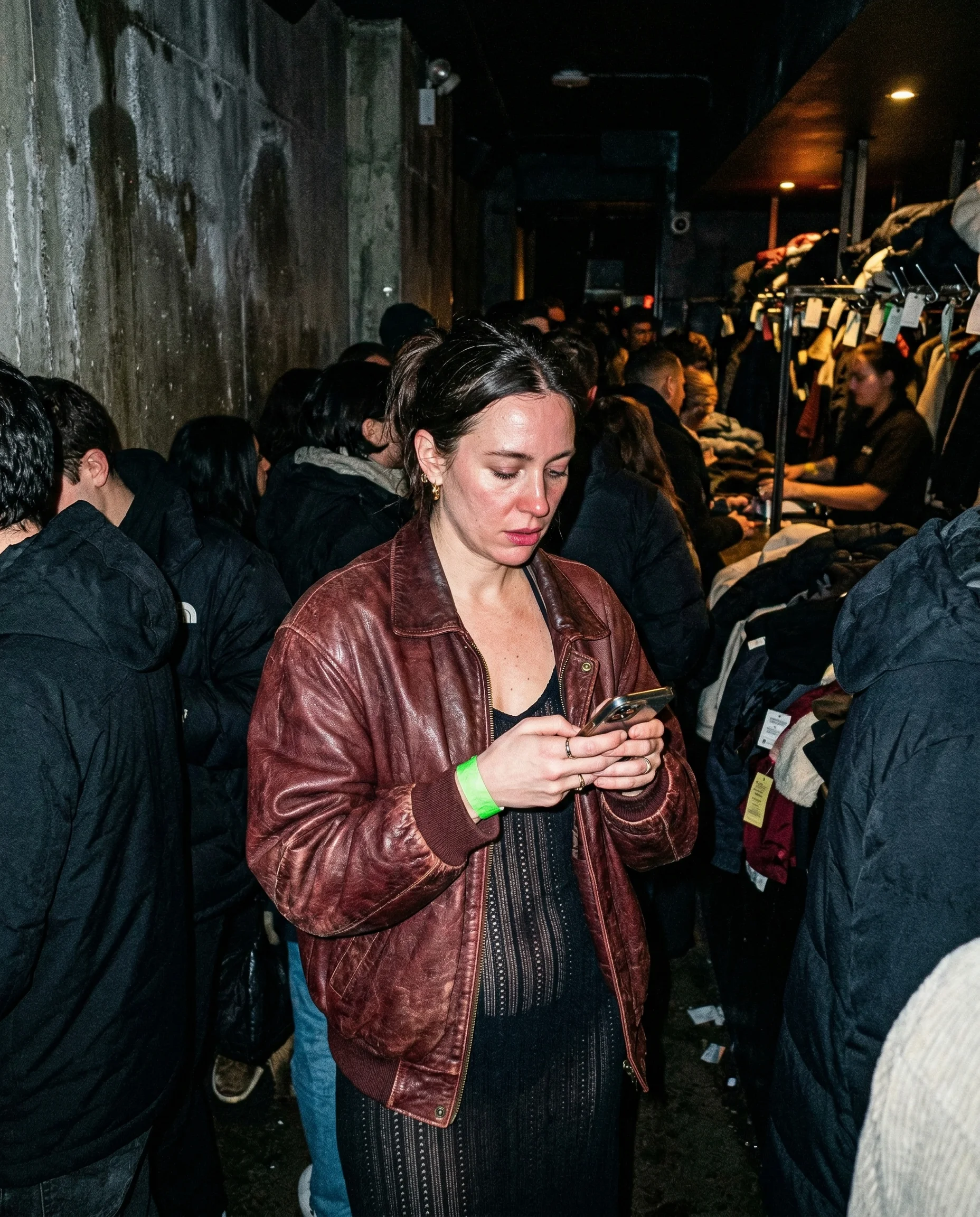

the coat pile as a floor anchor
The pile of discarded wool coats is the only reason this shot stays grounded. If you put someone on a clean bench or a stool, the whole thing turns into a fashion catalogue. By dumping them onto a heap of someone else’s heavy, lint-covered outerwear, you introduce a layer of physical discomfort that the camera picks up immediately. The flash catches the stray threads and the uneven texture of the wool, which forces the eye to focus on the grit rather than just the outfit. It’s the visual equivalent of being stuck in a hallway at 3 AM with nowhere to sit.
the yellow paper tag as a distraction
That crumpled coat check tag is the most important object in the frame. It’s a bright, sharp piece of visual noise that pulls the focus away from the subject’s face for just a second. Because the tag is held loosely and is clearly beat up, it tells the story of how long she’s been sitting there better than a tired expression ever could. When the flash hits the yellow paper, it creates a harsh highlight that makes the rest of the scene feel darker and more claustrophobic by comparison. It’s a small, stupid detail, but without it, the subject looks like she’s posing. With it, she looks like she’s waiting for something that isn’t coming.
flash falloff in industrial hallways
Industrial hallways are usually death for portraits because they turn into flat, grey tunnels. The key here is letting the flash be rude. By using a direct, on-camera light source, you blow out the texture of the cobalt leather skirt and the white tee, while the background behind her falls into nearly total shadow. That contrast is what creates the depth. If you try to balance the light or fill in the shadows, you lose the sense of being caught in a cramped, unglamorous space. The grain in the shadows is the final piece of the puzzle—it keeps the skin from looking like plastic and ensures the whole image feels like it was snapped on a phone by someone who shouldn’t be there.
Frequently asked questions
how do i stop the skin from looking like airbrushed plastic?
stop trying to smooth it out. the flash needs to be harsh enough to show pores, peach fuzz, and the occasional blemish. if you see the skin tone start to even out too much, you’ve gone too far. keep the lighting direct and unflattering.
why does the background look so dark in my shots?
you're likely relying on the camera's auto-exposure, which tries to brighten the whole room. for this look, you want to expose for the subject and let the background fall away. the darkness in the hallway is what makes the flash pop against the subject.
what makes the coat pile look real instead of staged?
it needs to be messy. don't try to arrange the coats neatly. they need to look like a pile of discarded, lint-covered wool that hasn't been touched in hours. if the fabrics look too clean or uniform, the scene loses its grit.
is there a specific lens setting for this look?
a wider lens helps capture the claustrophobia of the hallway. the slight barrel distortion you get from a wider angle actually helps the image feel more like a candid phone snap and less like a professional studio portrait.