
Club Bathroom Mirror Selfie: Smudged Mascara and Harsh Flash
Nightlife captured with a jagged, unforgiving flash. Forget the polished party aesthetic; this is the reality of 3 AM bathroom mirrors and sticky bar tops.
Get the next prompt drop
We publish new prompts weekly. Get them in your inbox instead of checking back.
You're in. New drops land in your inbox.
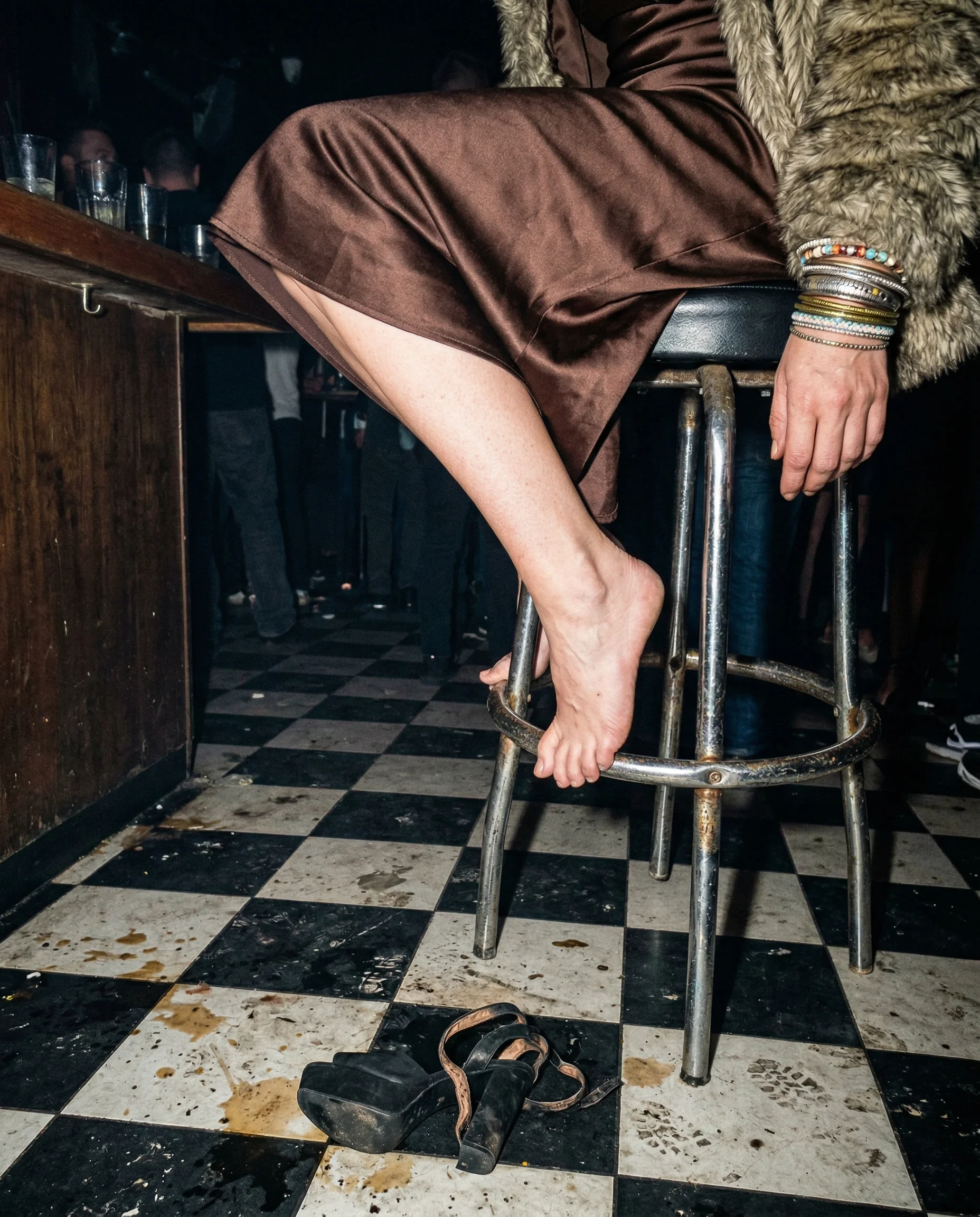
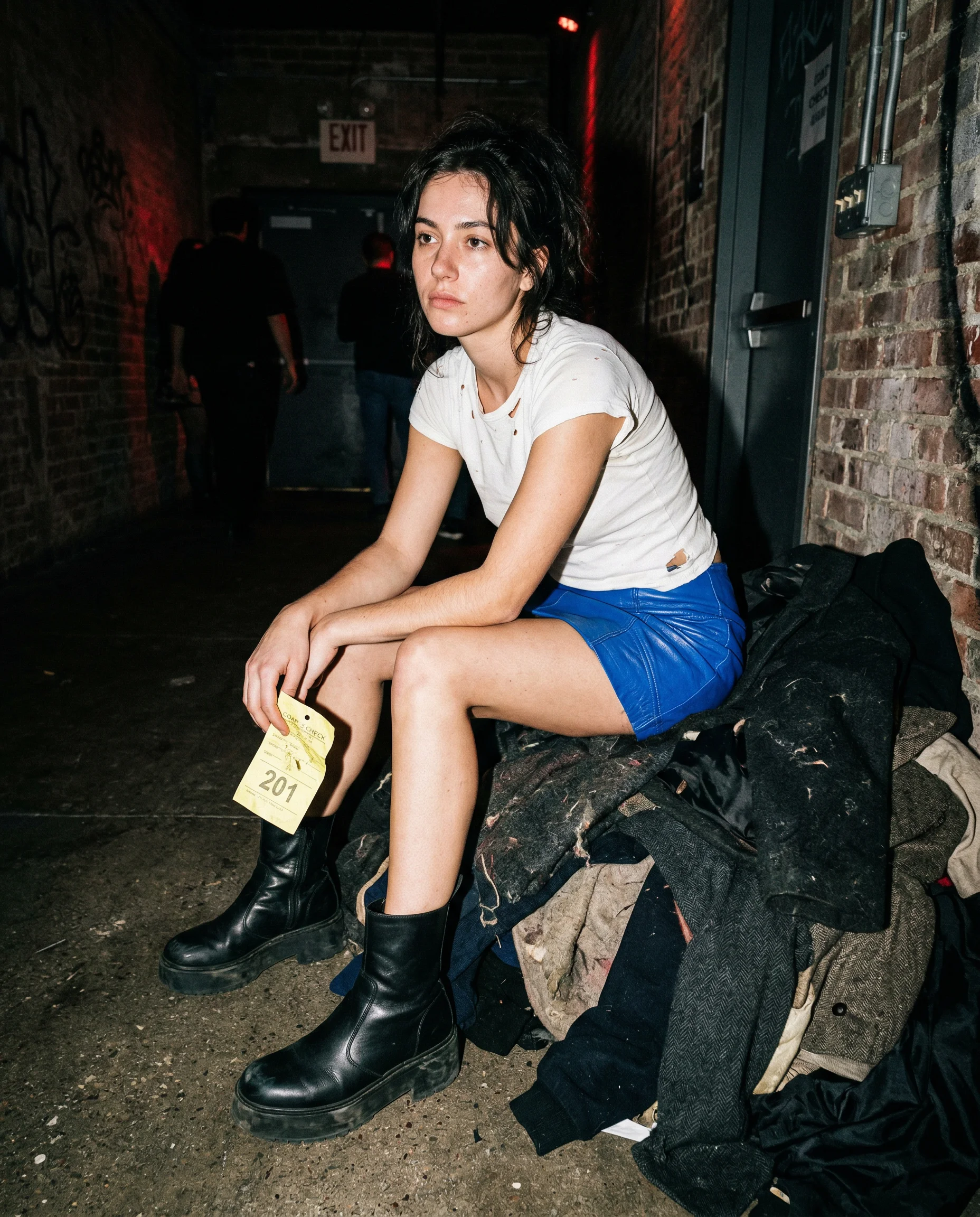
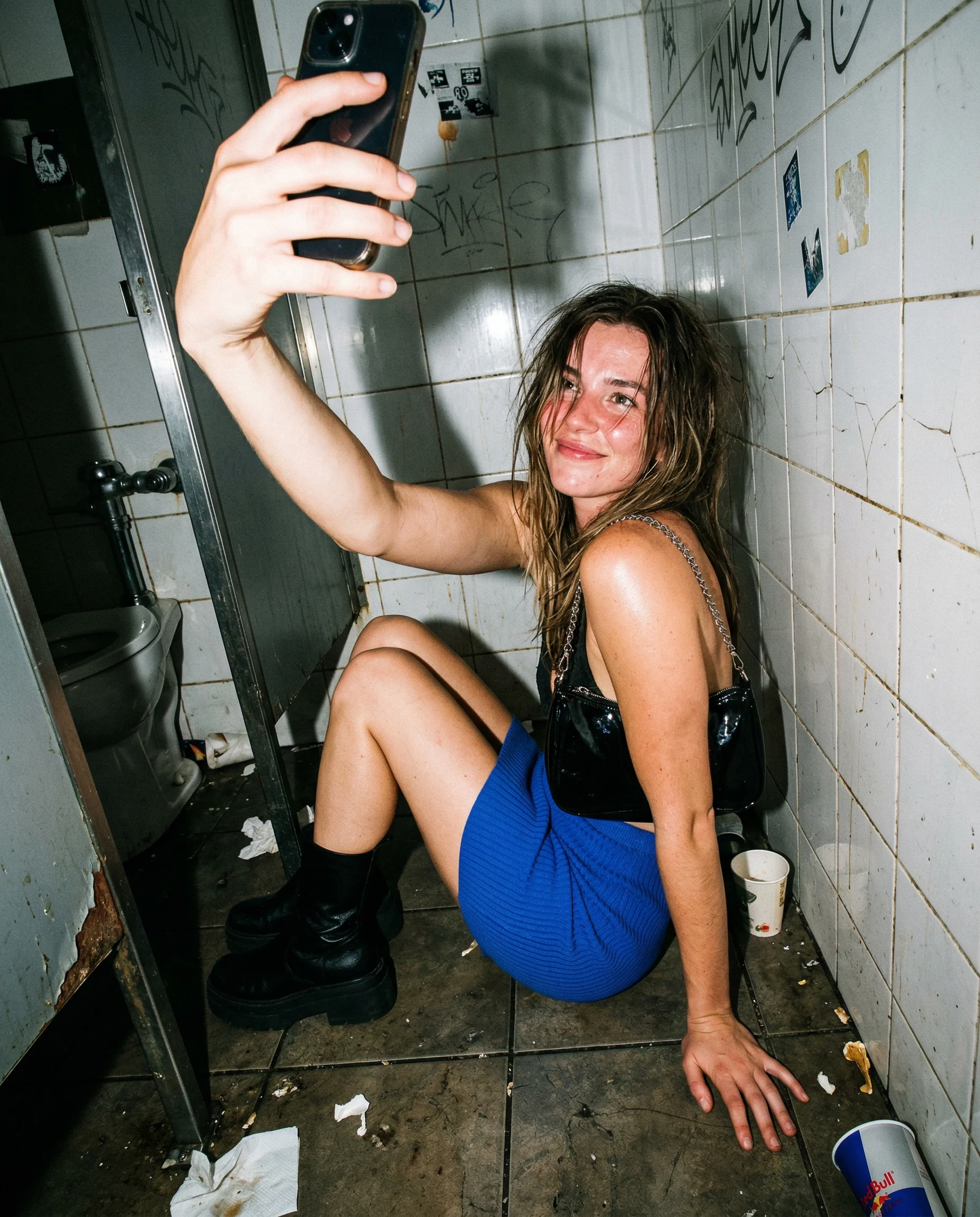

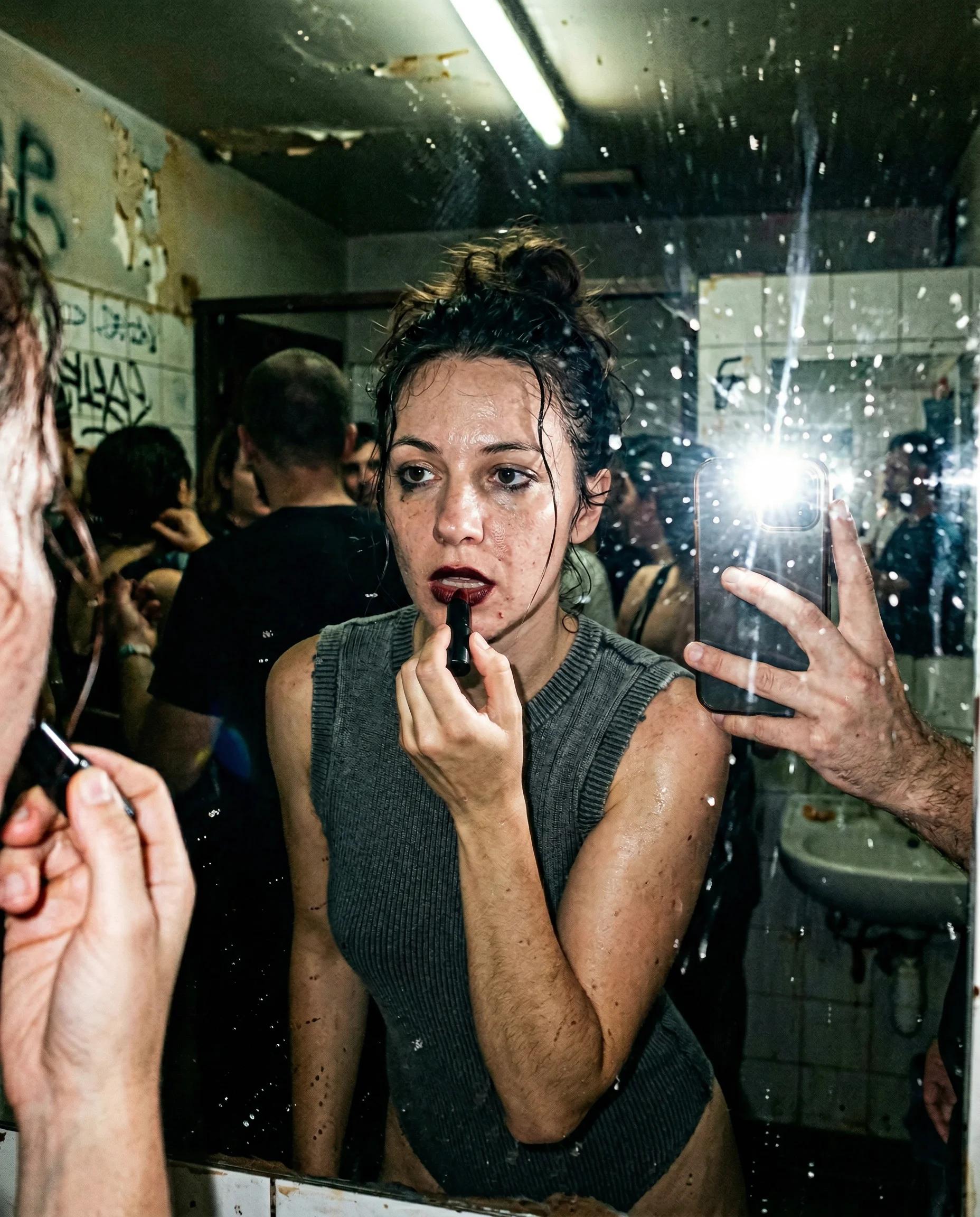
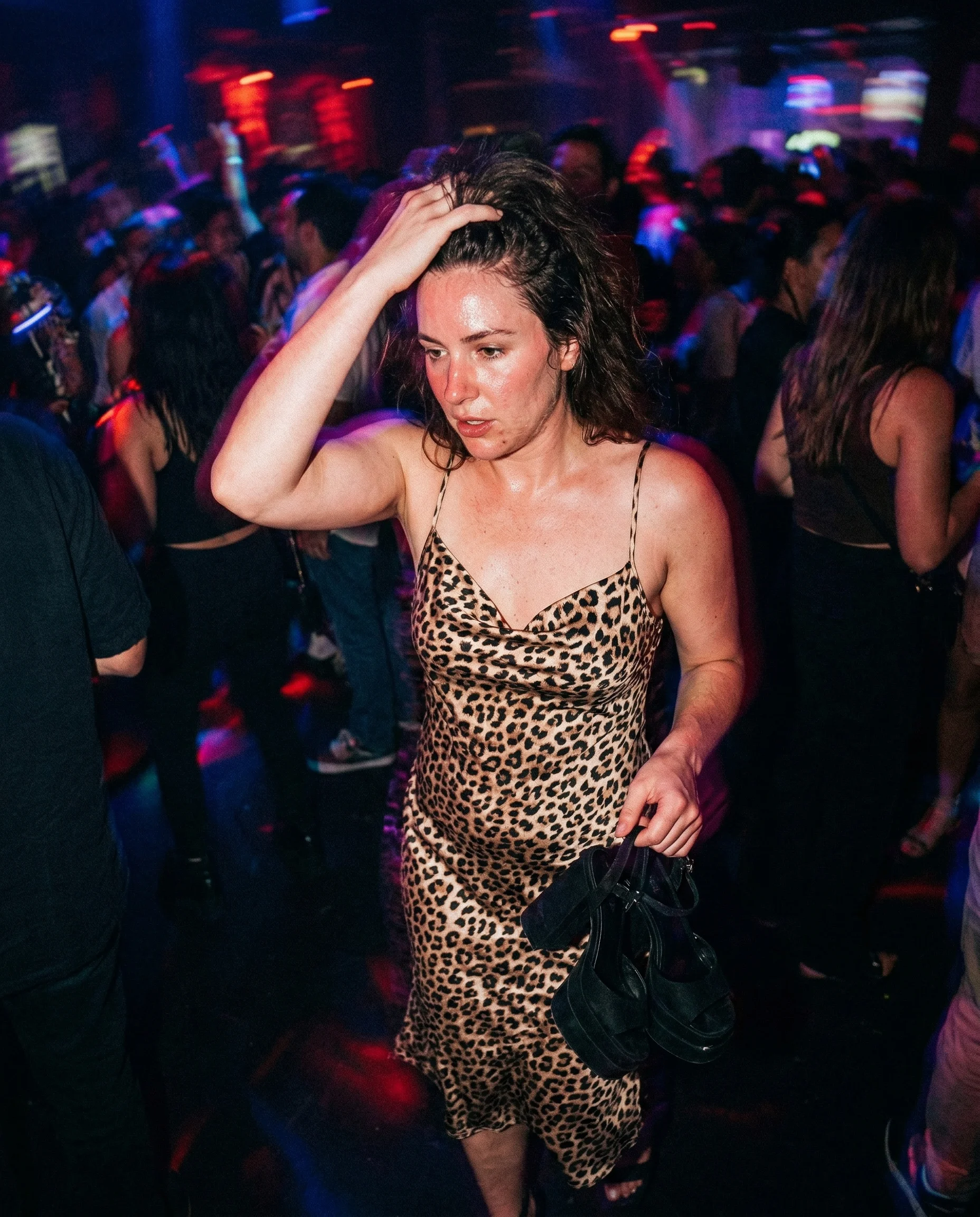
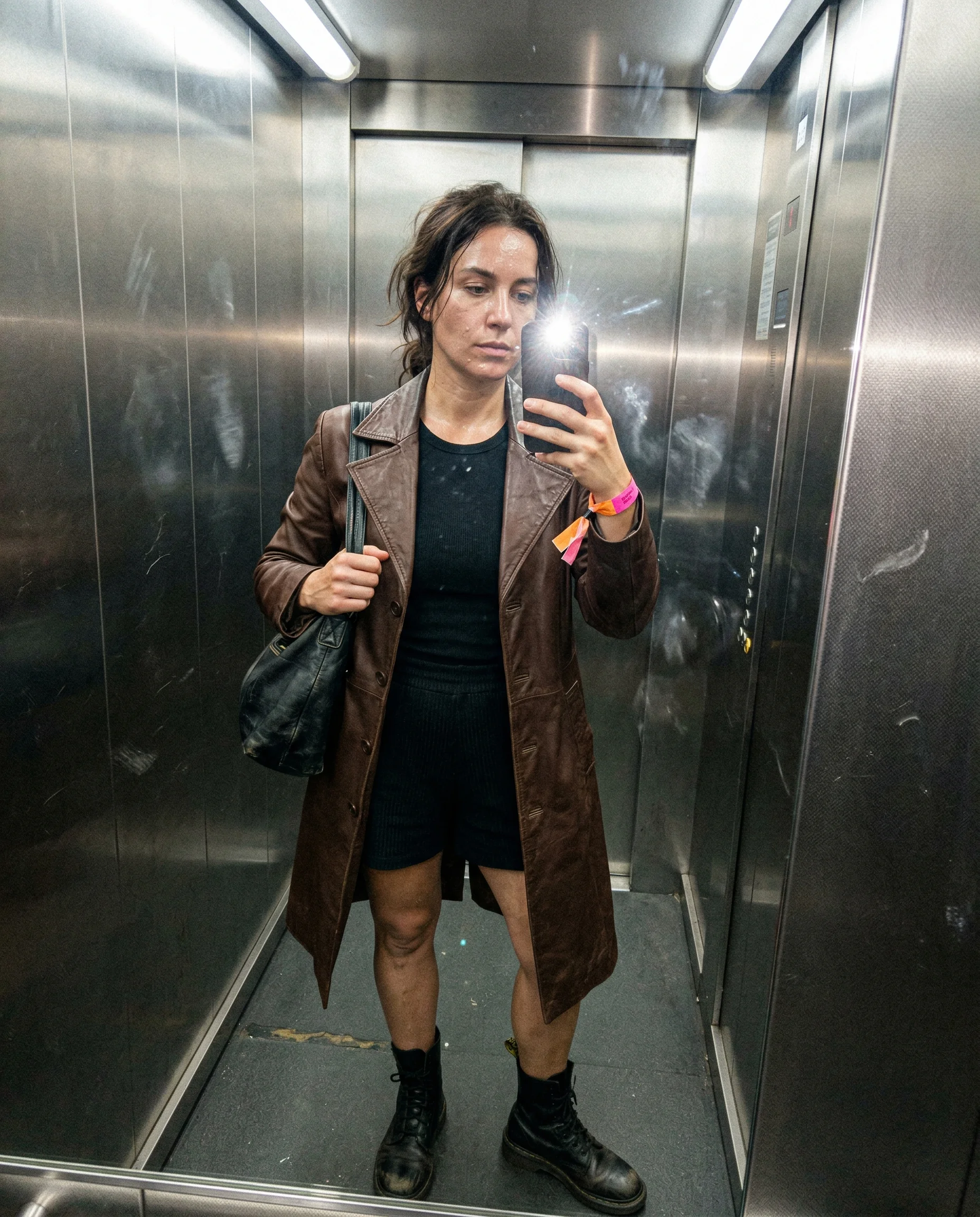
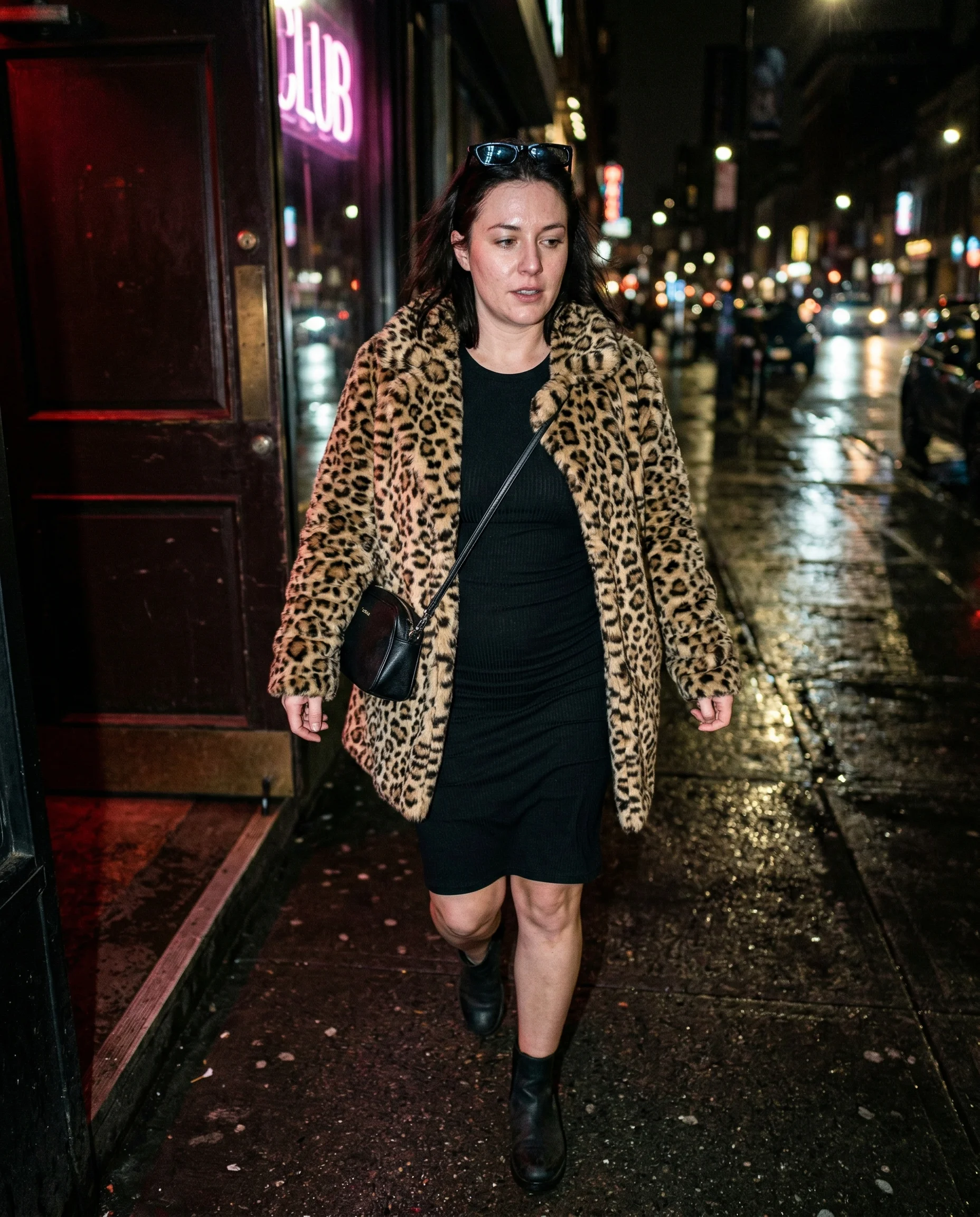
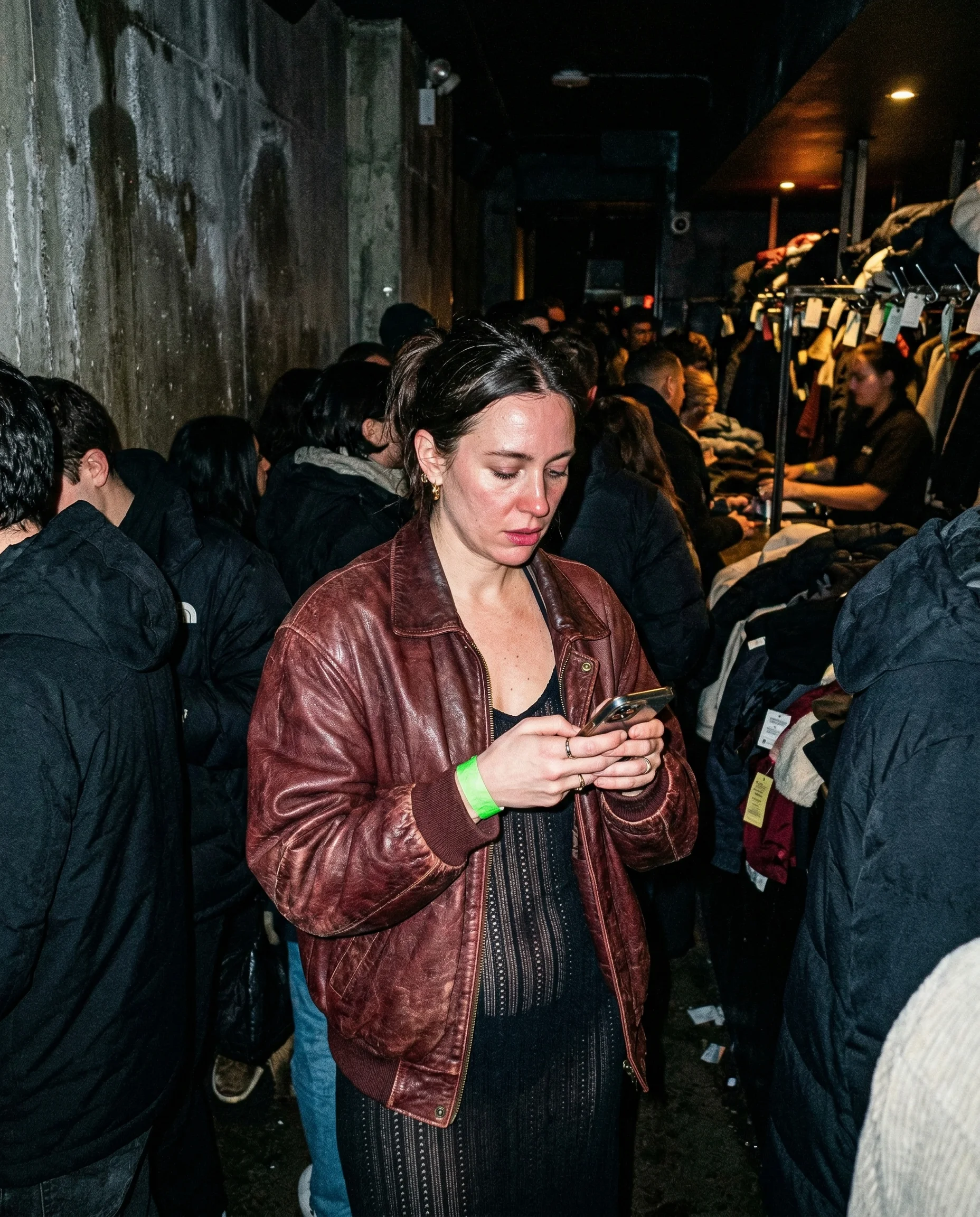
the flash on chrome and grime
Direct phone flash hitting a water-spotted mirror is this falls apart when you the polish. When the light bounces off the chrome faucet and the glass, it creates hot spots that don’t care about flattering the subject. If you try to soften that light, you lose the claustrophobic, trapped feeling that makes the scene hit home. I need the flash to stay a little rude here—it should expose the pores, the sheen on the T-zone, and the general exhaustion of the night without trying to clean anything up.
the makeup purge
Everything in this frame is about the transition from the dance floor to the bathroom sink. The crumpled tissue held to the eye is the anchor. It’s not a posed action; it’s a functional, desperate moment. By keeping the mascara smeared and the skin tone slightly uneven, you avoid the trap of making this look like a beauty tutorial. The sheer black camisole under the oversized, nicotine-tinted blazer adds a layer of ‘I’ve been wearing this for six hours’ that feels lived-in. The hair clip is half-fallen, and the loose tendrils are messy—that kind of disarray tells the story of a long night better than any perfectly styled hair ever could.
why the small details save the shot
If this gets too clean, it starts looking fake. what matters is the small, gross artifacts that most people try to edit out: the discarded, damp paper towel on the edge of the sink, the water stains on the counter, and the slight blemish on the cheek. These details are the difference between a staged photo and a real-feeling candid. When the background is just a sliver of tiled wall and the lighting is harsh, there is nowhere for the image to hide, and that’s exactly where the truth of the night comes out.
Frequently asked questions
How do I keep the flash from making the skin look like plastic?
Avoid any prompt words that imply smoothing, softening, or retouching. Specifically, calling for visible pores, peach fuzz, and an ordinary skin tone forces the model to render actual texture. If the skin starts looking too perfect, dial back the lighting intensity or add more grit to the environment.
Why does the blazer look nicotine-tinted?
That specific shade of beige mimics the look of clothes that have been trapped in a smoky, poorly lit environment for hours. It’s a color choice that feels dated and slightly dingy, which helps sell the 'I’ve been here all night' narrative far better than a bright, clean color would.
How do I make the bathroom mirror look dirty without it looking fake?
Don't ask for 'dirty' in a generic way. Ask for specific artifacts like water spots on the chrome, streaks on the glass, or discarded paper towels. These concrete details create the illusion of a neglected space better than a vague request for grime ever could.
Is there a way to make the expression feel more authentic?
Focus on the physical action, not the emotion. Instead of asking for 'sad' or 'tired,' ask for the subject to be dabbing at their eye with a tissue or looking over-stimulated. The expression should be a reaction to the physical mess they are dealing with—the smeared makeup and the bright, unforgiving light.