
Sticky Club Bar Top and Glitter Mesh Candid Flash
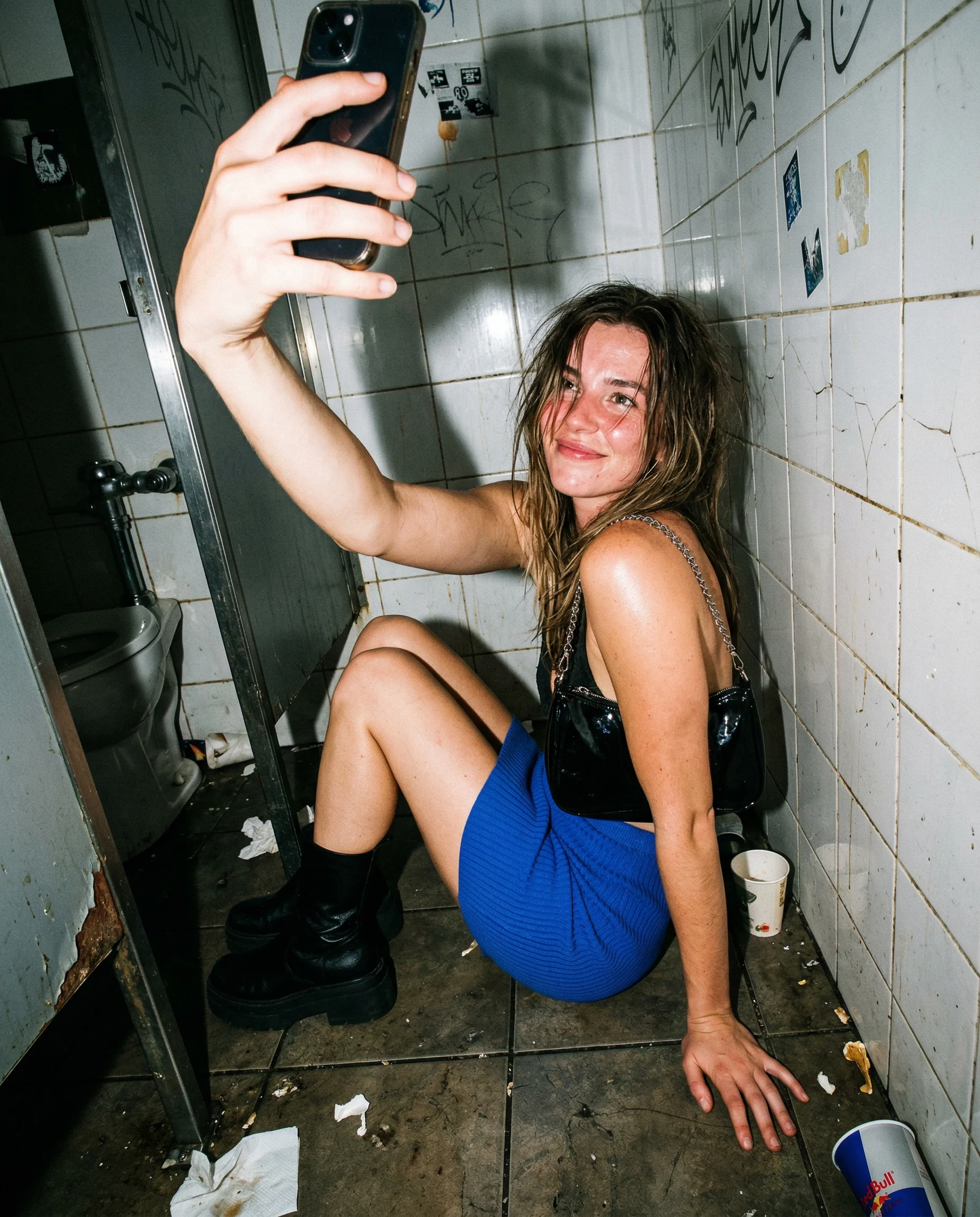
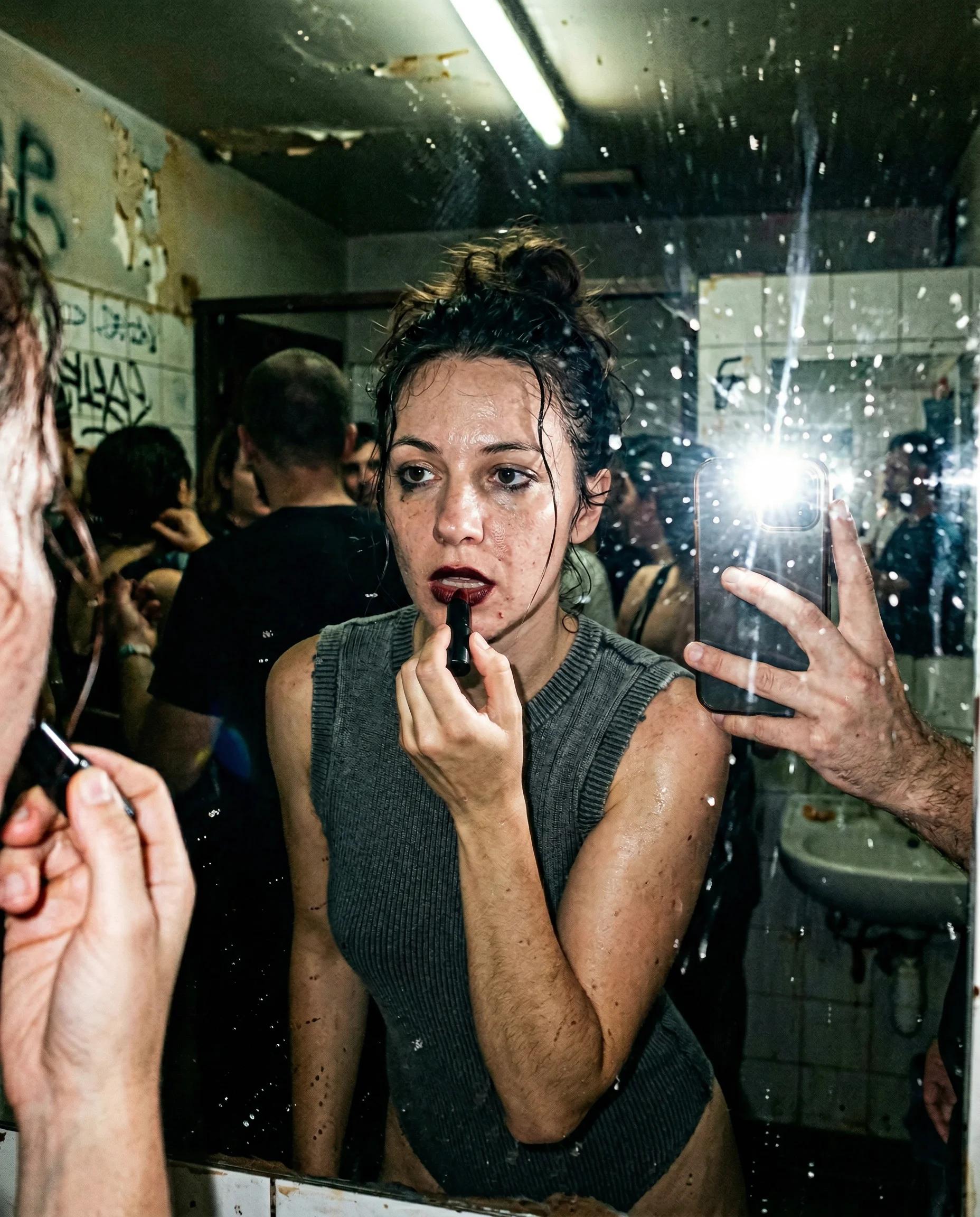
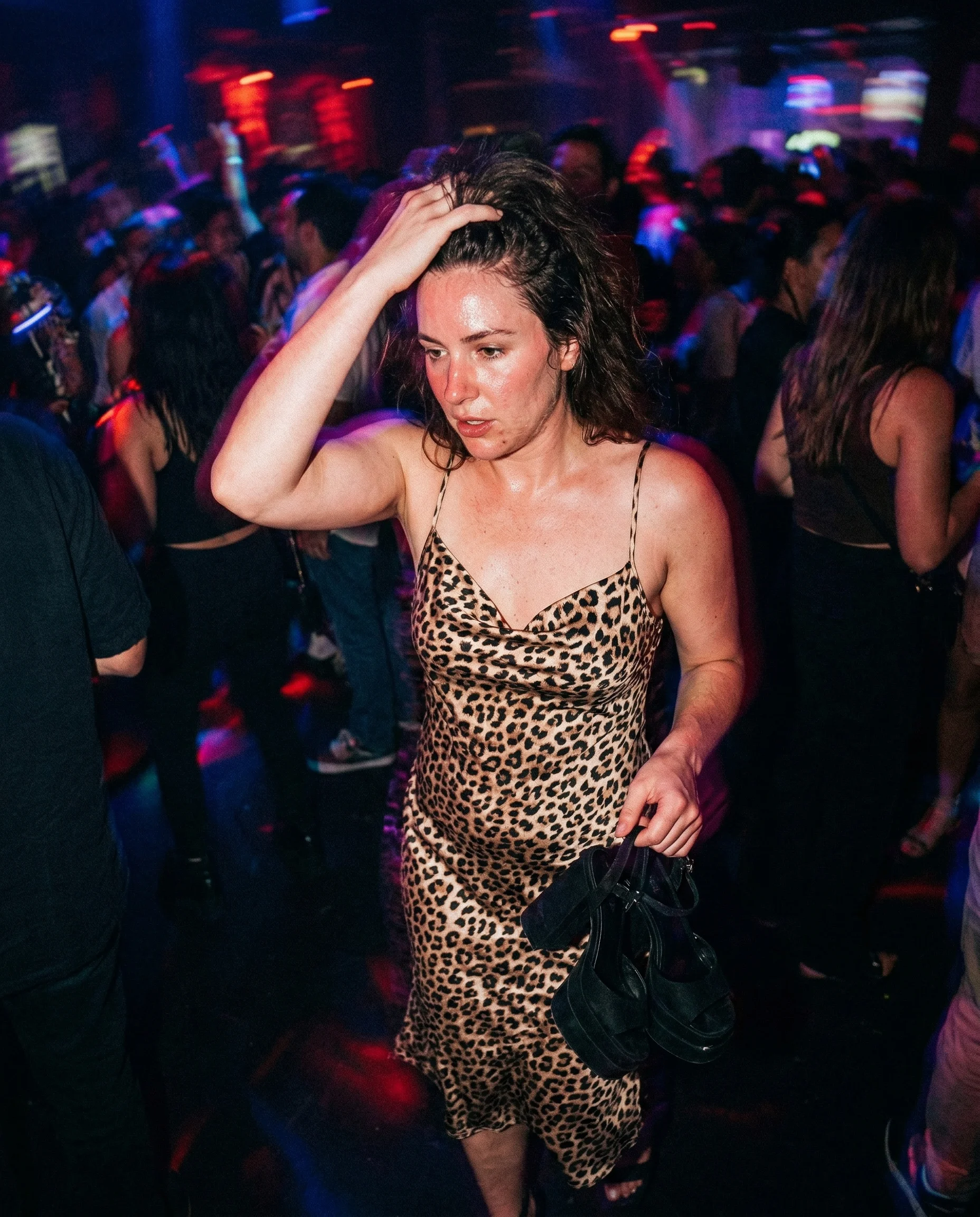
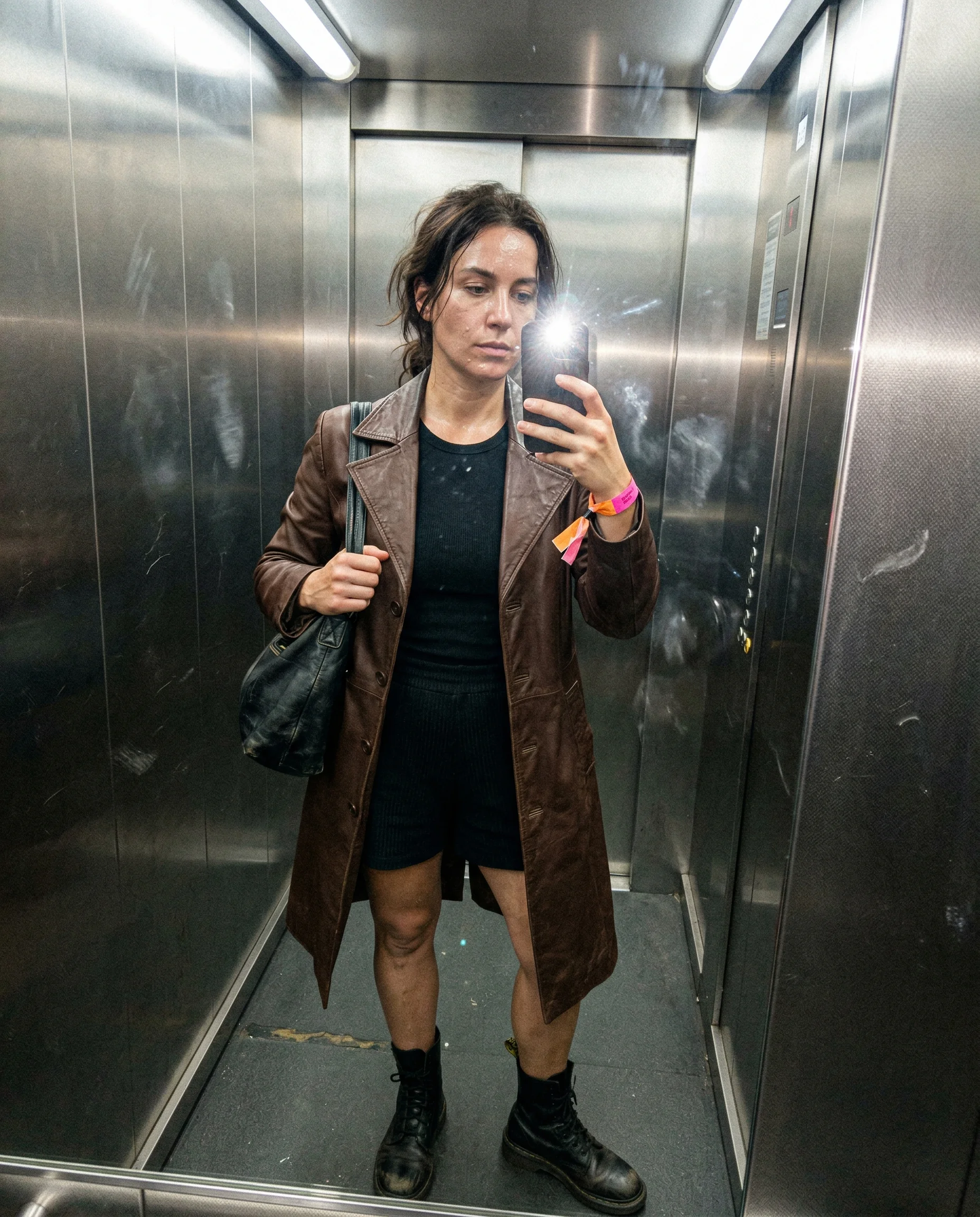
Nightlife captured with a jagged, unforgiving flash. Forget the polished party aesthetic; this is the reality of 3 AM bathroom mirrors, sticky bar tops, and the walk home.
Get the next prompt drop
We publish new prompts weekly. Get them in your inbox instead of checking back.
You're in. New drops land in your inbox.
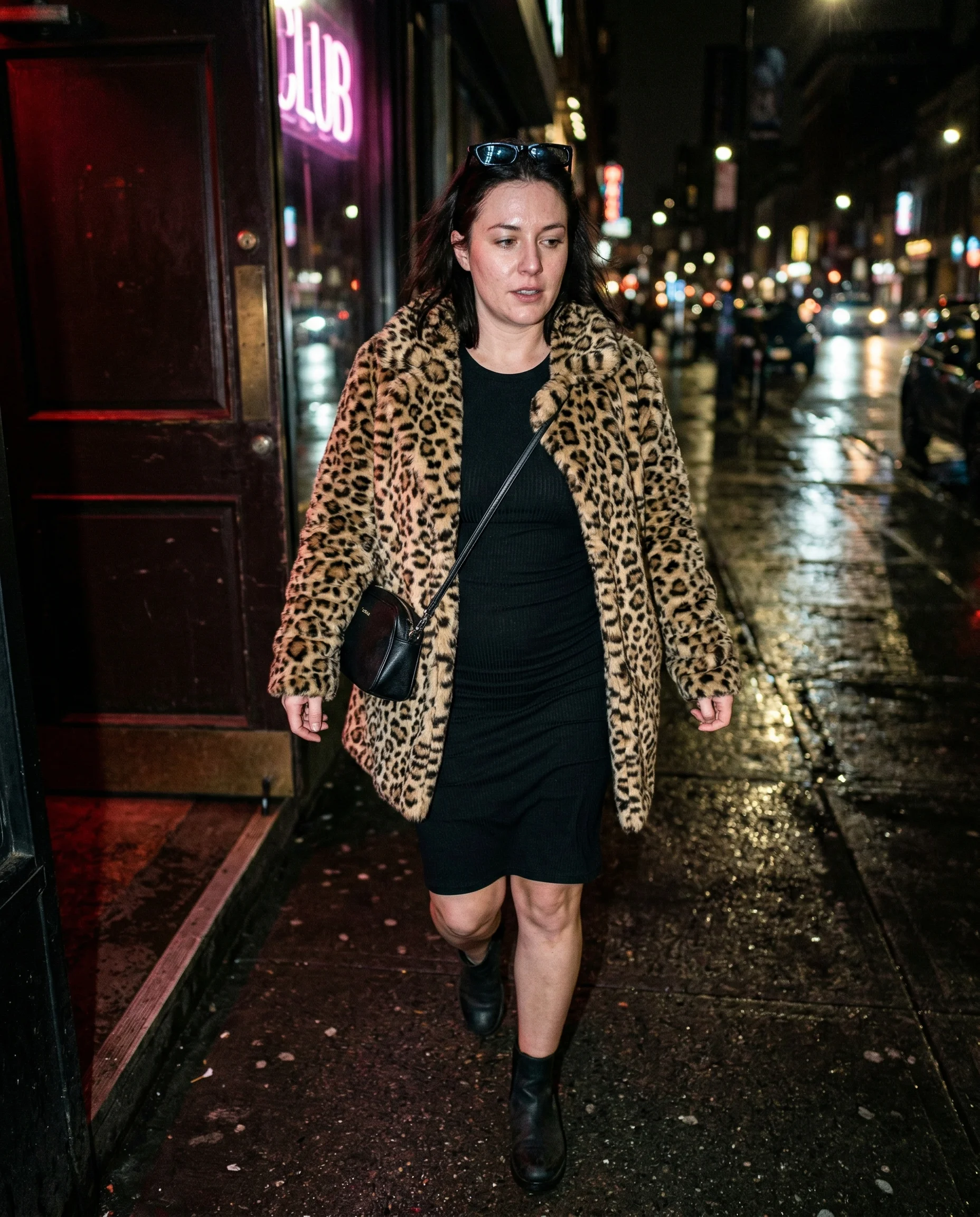
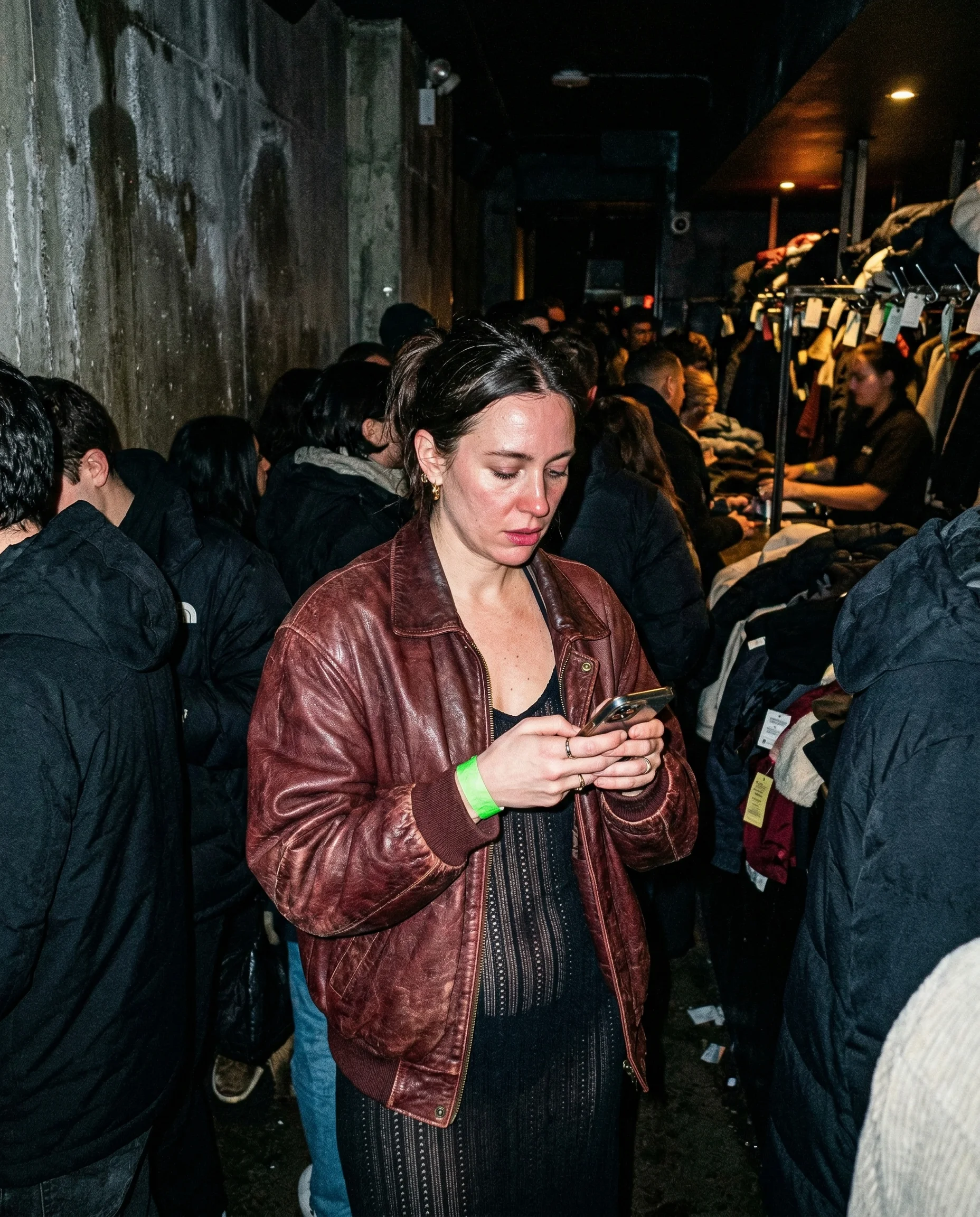
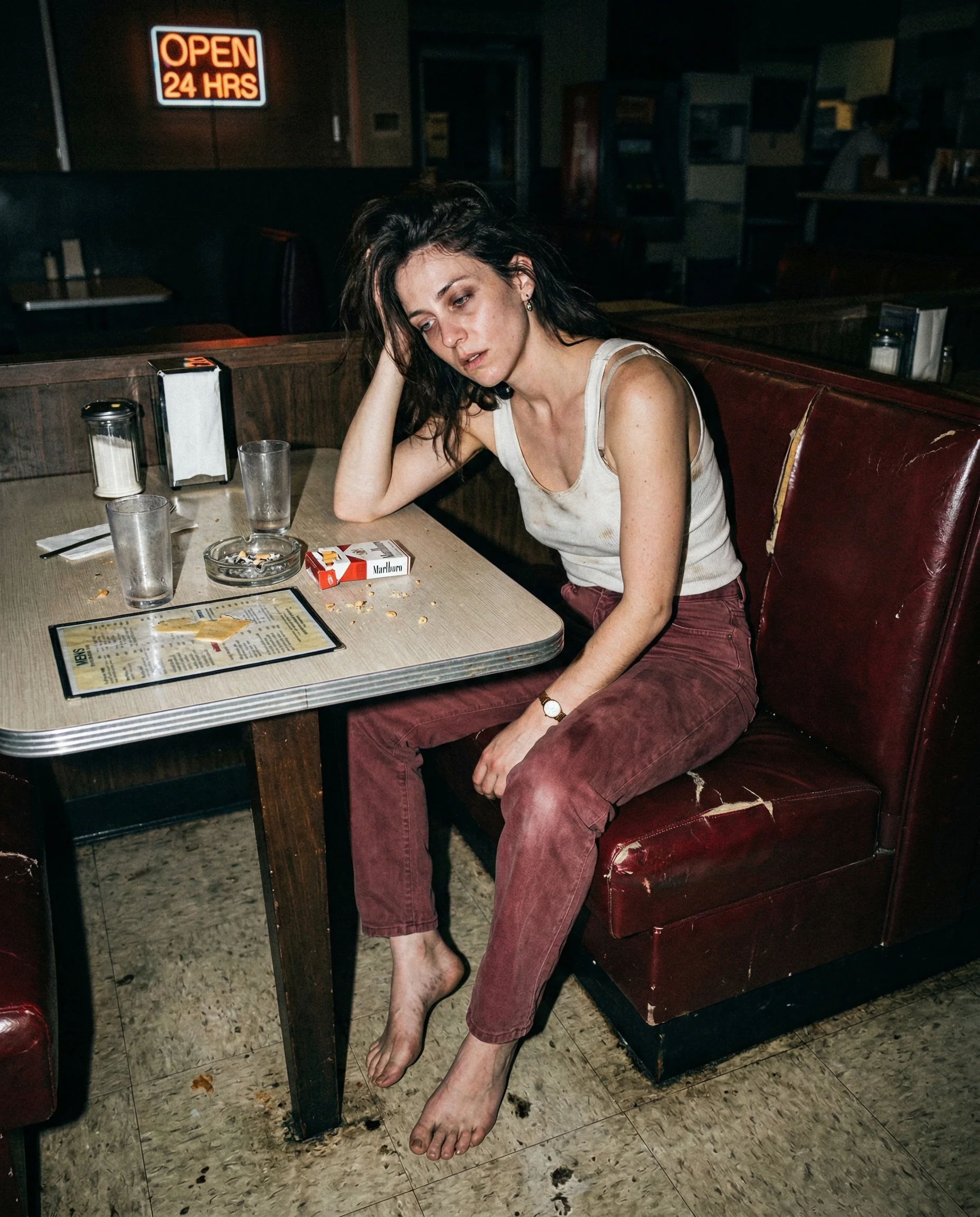
the scarred wood and spilled liquor
I trust the bar top more than I trust the subject’s face. The wood is chewed up, covered in deep scratches, and coated in a layer of grime that only exists at 2 AM. When the flash hits the sticky residue and the half-empty glass, it creates these sharp, unforgiving highlights that make the scene feel claustrophobic. The lime wedge floating in the dregs isn’t a prop; it’s evidence. If the surface was clean, the whole image would look like a stock photo for a generic nightlife ad. Instead, the condensation on the glass and the crumpled napkins with drink rings prove that someone has been sitting there for hours waiting for a night that peaked three drinks ago.
flash as a blunt instrument
I treat the flash like a physical object that hits the room and bounces back with zero mercy. Most people try to soften the light to make the subject look pretty, but that’s a mistake. By forcing the light to be direct and harsh, I pull out the texture of the glitter mesh top and the slight sheen on her skin. It highlights the pores and the faint peach fuzz rather than hiding them behind a filter. The flash catches the silver hoops and the stacked bangles just enough to make them look like cheap, worn-in accessories rather than high-end jewelry. If the lighting doesn’t feel like it’s intruding on the moment, it’s not doing its job.
the cost of the checked-out stare
Her expression is the anchor of the frame. She isn’t posing for the camera; she’s looking right through it, completely disconnected from the noise of the club behind her. That distance is what makes the image feel real. I want that specific, tired look that happens when the music is too loud and the conversation has run dry. The background blur is just enough to keep the bartender and the crowd as secondary shapes, ensuring the focus stays on the exhaustion in her eyes. It’s a total h*ll of a mood, but it only lands because the surrounding details—the stained napkins, the lighter on the bar, the messy bun—support the narrative of a night that’s gone on just a little too long.
Frequently asked questions
Why does the skin texture look so real instead of airbrushed?
I avoid any prompt terms that suggest 'smooth' or 'perfect' skin. By specifically calling for visible pores, peach fuzz, and natural T-zone sheen, the model is forced to render the skin as an organic surface rather than a plastic one.
How do you keep the flash from making the image look like a studio shoot?
The secret is the distance and the angle. By using a 24mm-equivalent lens, the camera is physically closer to the subject, which makes the flash hit with more intensity. I also lean into the 'phone-camera' aesthetic to ensure the light doesn't have the professional fall-off you'd see with a studio softbox.
What should I focus on to make the bar environment feel authentic?
Focus on the debris. If the bar top looks too clean, the image loses its weight. Including specific details like crumpled cocktail napkins, sticky rings from spilled drinks, and a lighter or loose change makes the environment feel lived-in and tired.
Is the glitter mesh top necessary for this specific look?
It helps, but the texture is the real reason it works. The glitter mesh reflects the harsh flash in a way that creates tiny, sharp points of light across her torso, which adds to the gritty, high-contrast feel of the nightlife atmosphere.