
Bar Menu Shield: Candid First Date Nervousness
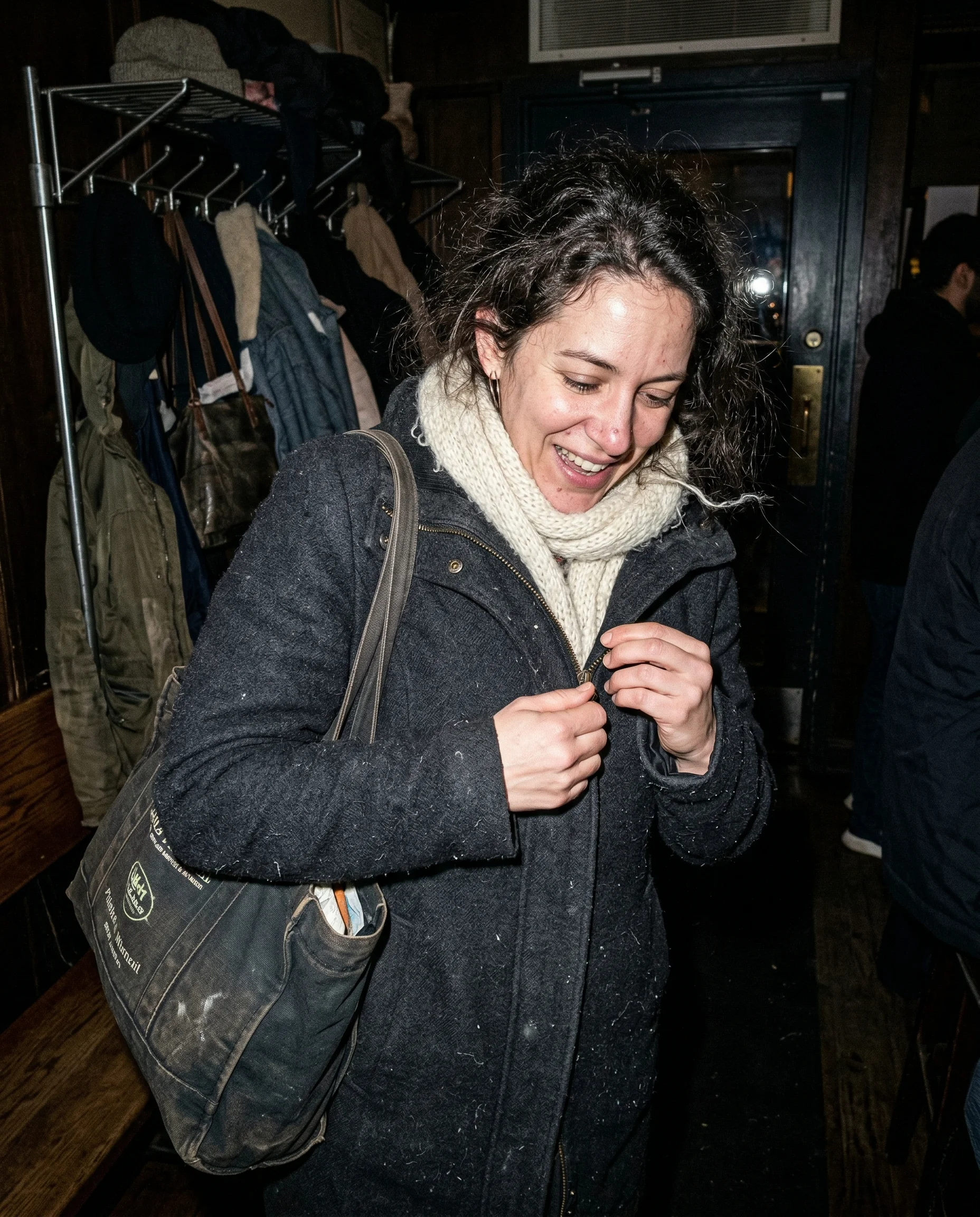
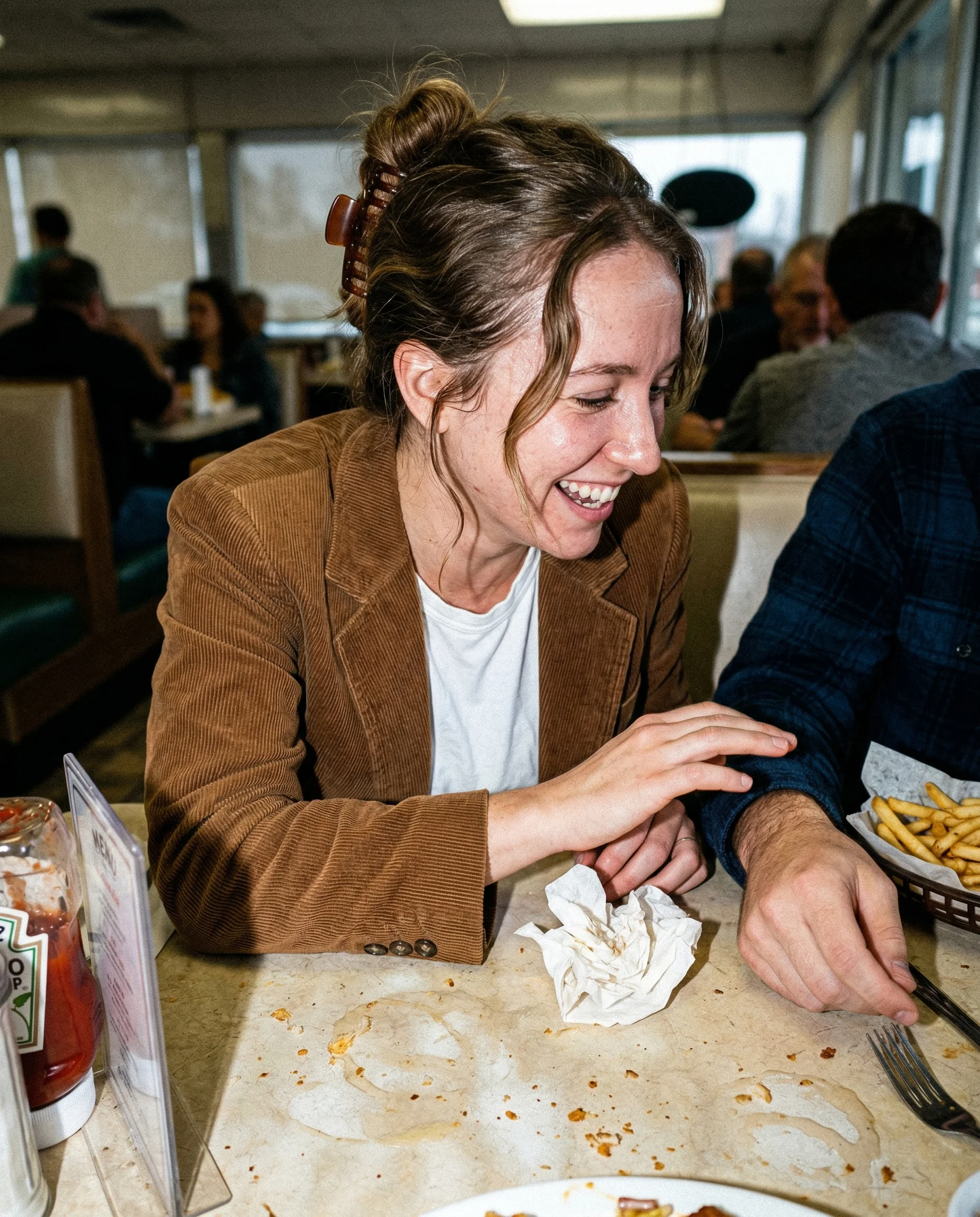
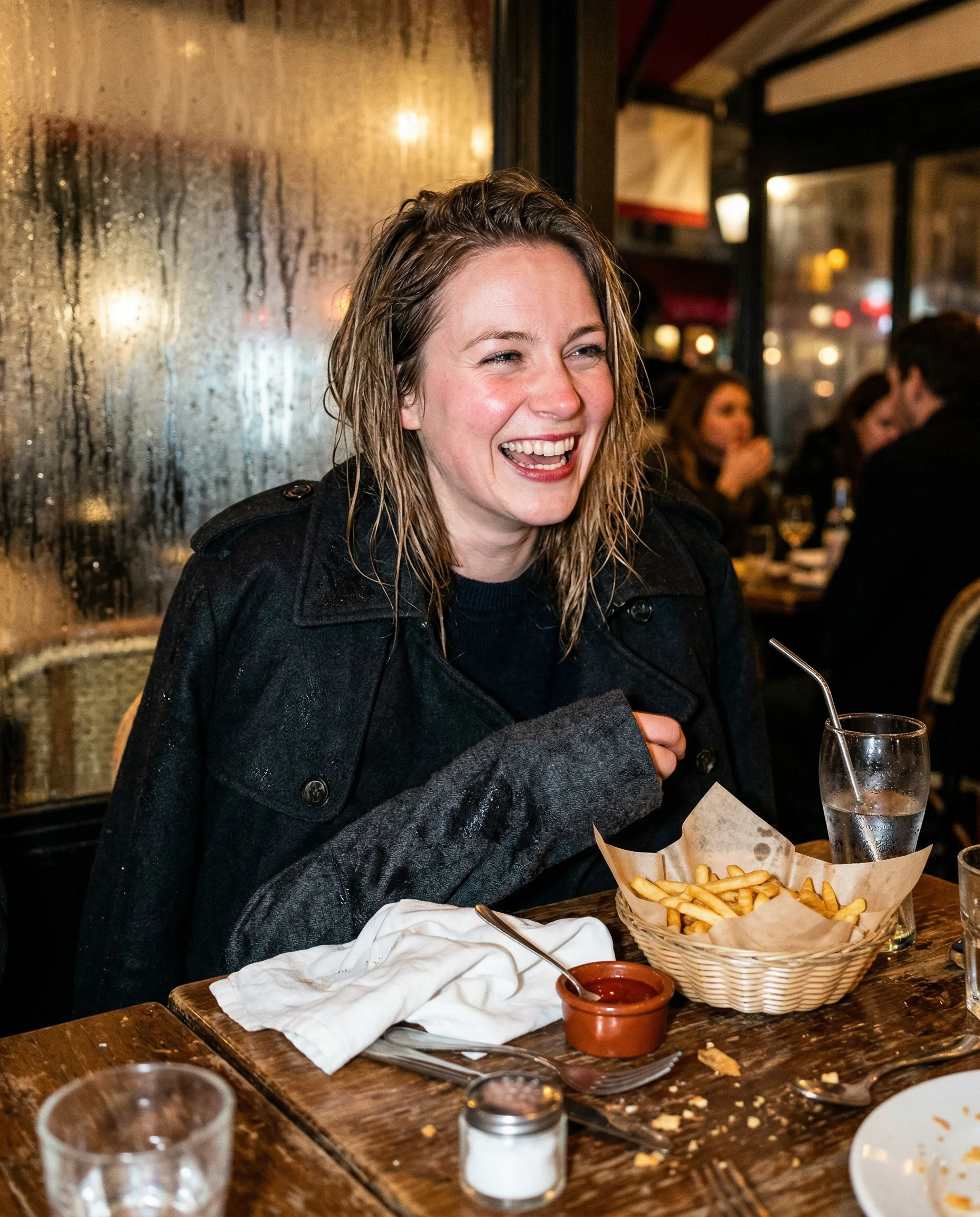
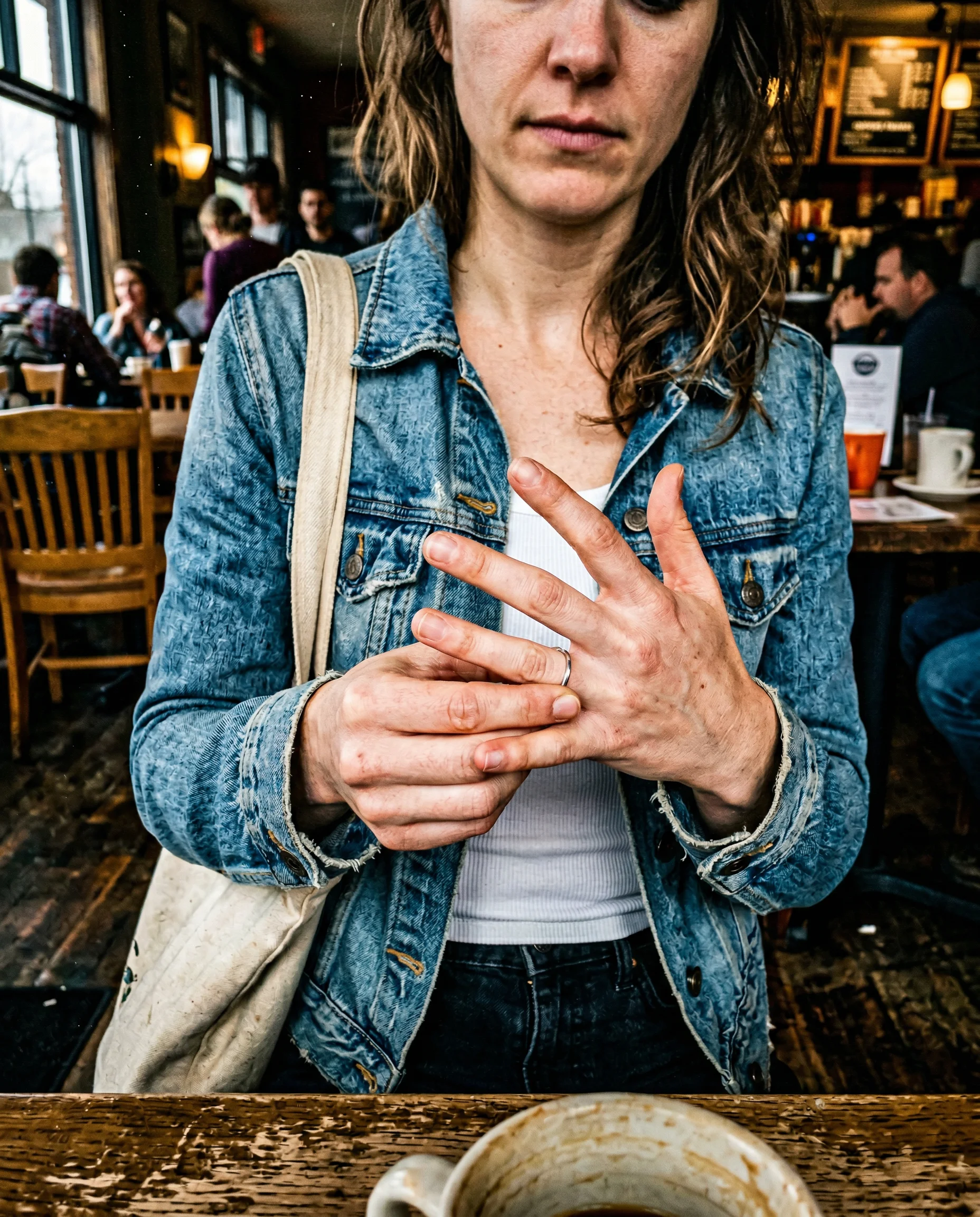
First dates are rarely cinematic. This collection tracks the friction of a first meeting: napkin-fidgeting, coat-check panic, and relief through smudged glass.
Get the next prompt drop
We publish new prompts weekly. Get them in your inbox instead of checking back.
You're in. New drops land in your inbox.
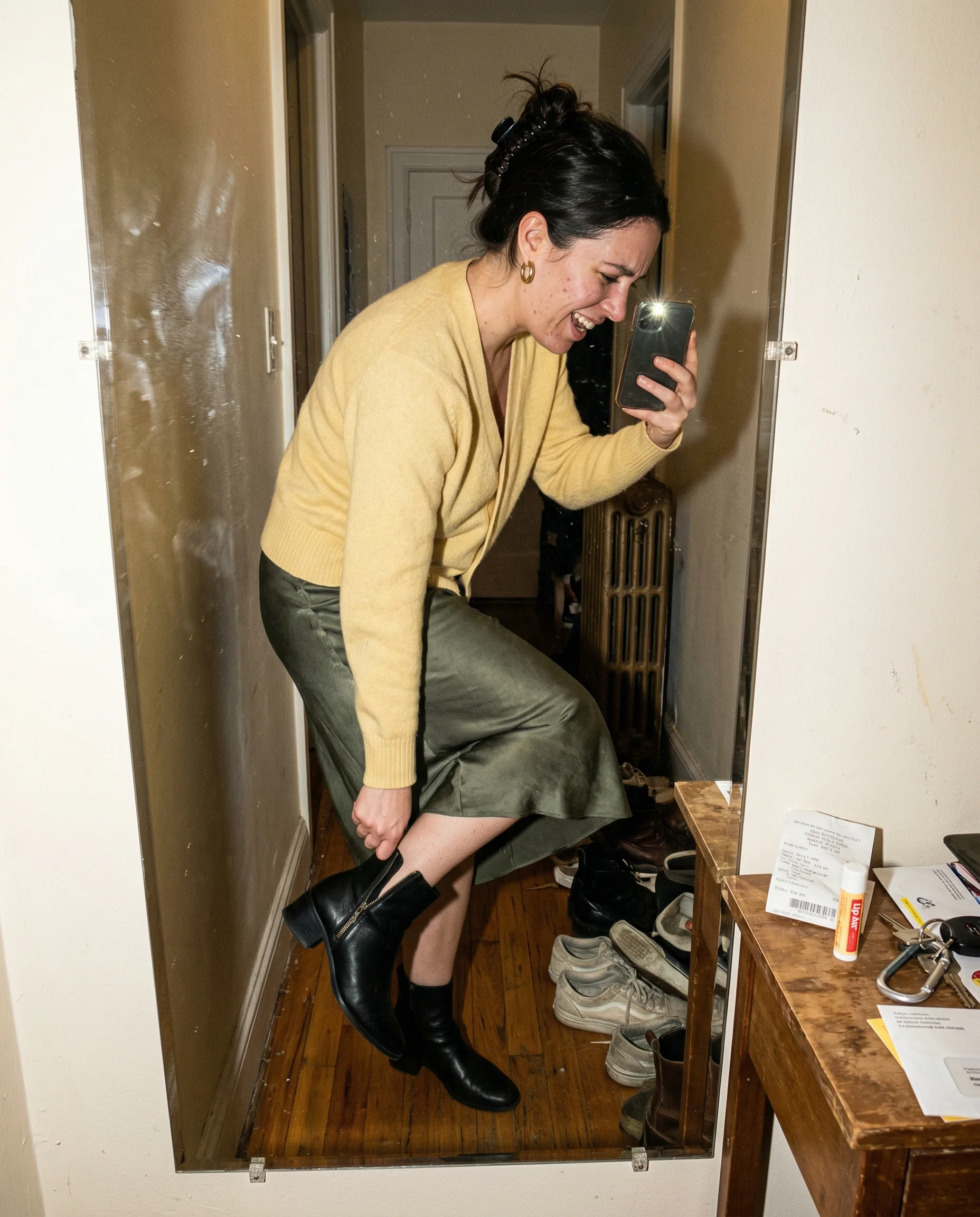
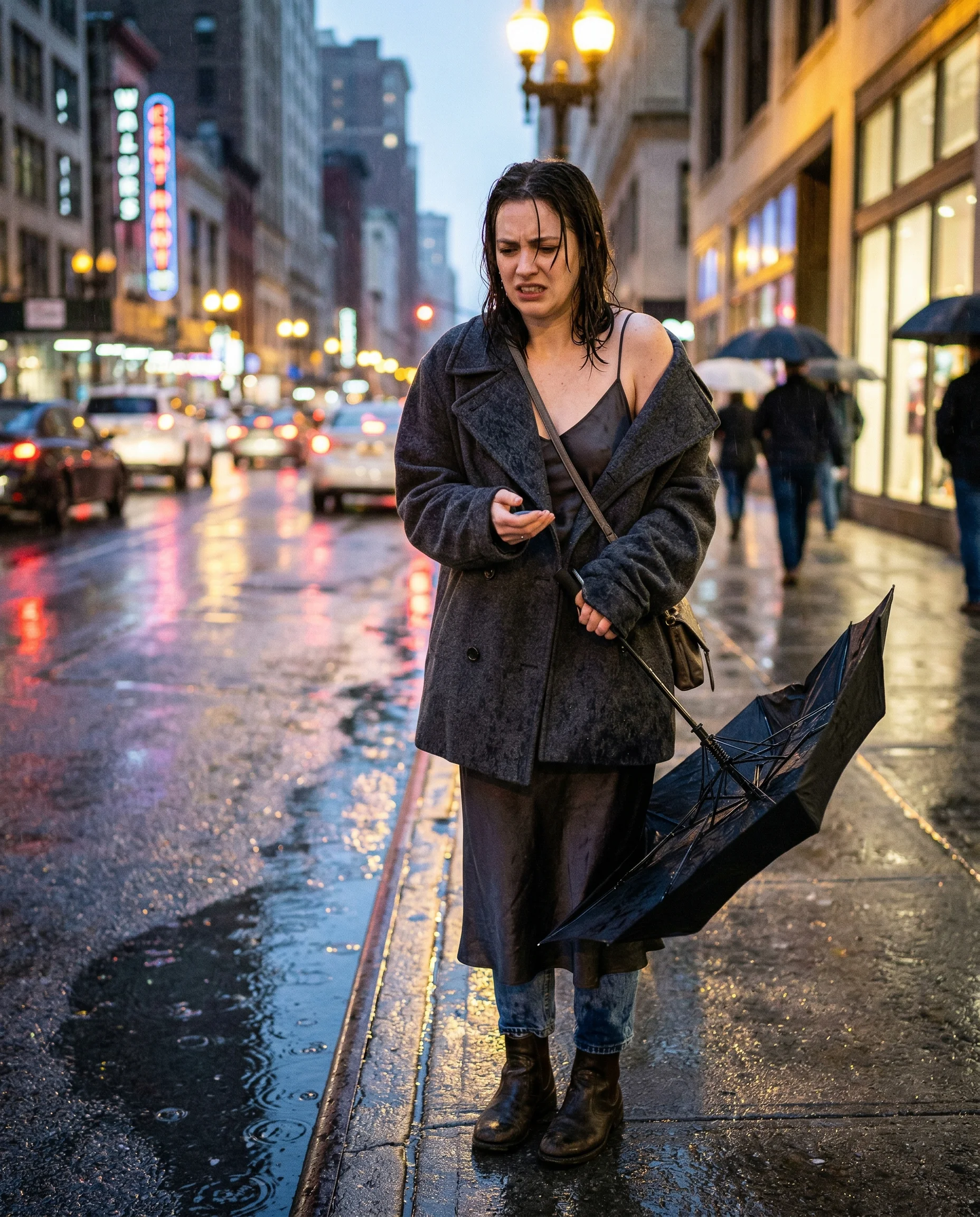
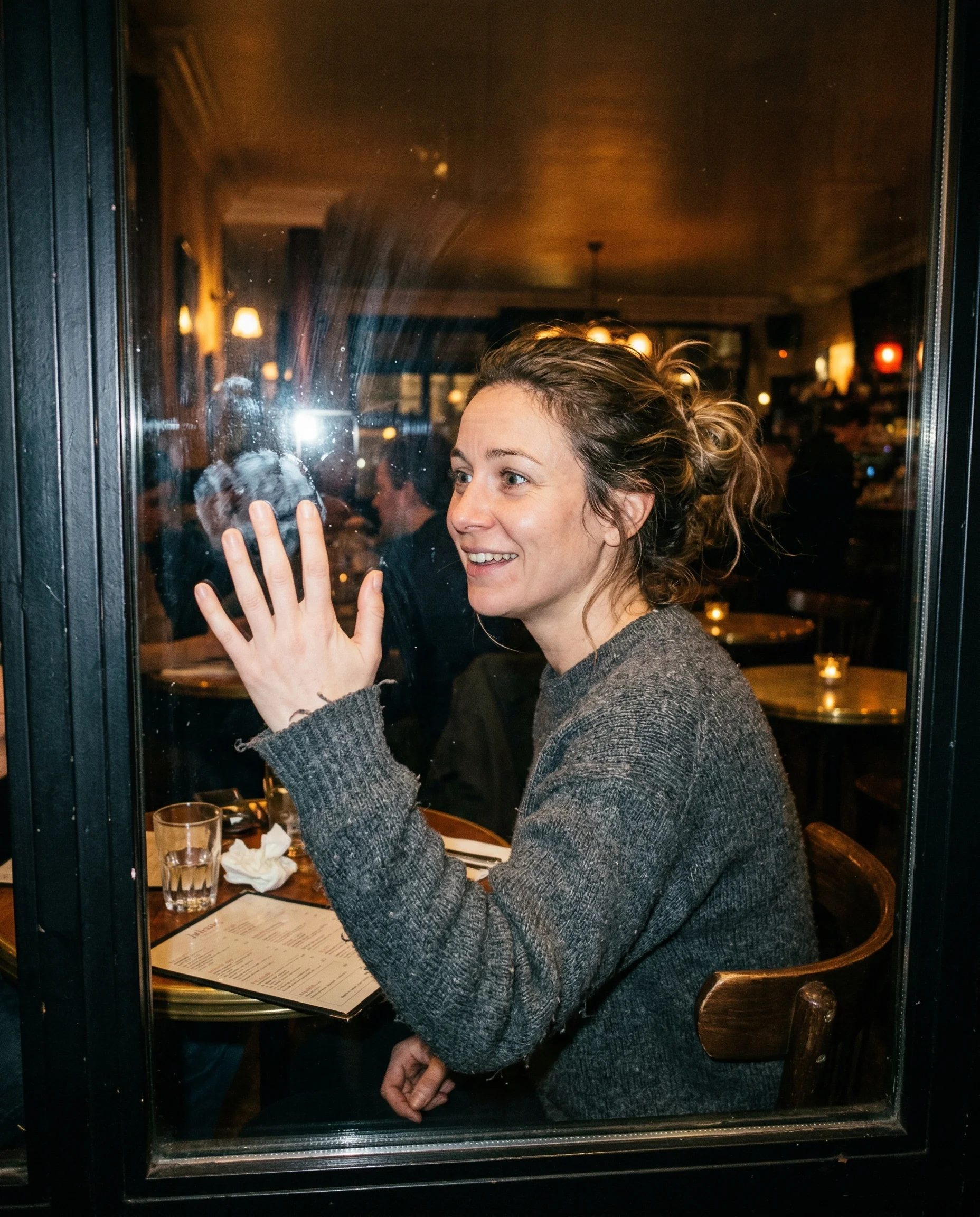
the menu as a barrier
The laminated menu acts as a physical wall, forcing her to hold it high enough to obscure her mouth and chin. It is a classic move when someone is trying to disappear or doesn’t know what to do with their hands. The edge of the menu cuts into the frame, pinning the viewer’s focus on her eyes. If the menu were held perfectly flat or aligned with the camera, the shot would look like a staged portrait. Instead, the slight angle and the way her fingers grip the laminated edge make it feel like she is genuinely using it to hide from the entrance.
harsh flash and skin texture
I need the flash to stay a little rude in a dark bar. If this were lit with soft, flattering light, the tension would evaporate. The direct flash does the heavy lifting: it catches the T-zone sheen, the natural texture of her skin, and the faint peach fuzz on her cheek. When you see the pores and the slight unevenness of her skin, the image stops feeling like a stock photo and starts feeling like a real moment. The flash creates a sharp, high-contrast look that mimics a phone camera pushed to its limits, which is exactly why it doesn’t look like a polished commercial production.
the background mess
Bar interiors get fake fast if they are too clean. The blurred background is a mix of warm, flickering neon spill and the condensation on a nearby glass, which grounds the scene in a specific, sticky reality. The dark, out-of-focus bar environment provides just enough context to know where she is without distracting from the main action. The condensation on the glass is a small, quiet detail that sells the temperature and the atmosphere. By keeping the background dark and slightly chaotic, the focus stays pinned on her nervous glance toward the door, making the whole scene feel trapped in a single, unscripted second.
Frequently asked questions
how do i make the flash look less like a studio setup?
Stop trying to diffuse it. If you want that raw phone-camera look, you need the flash to be harsh and direct. It should create sharp shadows and catch textures like skin pores or condensation on glass. The second you soften the light, you lose the grit.
why does this image look so much more real than others?
It is the combination of the messy claw clip, the slightly uneven skin tone, and the way the menu is held. These are not perfected elements. They are small, human details that usually get scrubbed out in commercial work, but they are exactly what makes a candid shot stick.
what is the best way to frame a candid bar scene?
Keep it eye-level and slightly off-center. If you get too precious with the composition, the spontaneity dies. Catching the subject in a moment of distraction—like looking toward an entrance—makes the viewer feel like a fly on the wall instead of a photographer.
how do i keep the background from looking like a fake blur?
Don't over-process the depth of field. Let the light spill be natural and slightly messy. When you see the flickering neon and the condensation on a glass, the background stops being a generic blur and starts being a real place. If it gets too clean, it looks like a cheap digital filter.