
Candid Bistro Window Relief: First Date Through Smudged
First dates are rarely cinematic. This collection tracks the friction of a first meeting: napkin-fidgeting, coat-check panic, and relief through smudged glass.
Get the next prompt drop
We publish new prompts weekly. Get them in your inbox instead of checking back.
You're in. New drops land in your inbox.

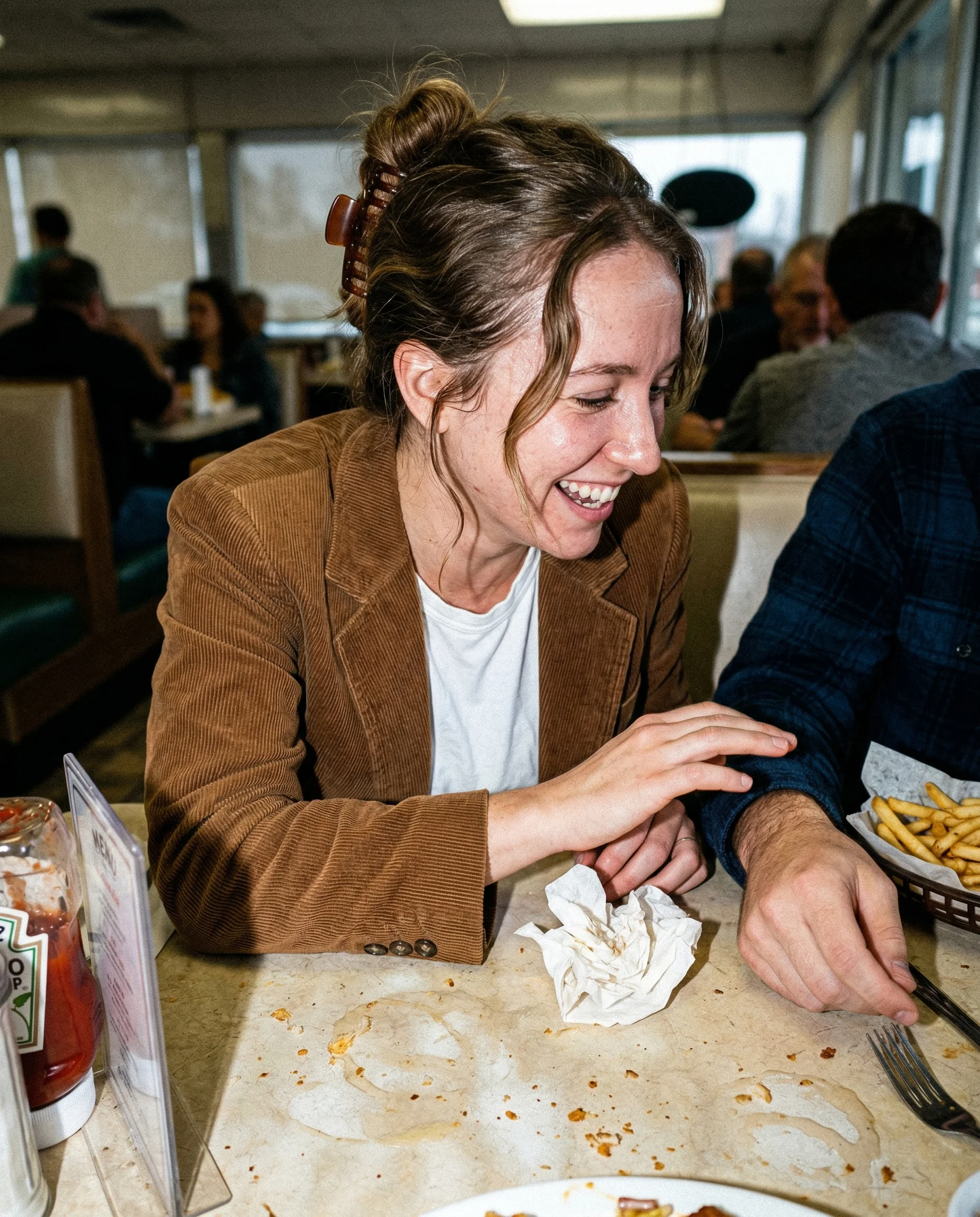

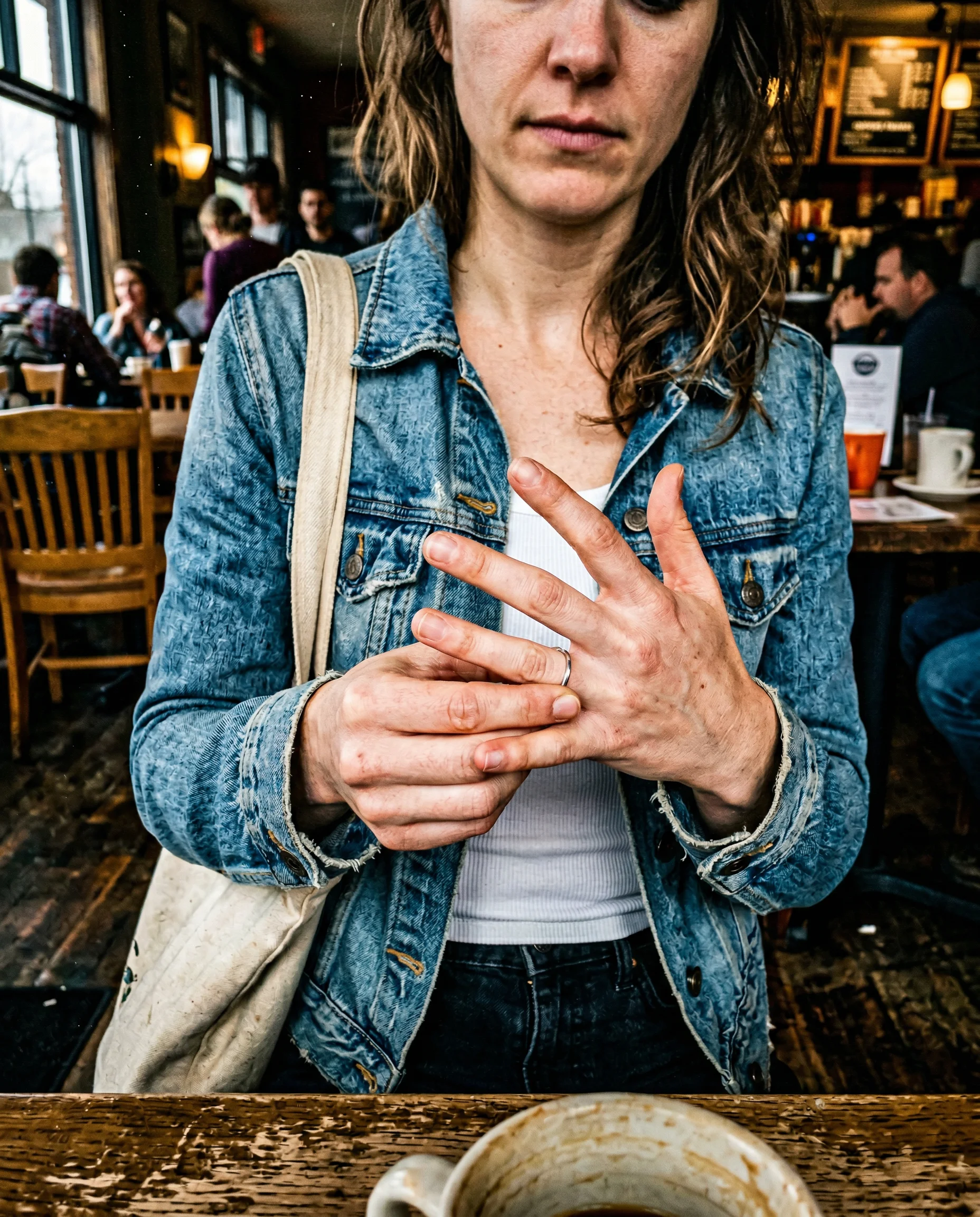
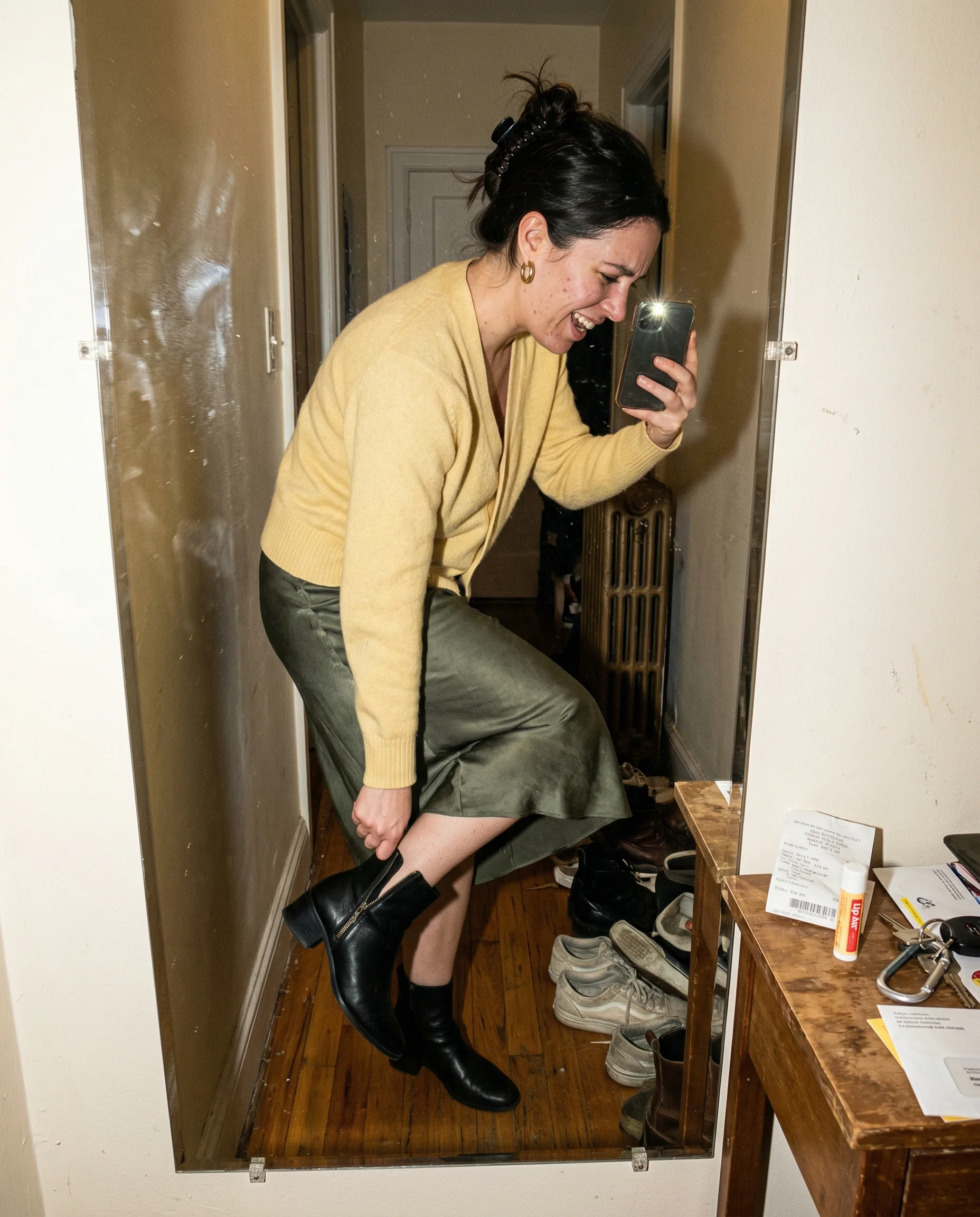
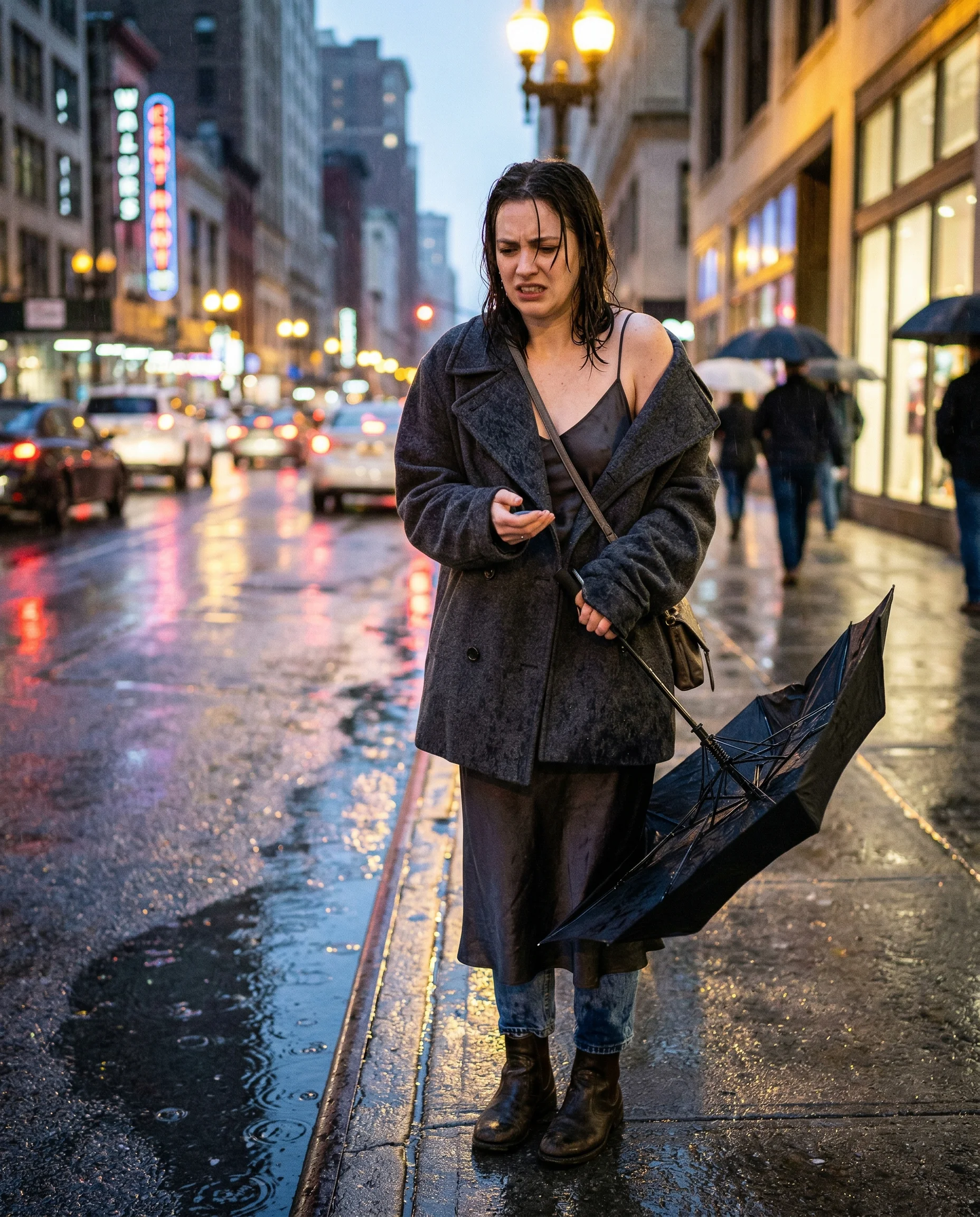

the smudged glass barrier
The smudge on the window matters more than the person behind it. If the glass were clean, the shot would look like a catalog ad. By catching the flash reflection directly on the glass, the image creates a physical barrier between the camera and the subject. That oily palm print and the streak of condensation make the viewer feel like they are standing on a cold sidewalk, peering into a space they aren’t meant to be in. Keep the glass dirty and let the light bounce off the grime.
pilling wool and messy buns
I always look for the details that show the night has already been going on for a while. The pilling on the charcoal sweater cuffs is essential—it’s the kind of detail that gets edited out in commercial work, but it’s exactly what makes this feel like a real person. The low bun, with those loose, unstyled strands escaping, suggests she’s been sitting there waiting, maybe fidgeting with her hair. If the hair were perfectly set, the relief in her expression would look like acting. The messier the sweater and the hair, the more honest the laugh feels.
the flash reflection trap
Using a direct phone flash through a window creates that harsh, high-contrast look that defines a low-budget candid. It catches the pores on her nose and the slight sheen on her T-zone, which keeps the skin texture grounded. If the light were soft or diffused, the image would drift into a polished, staged look that kills the spontaneity. The grain from the high ISO setting does the rest, pulling the background into a murky, dark blur that keeps all the focus on the immediate, cluttered table.
Frequently asked questions
How do I stop the glass reflection from looking like a mistake?
Don't try to hide it. The reflection is the point. If you angle the camera slightly so the flash hits the glass, you get that raw, amateur look that makes it feel like an actual phone photo rather than a studio setup.
Why does the skin look so real in this shot?
It's the combination of high ISO grain and direct flash. The flash highlights actual skin texture like pores and peach fuzz, while the grain prevents the AI from smoothing everything into a plastic finish. Focus on prompts that specify skin imperfections to keep it grounded.
How do I keep the background from looking too clean?
Keep the interior cluttered. Half-empty water glasses, discarded menus, and dark, indistinct shapes in the background add depth. If the background is too tidy, the image loses its sense of place and starts to look like a stock photo.
Is there a trick to getting the 'relief' expression right?
Focus on the context, not just the face. By framing her mid-laugh with her hand pressed against the glass, the relief is implied by the action. It’s the combination of the hand position and the genuine, unposed laugh that sells the emotion.