
Damp Wool and Late Arrival: Restaurant Table Candid
First dates are rarely cinematic. I track the friction of a first meeting: the napkin-fidgeting, the coat-check panic, and the relief of a shared laugh through smudged glass.
Get the next prompt drop
We publish new prompts weekly. Get them in your inbox instead of checking back.
You're in. New drops land in your inbox.
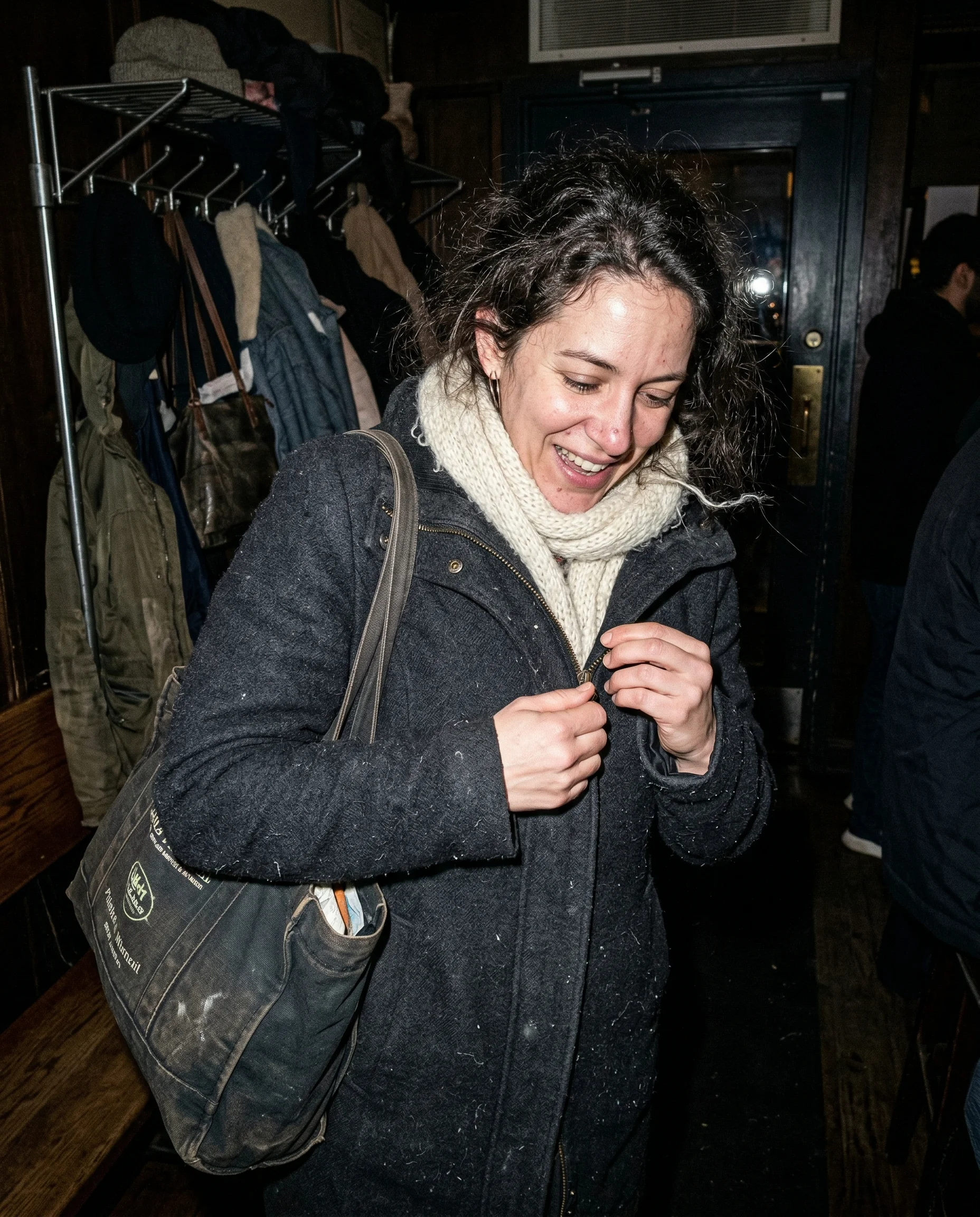
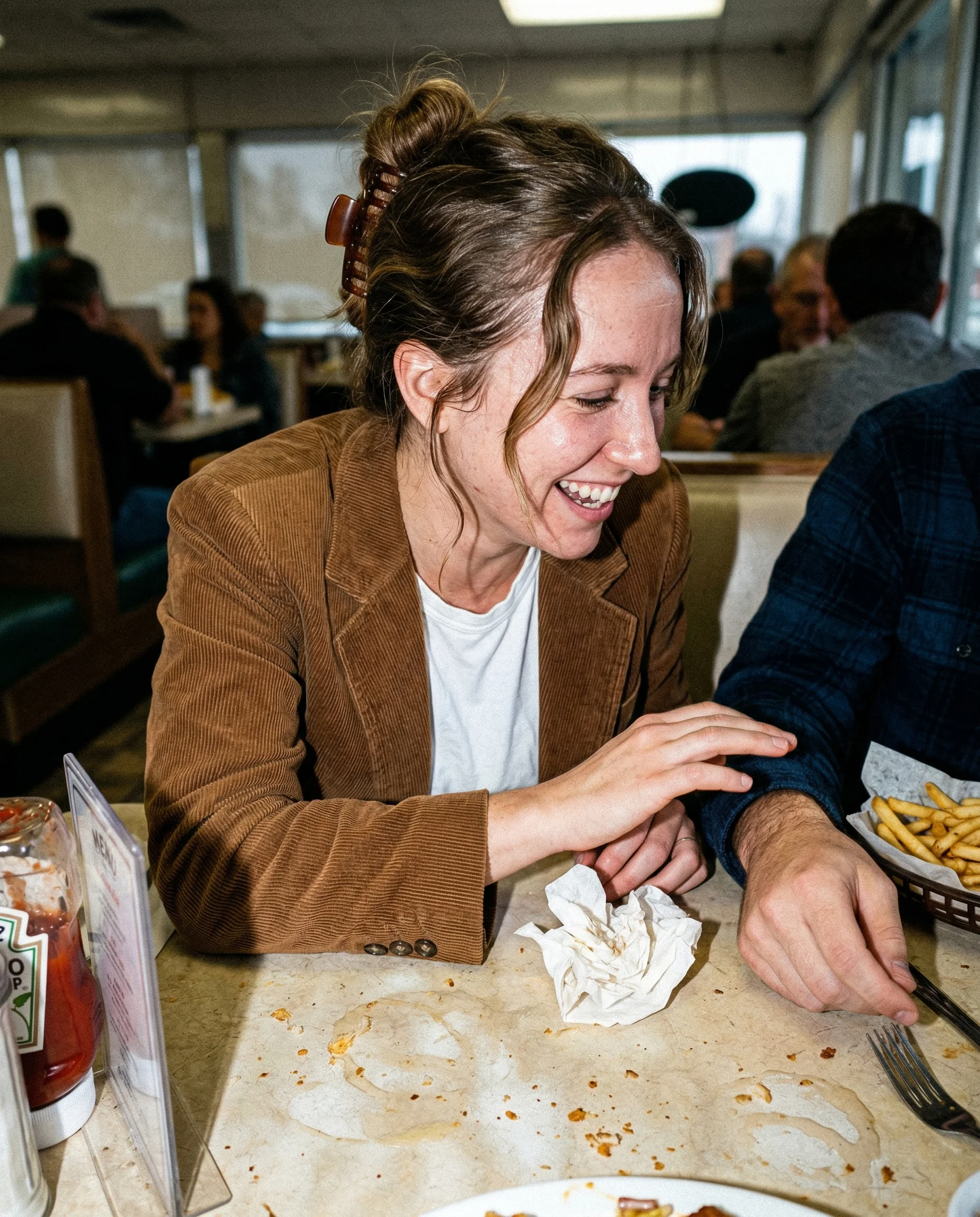
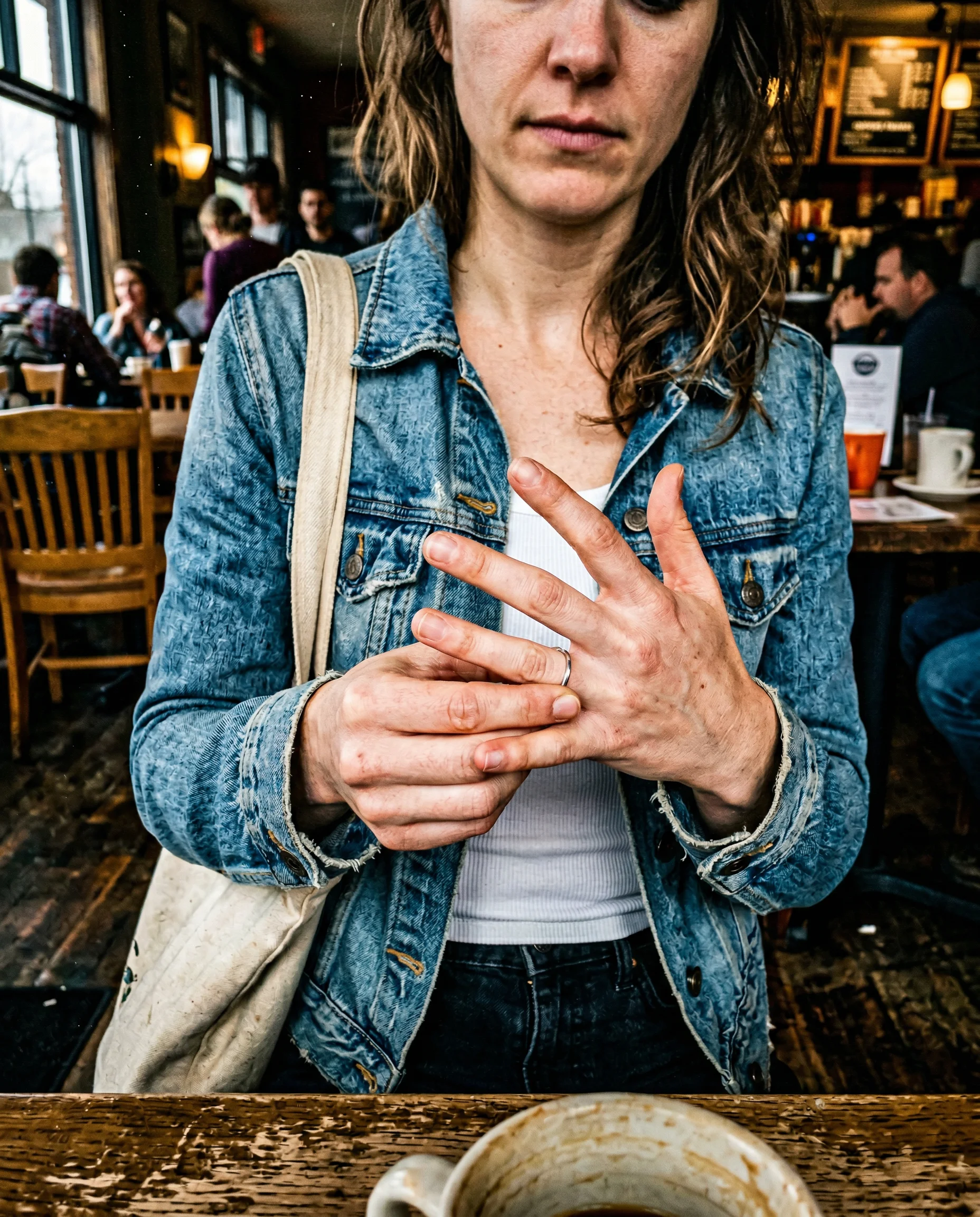
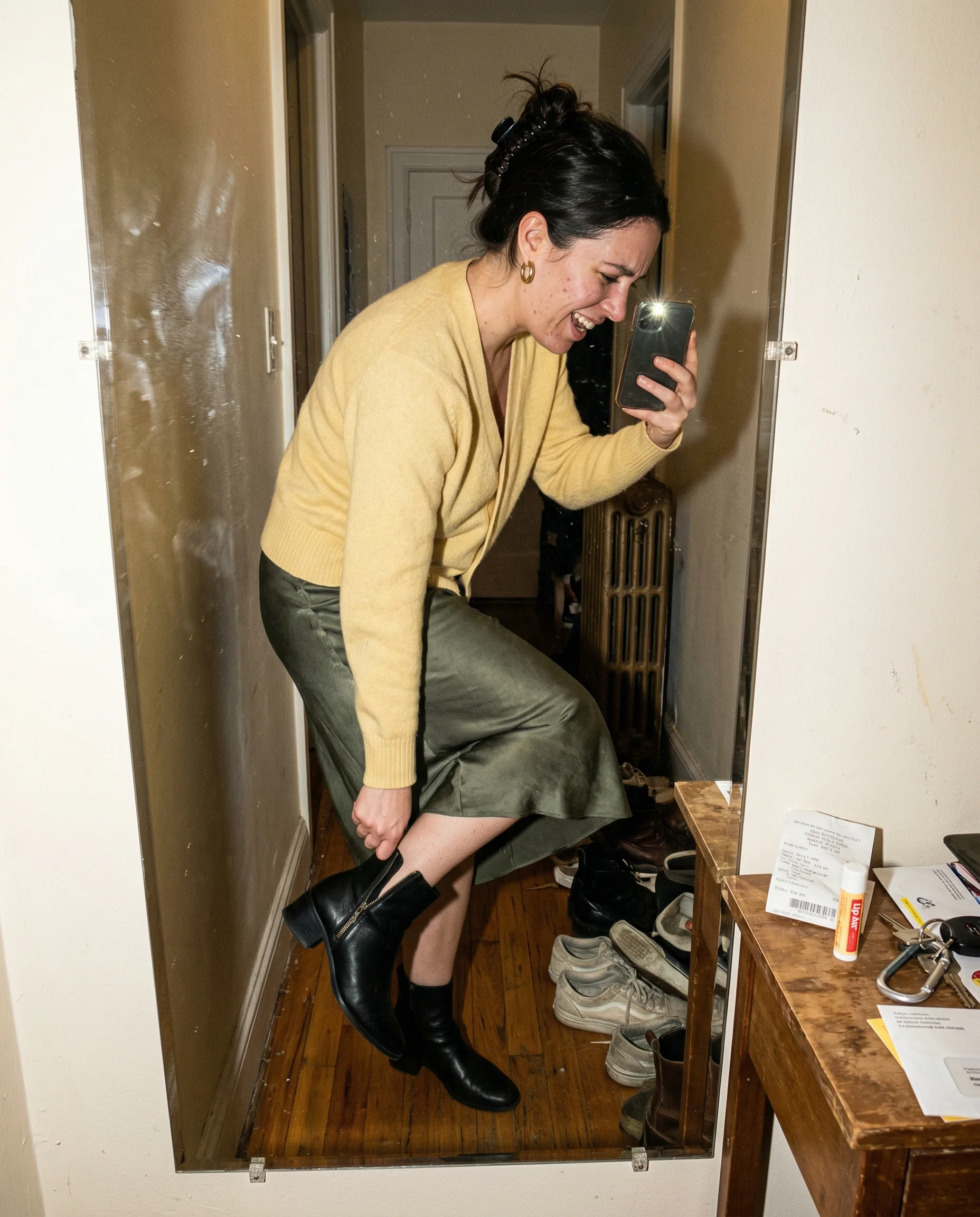
the heavy sleeve and the fry basket
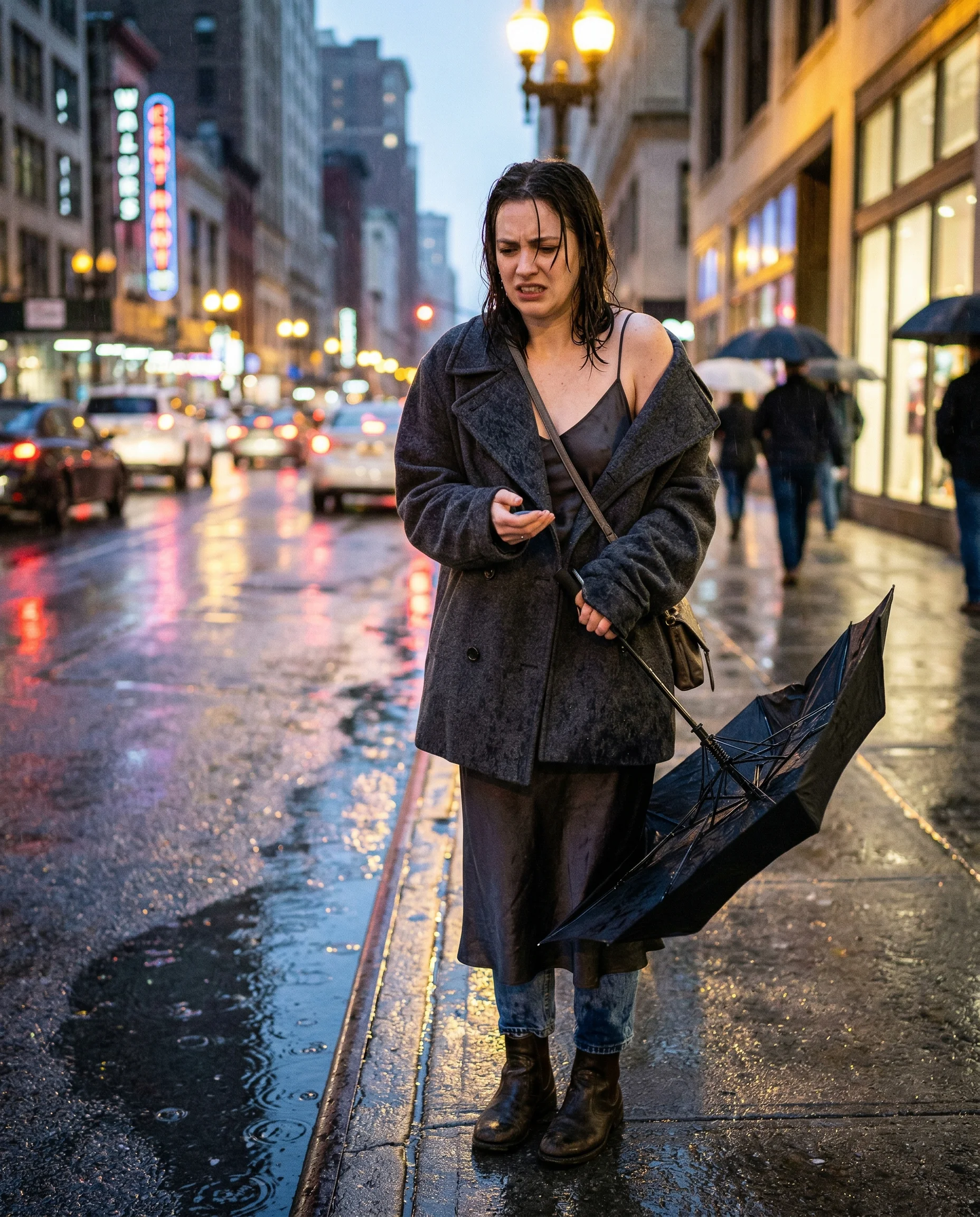
i want the coat to look like it’s weighing her down. that damp patch on the wool sleeve isn’t just a detail; it’s the reason the whole shot feels grounded. if the coat were dry or perfectly hung, we’d be in catalog territory. instead, she’s still half-wrapped in it, and the way the sleeve drags near the basket of fries makes it look like she’s about to knock the whole thing over. i need that friction between the cold, wet fabric and the greasy, warm table setting to sell the fact that she just walked in from the rain. it shouldn’t look neat.
flash against the fogged glass
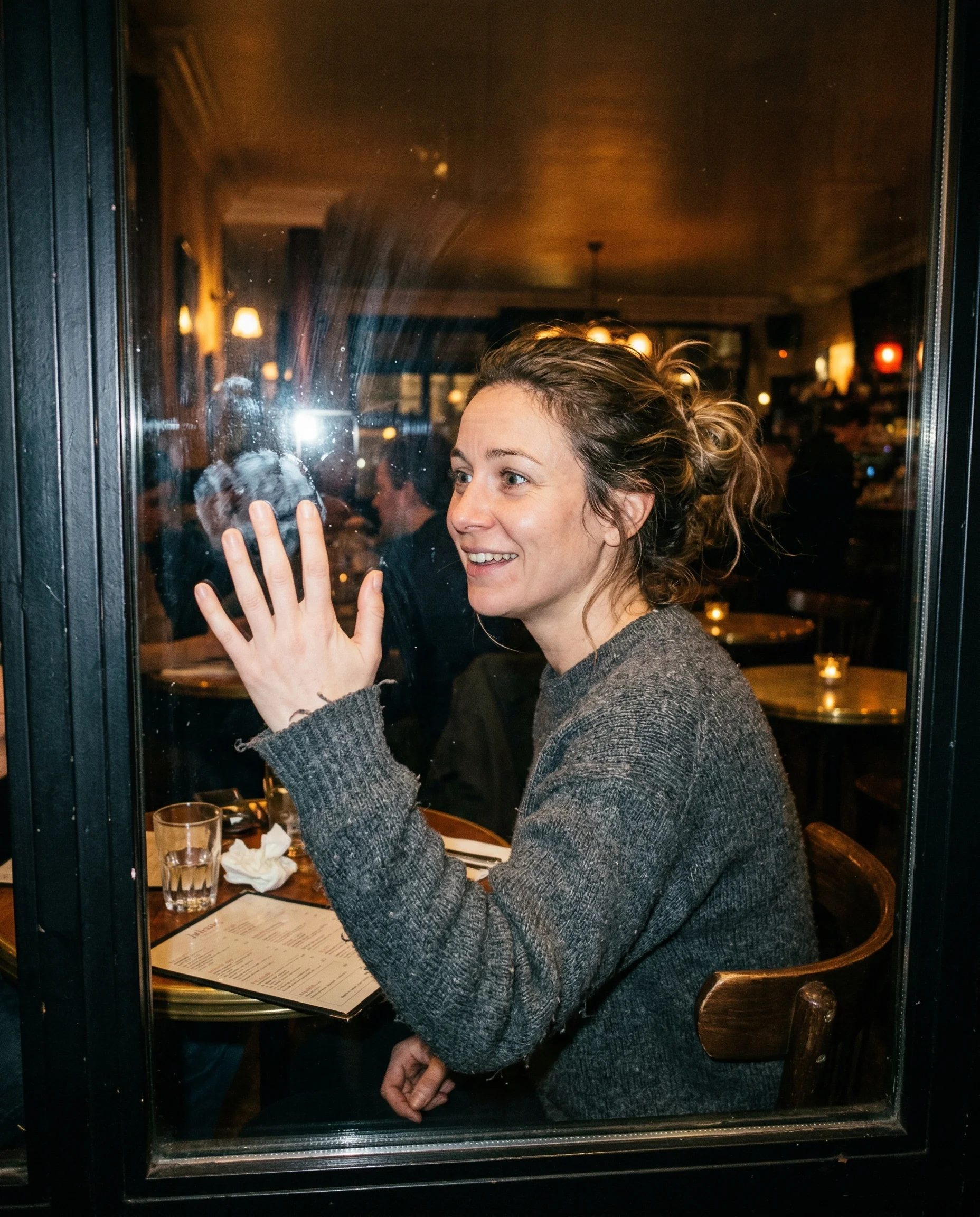
the window behind her is doing all the heavy lifting. that condensation isn’t just for atmosphere; it’s a light trap. when the direct flash hits it, the glass turns into a mess of glare that cuts her off from the rest of the restaurant. i love that the light is rude and unblended. it hits her face, catches the stray hair, and creates that high-contrast, slightly oily skin texture that screams phone-camera. if i had diffused that light, the whole thing would have turned into a soft-focus magazine lie. the goal is for the flash to look like an intrusion, not an enhancement.
the messy geometry of a late apology
look at the table. it’s a disaster, and that’s exactly how i want it. the rumpled napkin, the salt shaker sitting too close to the edge, and the way the cutlery is just tossed down—this is the visual language of someone who is mortified but trying to laugh it off. if the napkin were folded or the table were wiped clean, the narrative of being late and flustered would die instantly. i keep the focus on the chaos of the immediate surroundings because that’s where the truth lives. the laugh isn’t a performance; it’s a reaction to the fact that she’s currently a wet, messy, apologetic wreck in a warm room.
Frequently asked questions
why does the skin look so textured?
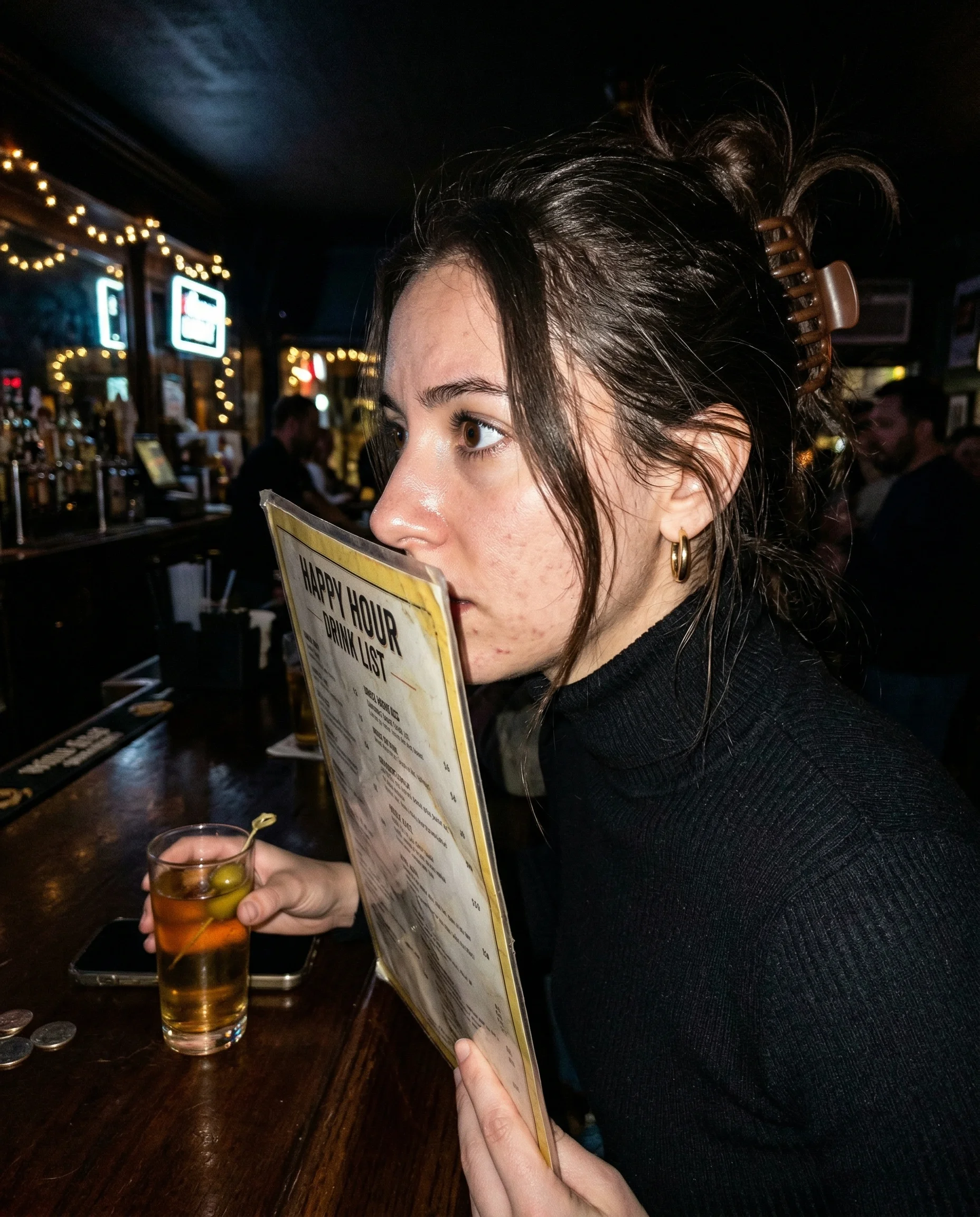
i’m pushing for raw, unfiltered detail. if you smooth out the pores or hide the T-zone sheen, you lose the human element. the flash is meant to be unforgiving—it picks up every bit of peach fuzz and uneven tone, which is the only way to make an AI image feel like a real person.
how do i keep the flash from looking like a studio setup?
stop trying to make it flattering. if the light is hitting her dead-on and creating harsh shadows behind her, you’re doing it right. the moment you start worrying about 'good' lighting, you’ve already lost the candid feel.
is the damp sleeve necessary for the shot?
it’s the anchor. without that wet texture on the wool, the story of her arriving from the rain falls apart. small, tangible failures like a damp sleeve or a messy napkin are what stop the viewer from thinking this is just another stock photo.
how do i get the background to look this cluttered?
don't focus on the background. let the bistro clutter exist in the periphery. the chaos of the table and the fogged window are enough to frame the subject without needing a perfectly curated environment. keep it messy, keep it tight.