
Diner Booth Napkin Reach: Harsh Flash Candid Moment
First dates are rarely cinematic. I track the friction of a first meeting: the napkin-fidgeting, the coat-check panic, and the relief of a shared laugh through smudged glass.
Get the next prompt drop
We publish new prompts weekly. Get them in your inbox instead of checking back.
You're in. New drops land in your inbox.
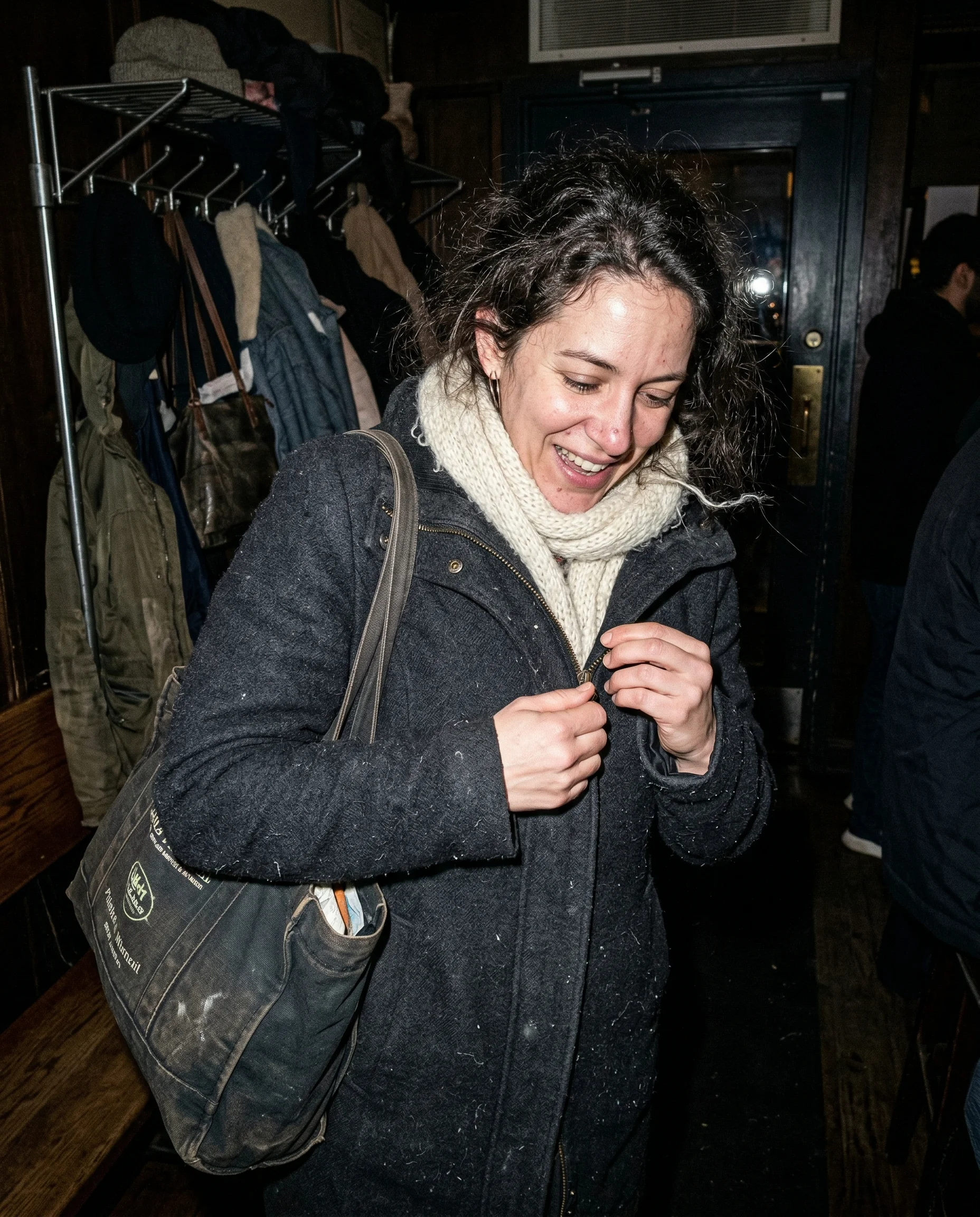
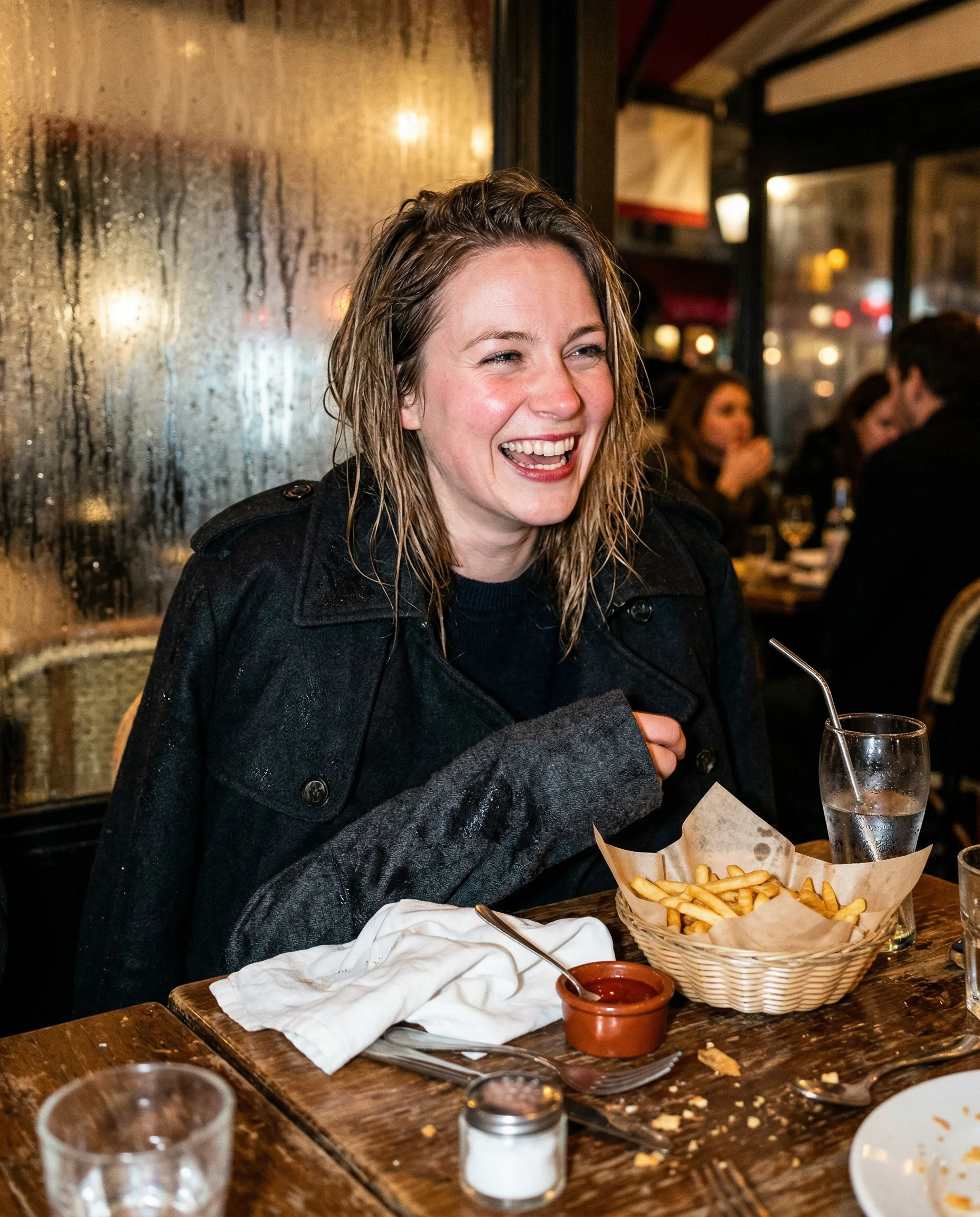
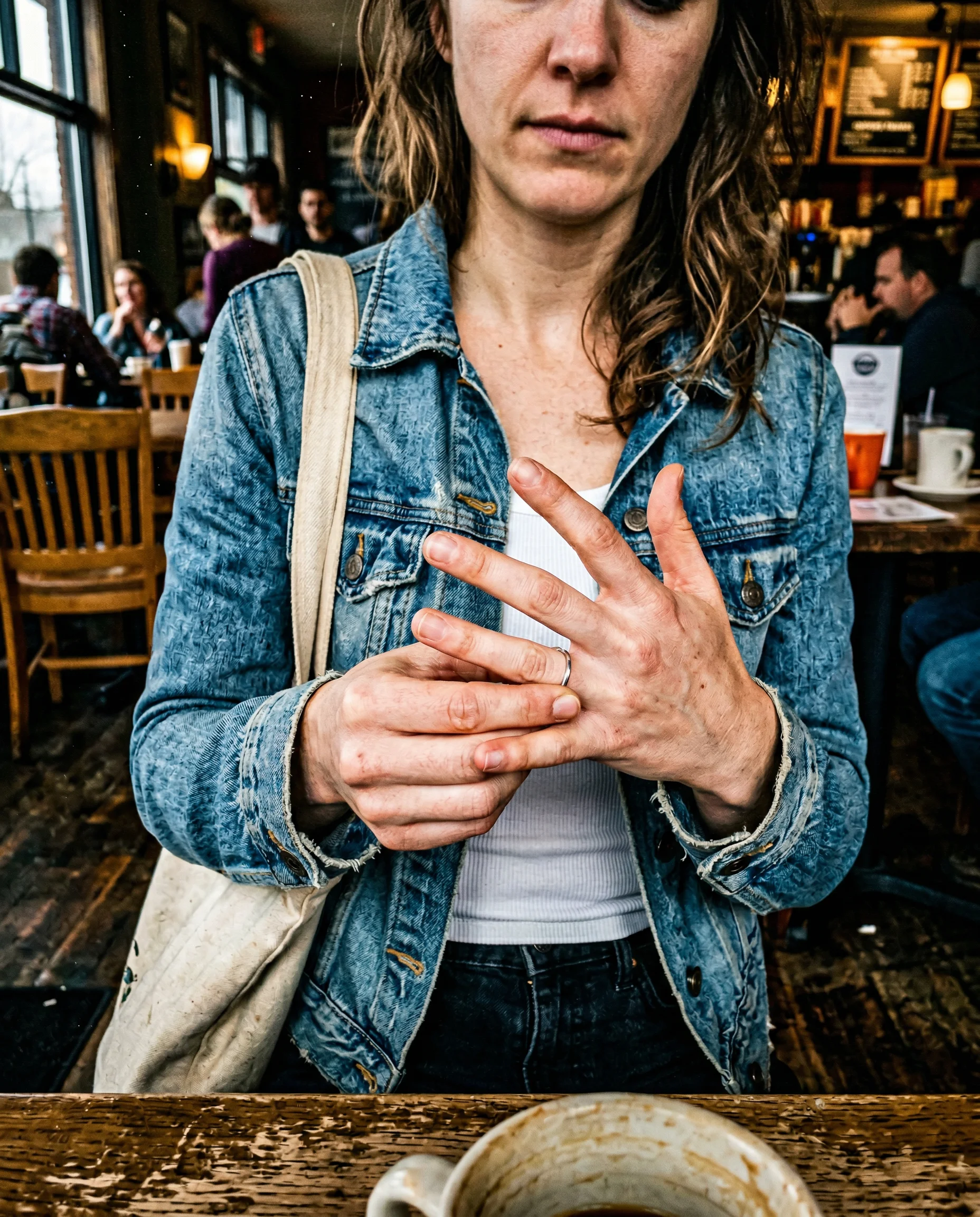
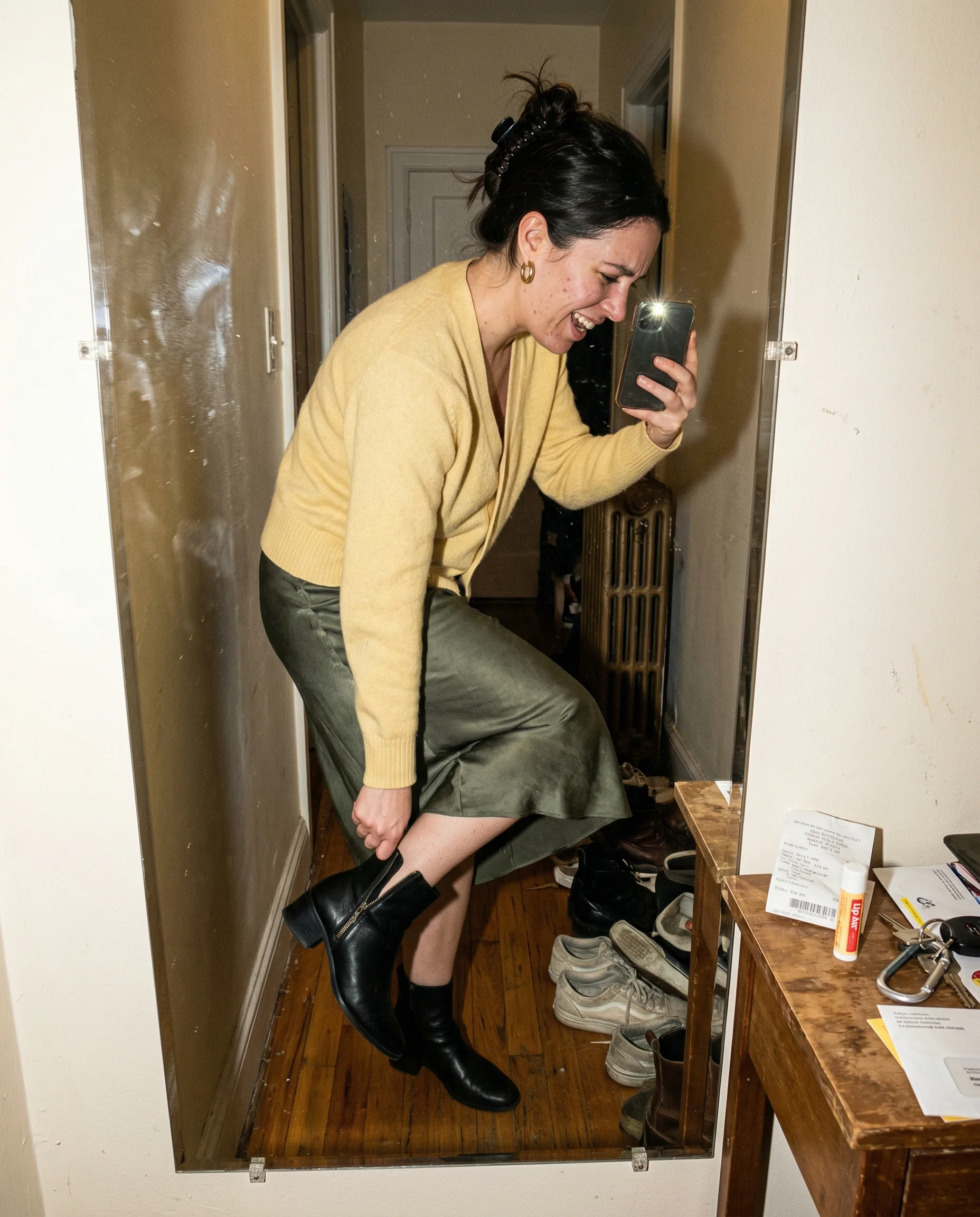
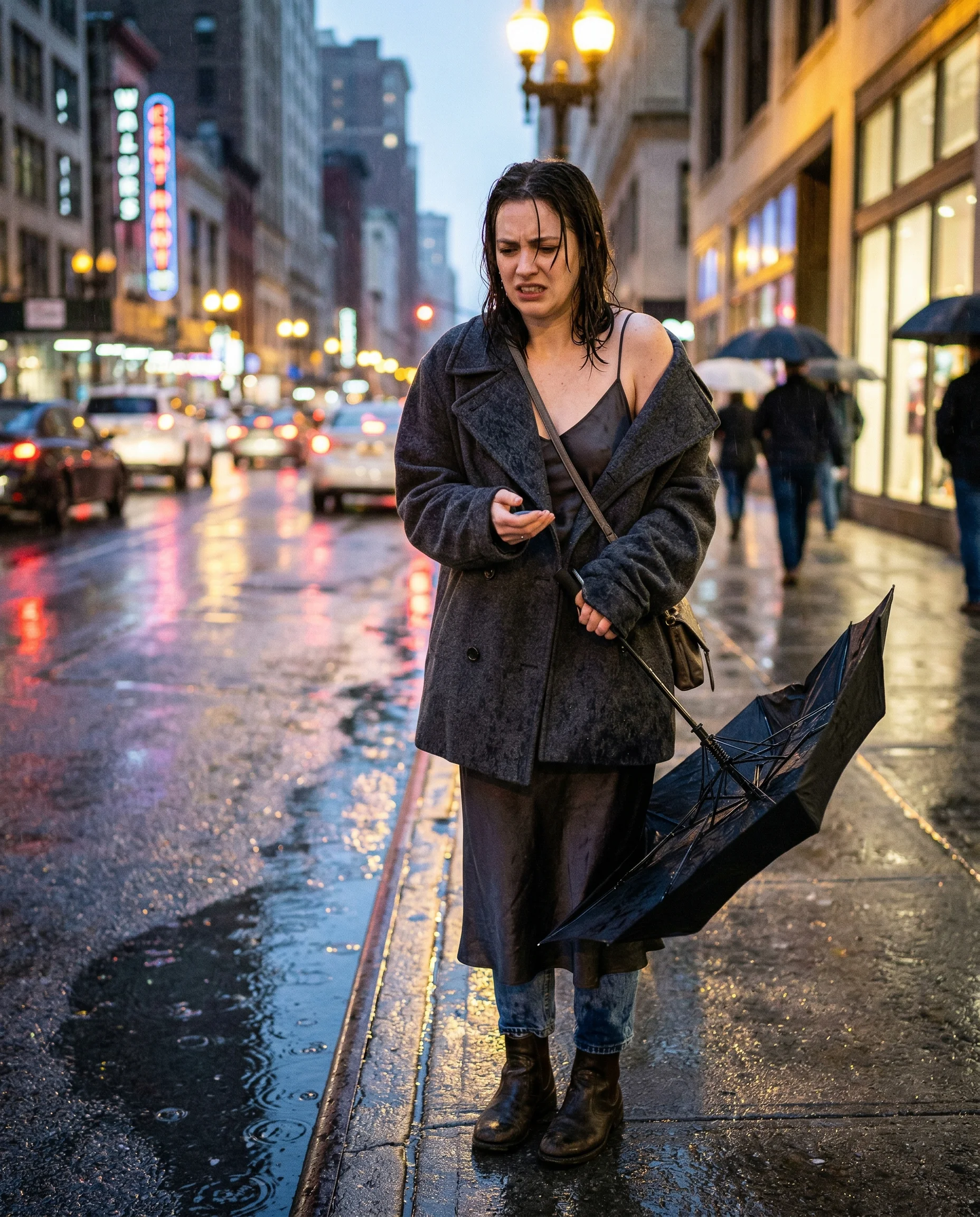
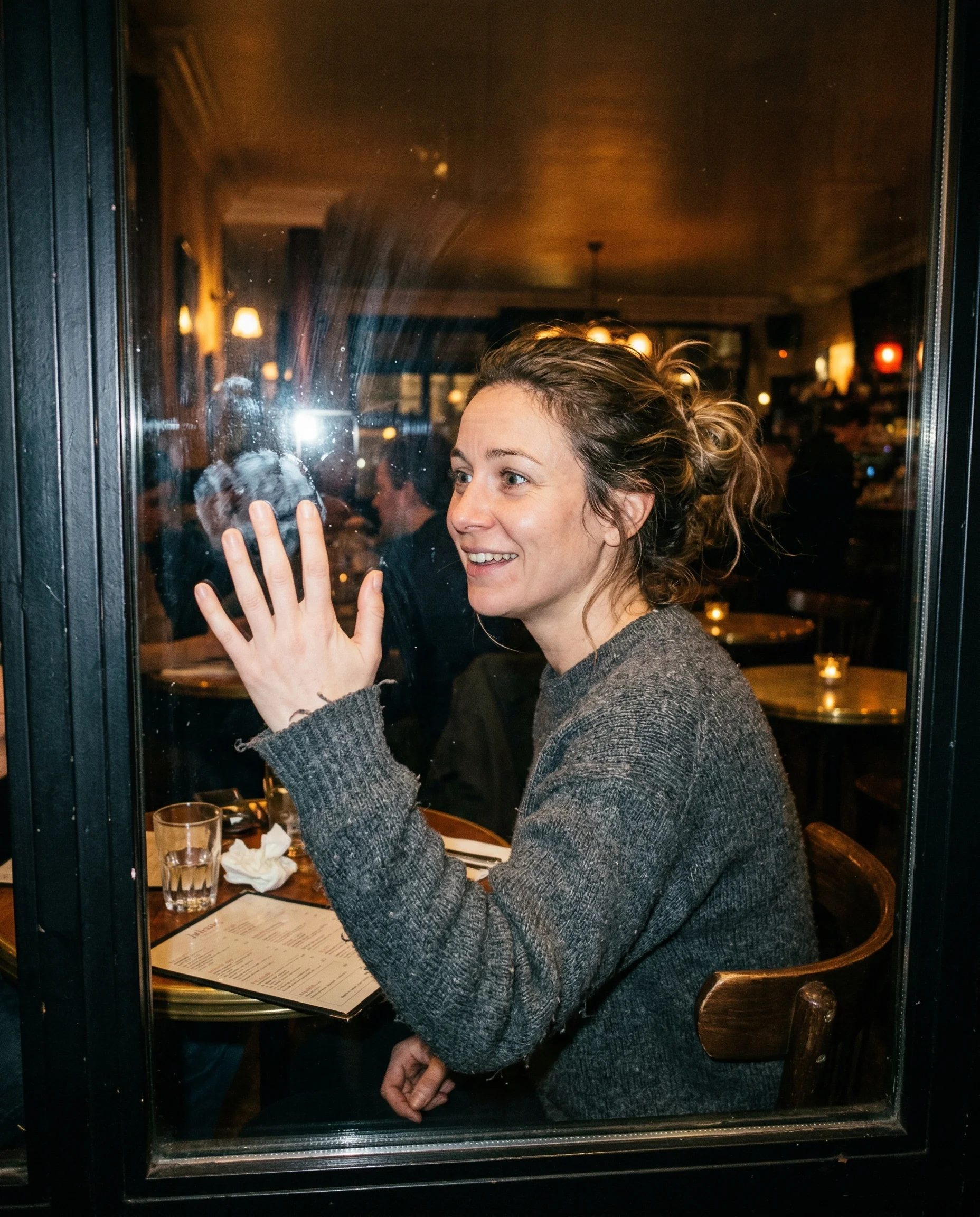
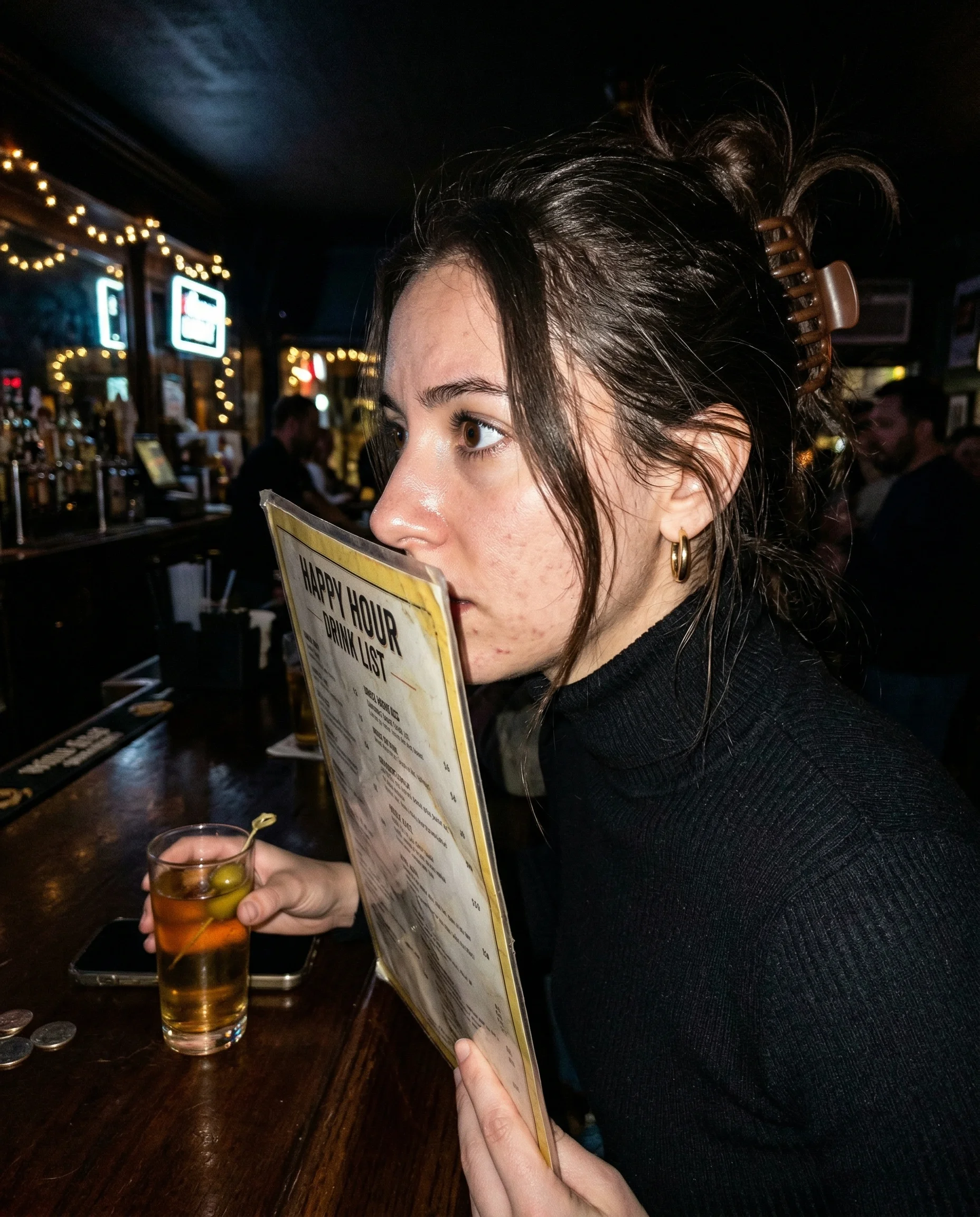
the debris on the laminate
I want you to look at the table, not the face. If the laminate were clean, this whole shot would fall into the trap of being a stock photo. The scattered crumbs, the faint grease rings, and that crumpled, used-up napkin are the only reasons this feels real. I pushed for that harsh, direct flash because it turns every piece of table-trash into a high-contrast detail. When the light hits the texture of the crumbs, it forces the viewer to acknowledge the environment. It isn’t a romantic bistro; it’s a place where people eat, drop things, and get embarrassed. If the table looks too tidy, you’ve lost the plot.
the corduroy and the clip
There is a specific kind of unpolished texture that keeps me grounded. The oversized brown corduroy blazer is heavy and slightly out of place for a casual diner, which is exactly why it works—it feels like a real person’s choice, not a stylist’s. The plastic hair clip holding that messy bun is the anchor. It’s cheap, it’s functional, and it’s clearly been there all day. I wanted the tendrils of hair falling around her face to look slightly chaotic, like she’s been sitting there for an hour and the conversation is finally starting to crack her composure. If the hair looked perfect, it would be a portrait. Because it looks like she just pulled it back in a rush, it’s a witness account.
catching the pull-back
This shot is about the exact millisecond of a mistake. She reached for the napkin, he reached for it, their hands collided, and now she’s pulling back. That laugh isn’t a ‘posed for the camera’ smile; it’s the physical manifestation of ‘oh god, I’m being weird.’ The 24mm lens creates that slight barrel distortion that makes the table feel cramped and the interaction feel uncomfortably close. By keeping the framing tight and the flash rude, I’m making sure the camera feels like it’s intruding on a moment that was never meant to be seen by anyone else. If the light were diffused or the angle were level, the tension would evaporate. I want the viewer to feel like they’re sitting in the booth right next to them, trying not to stare.
Frequently asked questions
Why use such a harsh, direct flash for a diner shot?
Soft lighting is the enemy of authenticity in this context. A direct, un-diffused flash creates high-contrast shadows and catches the grime on the table, which makes the scene feel like a candid phone photo rather than a polished editorial.
How do you keep the skin from looking like AI plastic?
I explicitly prompt for visible pores, T-zone sheen, and uneven skin tones. By embracing the noise and the slightly greasy look that comes with a flash in a warm room, you stop the model from trying to smooth everything out.
What is the role of the 24mm lens here?
The 24mm lens is wide enough to capture the clutter of the table and the booth environment while adding just enough barrel distortion to make the perspective feel slightly skewed and intimate—like a phone held too close to the action.
Is the mess on the table intentional?
Absolutely. If the table were clean, the image would feel staged. The crumbs and water rings are the 'truth' of the scene; they tell the story of a meal that has been happening for a while, which makes the awkward moment between the subjects feel earned.